Introduction
Despite extensive literature on customer lifetime value (CLV) and its models, there remains a need to synthesize its specific relevance and evolving challenges in the digital age, where big data, artificial intelligence (AI), and omnichannel interactions transform traditional calculations and applications. This paper addresses this by providing a conceptual overview and highlighting strategic implications.
The primary objective of this study is to examine the concept, models, applications, and challenges of CLV in the digital context, emphasizing its role in modern marketing and business decision-making.
Customers define the business, as no business can survive without customers. Customers are stakeholders who matter most, as they are the prime income source, and their relationships contribute to the organization’s strategic assets. Customer relationships are built on trust and the experience that a customer has had with the organization over a period of time.
The famous quote of Henry Ford, where he states that “Customers can have any color car as long as it’s black,” emphasizes the early mindset of the manufacturers in the 20th century: focused only on mass production, giving the least preference for the individual customers (1). During this period, the choice of the customers was limited, and it was the business that dictated terms. This was because customers were not powerful enough or did not have sufficient knowledge about the different choices they could have. Their journey was very simple, which was focused just on the acquisition of the products.
Significant changes in business practices and consumer behavior have led to the evolution of customers from being passive recipients to empowered stakeholders. The transition can be visualized through frameworks like customer lifecycle management, customer relationship management (CRM), and total quality management (TQM). All these concepts also help us to understand the importance of customer retention and the way to maximize CLV.
The rise of consumerism and the increase in disposable income have shifted the power from the marketer to customers. This dynamic shift in power was witnessed especially after World War II. Organizations started realizing the need and importance of repeat business, which is directly linked with the concept of CRM (2). The initial CRM system was more profound in data collection and segmentation, which enables the organization to understand the customer’s needs and wants.
Marketing discipline has progressed now to become “customer-focused” and shifted to building long-term relationships with customers from just transactional interactions.
The marketing environment has significantly changed in the present digital era. Earlier marketing approaches, which were focused on transactional interactions, were not able to meet the needs and expectations of the current customers. Instead, businesses have shifted their focus towards building long-term relationships with customers, identifying that customers are the most important assets of any organization.
The internet revolutionized the customer landscape. Customers become empowered with the introduction of e-commerce and with the bombardment of information available through online platforms. Exposure to reviews, comparisons, and the availability of community forums has enabled customers to make more and more informed decisions. This has significantly resulted in the evolution of CRM to enhanced CRM (ECRM), which underlines the usage of digital technologies for personalized communication, targeting, and getting real-time data (3).
The widespread use of social media has further augmented the voice of the customers by enabling them to give instant feedback and participate in online surveys. This transition has led the organization to get involved in managing its online reputation and maintaining customer relationships with continuous and genuine conversations.
Today, the customer is arguably the most important stakeholder in any business. Stakeholder theory highlights the interconnectedness of different groups that impact a business (4), but the fact is that customers are an inevitable part of any business that contributes to the revenue and sustainability of the business. This statement is being supported by the rise of purpose-driven marketing, which showcases that the customers will favor only those companies that align with their values and the contribution they make to society (5).
It is necessary to understand the importance of CLV. Businesses must focus on maintaining a long-term relationship with their customers by incorporating their mission. This can be done by acquainting with loyalty programs and giving a personalized experience to keep the customers engaged.
Marketers have shifted their focus from just selling to nurturing a long-term relationship with customers, which is built on trust and shared values. Companies that fail to understand the customer-centric paradigm will be thrown out of the market, which is highly informed, empowered, and value-driven.
Jackson (6) identified customers as the most important people, and their relationships based on experiences over time with the organization are considered the strategic assets of any organization. For every business, it is vital to develop and retain loyal customers.
Thus, organizations should emphasize creating long-term customer relationships. They need to comprehend that it is not a one-time exchange but a continuous process that evolves and grows over a period of time.
Understanding customer lifetime value (CLV)
Historically, the relationship between a business and a customer was considered transactional. The advent of technology and the availability of various digital platforms have transformed customers from “merely a king” to a “dictator” by gaining unprecedented access to information. Organizations started valuing the preferences and feedback of their customers.
The marketing discipline has evolved to become more customer-centric to comprehend customers’ needs and expectations. It has shifted to building long-term relationships with customers from transactional interactions and is now a process of defining, developing, and delighting the customer.
Customers start a relationship with the company, which may develop and come to an end over time. The customer indicates their interaction and the likelihood to continue doing business at any point in this life cycle. Fader (7) has showcased this in the form of mathematical calculations by connecting the total expected revenue of the organization to the customers over a period of time. As customers move through the lifecycle of the products, engagement with the product and organization gets deeper, which helps the organization to tailor necessary strategies to meet the evolving needs.
According to Kumar and Reinartz (8), businesses can calculate the value their customers create during the entire relationship with the company using CLV, as it gives the likely future income flow generated by an individual purchaser, taking into account their past behavior and the current value of that behavior. CLV enables organizations to make informed decisions on the allocation of resources, selection and retention of customers, and designing effective marketing campaigns.
Definition of CLV
Like many management terms, CLV also has many definitions. Some of the important definitions of CLV given by various researchers over the years are as under Table 1.
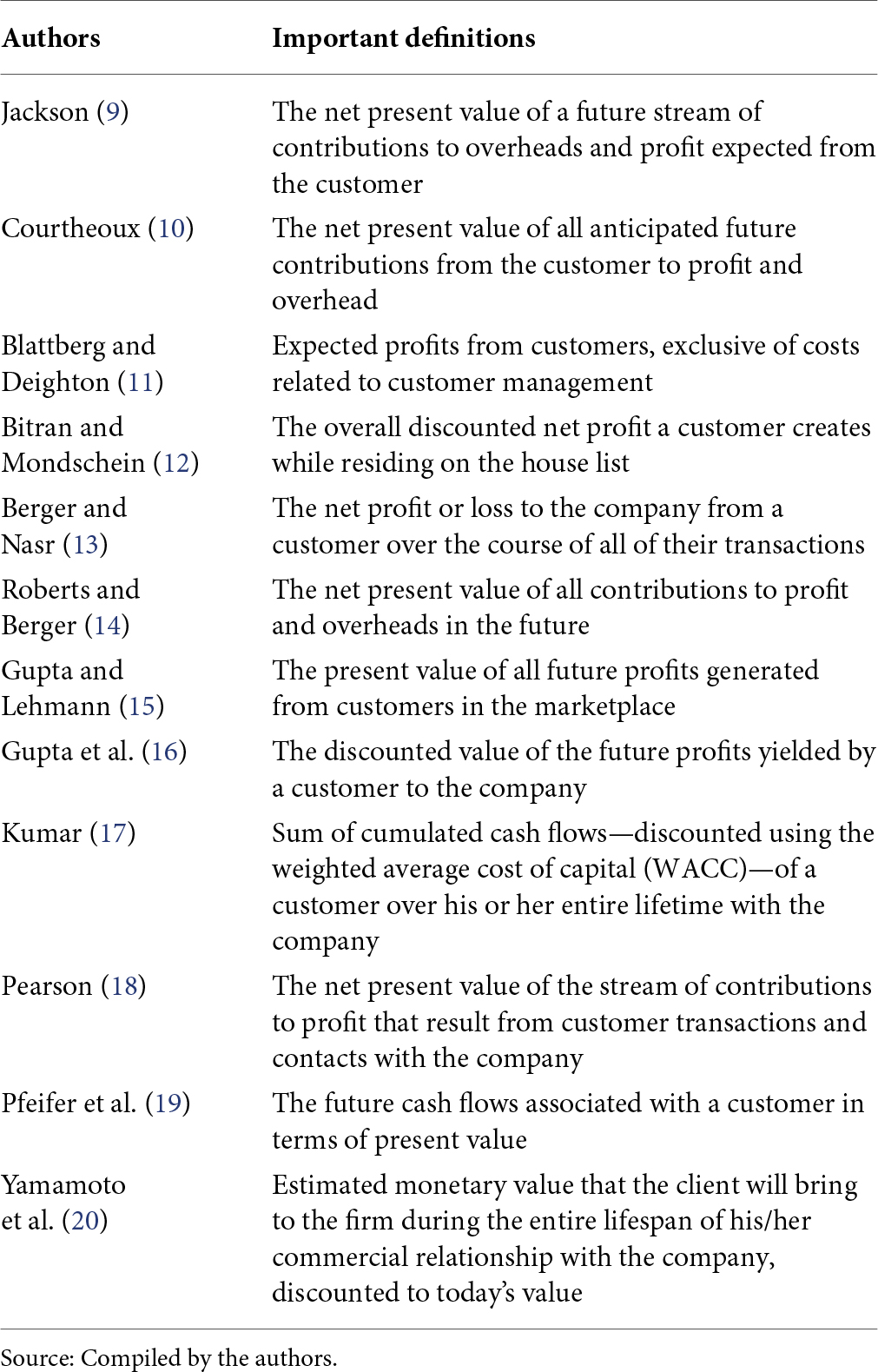
Table 1. Important definitions by different authors.
Since the resources are limited, it is essential to invest them with those customers who bring maximum return to the firm. CLV will make it easier to do the optimum allocation. Kumar (17) finds CLV useful for selection, targeting, and segmentation of customers and campaign management.
Reichheld and Sasser (21) discussed how tenure relates to customer profitability on the belief that long-term customer relationships relate to higher profitability. They commented that a need to retain customers is vital to increased value and hence proposed organizations pursue “zero defects.” They estimated losing 15%–20% of their customers each year for a business.
Importance of CLV in business
The concept of CLV has emerged as a useful tool in the digital age to evaluate the return on marketing investments. In the digital age, firms are able to have access to large amount of data about customers, including purchase history, online behavior, demographics, and more. Technology and data analytics utilize them to derive CLV more accurately.
Verhoef et al. (22) emphasized that companies could be able to extract valuable insights and patterns from these data to calculate CLV accurately by utilizing data analytics tools and techniques. The advent of big data, coupled with advanced analytical techniques, allows companies to extract valuable insights and patterns from customer interactions, leading to more precise CLV predictions and more effective resource allocation. This contrasts sharply with earlier, more elementary CLV estimations done that relied on simplified assumptions and limited data.
CLV in the digital age
Impact of digital technology on CLV
The digital era has witnessed a significant explosion of availability of data, access to it, and technological upgradations. Companies can now collect and analyze large amounts of customer data that include demographics, online behavior, purchase history, changes in the pattern, and more. Businesses can generate patterns using the new tools and techniques of data analytics to get valuable insights from this data to calculate CLV accurately.
Applications of CLV in digital marketing
Personalized marketing campaigns are one example of utilization of data analytics and CLV. By comprehending the CLV, companies can give individualized promotional offers and messages to optimize the potential revenue from each customer.
For example, as Bult and Wansbeek (23) pointed out, a company may identify high CLV customers and offer them exclusive discounts or rewards to encourage repeat purchases and increase their lifetime value.
Customer lifetime value can also be used for segmenting the customers based on their worth to the company. This will help the organization to prioritize the allocation of resources and formulate marketing strategies to attract the high-value segment to maximize the return on investment. Keeping track of consumer behavior and trends will help the company to track and monitor CLV over a period of time.
The classic examples of organizations that illustrate the benefits of CLV in the digital era are Amazon and Netflix. Amazon has been in headlines due to its customer-centric approach. It successfully employs CLV to personalize recommendations, offers, and promotions for individual customers. Netflix, on the other hand, withstands the heavy competition in the streaming industry by utilizing CLV to personalize content recommendations, increasing customer satisfaction and engagement intended for the long run.
Stages of customer life cycle
The customer life cycle differs for each customer and business to business. Its length varies by the nature of the company’s business, its customer’s profile, and their interaction. The five different stages of the traditional customer life cycle are:
1. Attraction or Awareness: This is the first stage where the customer journey begins. The stage is meant to attract the potential customers through advertising, marketing campaigns, and creating good awareness about the product and the brand. The intention behind taking all these efforts is to generate interest and create an awareness among the customers.
2. Acquisition: Once the organization is able to attract the potential customer, the next stage is to convert them into the actual customer. This is being done by generating the leads, using Salesforce and with the appropriate communication. The focus is solely on convincing the customers to make a purchase by making them believe that their purchase decision is right, ensuring a smooth onboarding process.
3. Retention: This stage is considered to be one of the most crucial stages for any organization. It is said that maintaining a customer is far tougher than gaining a new one. The intention of this stage is to make the customers go for repetitive purchases. This can be done by providing them with excellent service and establishing a long-term relationship with the customers. Continuous communication and offering the personalized products are the keys to retaining the customers.
4. Growth: The value provided by the organization to its customers will gradually increase in this stage. Upselling or cross-selling additional products or services, encouraging customers to upgrade or purchase higher-tier options, and providing them with augmented services can help the organization to grow the value.
5. Advocacy: This stage is where the organization tries to convert the satisfied and loyal customers into brand advocates. Being brand advocates, customers will try to engage in the activities helpful for promoting the products to the potential customers. The best way to make them brand advocates is to provide them with exceptional experiences, encourage them to share their opinion/feedback through reviews and testimonials, and offer them referral programs.
The customer life cycle is a never-ending process, and businesses should make sure to work on attracting, retaining, gaining, and advocating customers to ensure a long-term relationship and success.
Calculating CLV
Common models for estimating CLV
Some of the common models for estimating CLV are as under:
• RFM models
• Share-of-wallet model (SOW)
• Past customer value (PCV) model
• Pareto/negative binomial distribution (NBD) model
• Probability models
• Econometric models
• Diffusion/growth models
• Computer science model
RFM model: The RFM model creates “cells” or groups of customers based on three measures of recency, frequency, and monetary value to evaluate customer behavior and customer value. The element of recency allows organizations to understand a customer’s potential loyalty in relation to their expected frequency of purchases or pattern of previous purchase behavior. Interpretations made from the analysis that customers who purchase frequently are more likely to purchase again.
Bauer (24) extended it to managerial decision-making. Colombo and Jiang (25) and others combined the size of the purchase with frequency for customer segmentation and found its use in direct marketing and database marketing disciplines.
Thus, customers who spend more and make regular purchases are more likely to continue spending more and think more favorably of the brand.
• Recency (R) is a measure of how long it has been since a customer last placed an order with the company.
• Frequency (F) is a measure of how often a customer orders from the company in a certain defined period.
• Monetary (M) value is the amount that a customer spends on an average transaction.
There are two variations of this model. In the first method, customer data based on RFM criteria sorted from the customer database are analyzed after grouping them in equal quintiles. In the second method, combined effects of RFM are calculated after computing relative weights for each R, F, and M. The relatively straightforward logic, relative ease of use, and the accessibility of the inputs from the organization’s transaction data resulted in its adoption and popularity. Stone (26) suggested giving weightings to purchases in order to rank customers using the RFM methodology as an approach to assist targeting valued customers.
The RFM model works well in a high-volume business. Organizations can significantly target valuable customers, with a very high chance of purchase. It also avoids costly communications and campaigns to customers with a lesser chance of purchasing. However, RFM is useful only with historical customer data and not on prospective customer data.
Miglautsch (27), however, found several limitations of the model that “lead to poor decision-making,” while on the profitability of long-life customers, Reinartz and Kumar (28) opined that it could result in suboptimal allocation of limited resources. Further, the RFM approach does not factor in time in relation to cash flow over the period of the customer tenure and fails to consider the opportunity to increase retention rate, thereby improving profitability. These limitations reduce the contribution of this approach.
Share-of-wallet model: Reinartz et al. (29) defined SOW as the proportion of category value accounted for by a brand or a firm within its base of buyers amongst all brands purchased by the buyer in that category. It indicates the degree to which a customer meets his needs in the category with that brand or firm and can be used both for individual and aggregate levels. SOW is measured in percentage and calculated by dividing the value of sales (S) of the firm (j) to a buyer in a category by the size of the wallet of the same customer in a time period.
In the real marketplace, the information about a customer’s spending with competitors is not always available with the firms, and even the number of competitors is not considered. Typically, firms generate this information from primary market research or surveys administered to a representative sample of the firm’s customers. The results of CLV SOM are again not applicable for projecting into the geographical area.
PCV model: The PCV model is built on the assumption that the past performance of the customer (transaction or buying) indicates their future level of profitability. It is an extrapolation of the results of past transactions as a measure of the customer’s value in the future. Total contribution by the customer towards profits provided in the past determine the value of a customer.
However, this model cannot detect the location of a single customer in the geographical location. Observed behavior is the realization of an underlying stochastic process governed by latent (unobserved) behavioral characteristics that vary across individuals in a probability model.
Pareto/NBD model: Schmittlein et al. (30) proposed the Pareto/NBD model that calculates the probability that a customer is still active. Taking input from the number and timing of customers’ previous transactions, firms can identify and count the active customers. It can be used to find the number of retail customers and the growth of this customer base over the year. It also categorizes customers into active and inactive and estimates the level of transactions, both individually and collectively, from them. Studies like (31) have used the scores gained from RFM to get a better insight while predicting the CLV using Pareto analysis.
The major drawback of this model is that it assumes the customers will not drop out before becoming inactive. The model considers that the consumer’s purchase will be consistent as long as they are alive (32).
Probability model: Schmittlein and Peterson (33), Colombo and Jiang (25), and Reinartz and Kumar (28, 34) have all proposed probability models to compute CLV. The Beta geometric negative binomial distribution (BG-NBD) model is an advanced version of the Pareto model, and its implementation is considered to be easier.
The model proposed by Fader et al. (35), called the BG-NBD model, is considered one of the best models to explain the CLV and its probabilities. The major idea behind this model is to consider two main aspects relevant to the customer, i.e., the relationship is non-contractual and the purchase is continuous. The aim of this model is to predict the number of transactions made by the customer over a period of time. Thus, as per this model, the CLV can be calculated as follows: CLV = number of purchases happened × value generated through the purchase.
The model considers probability distribution as a major aspect in understanding the activation and deactivation of consumers from the purchase. A Poisson process (using a constant rate as λ) is adopted for the active consumers to understand how frequently they make the purchases.
Whereas the gamma distribution helps the organization understand the variations in the purchase behavior of different customers. The combination of a Poisson process and gamma distribution is otherwise called a negative binomial distribution. The geometric distribution is prevalent for understanding the deactivation process of the customers (36).
Further beta distribution helps the organization to understand the variations in the deactivation. By summing up all these, an organization will figure out the facts like, who their active customers are, what the frequency of purchase is, the time period of their deactivation, and the possibility of coming back to the organization for a purchase.
Econometric model: Econometric models deal with customer acquisition, retention, and expansion (cross-selling or margin) and then combine them to estimate CLV. Customer acquisition is considered the first step towards the purchase, and hence it is relevant in case of analyzing the CLV. Customer retention is the understanding of how long the customer stays with the organization. While discussing about customer retention, it is crucial to understand that the customers are prone to switch from the existing brand to another one at any point in time. Whereas customer margin is used to understand how much margin is being generated by the customer over a period of time (37).
The persistence model also deals with the same aspect as the econometric model. But what makes the persistence model different is to consider these factors as a dynamic system when we have sufficiently long time series. This model advocates multivariate time series analysis, such as vector autoregressive models, unit roots, and cointegration, to understand the variations among the variables when one changes (38).
Research from Yoo and Hanssens (39) has found that the CLV can be indirectly calculated by understanding the effect of certain factors like the impact of advertising, discounting, and product quality on customer equity and combining all these to calculate CLV. While the study conducted by Villanueva et al. (40) explains how CLV can be used to understand the variations that can be observed through different acquisition methods. Thus, there can be different purposes for the CLV calculation based on the different methods that an organization uses, be they econometric or persistence-based.
Diffusion/growth model: Most of the organizations use this model to understand the level of acceptance of their product/service among the customers so as to calculate the customer equity. This model explains customer segmentation by understanding the two aspects, such as the time period of adoption and the reason why a customer adopts a product (41). A study conducted by Cuadros and Domínguez (42) shows that segmentation will help to calculate the CLV in a better way by focusing on the category of customers who generate more revenue and thus focusing on attracting those customers.
Computer science model: Most of the models used in marketing are theory-based. But when it comes to calculating the CLV, one of the best approaches is to adopt computer science models. This model includes a neural network model, a generalized additive model, multivariate adaptive regression splines, classification and regression trees, and much more. These models help to understand the factors that lead to the churn rate (38). A neural network model helps to predict the CLV by analyzing complex patterns and relationships from a relatively larger customer dataset. Neural networks help the organization to segregate the customers based on the future CLV that the customer could be able to generate. This in turn will help the organization to plan the marketing and promotion strategies so as to attract these customer groups. Neural models are also helpful to determine the effectiveness of marketing campaigns and thus help the organization to retain the customer thus, improving the revenue (43).
Value creation and customer relationships
The role of quality and service in customer retention
Value creation in business emerges solely from the economic exchange between the customer and the organization. All the other stages preceding will incur costs such as costs involved in production and the supply chain. Therefore, the success of the organization is highly dependent on its ability to understand and provide the goods or services that are curated based on the ever-changing needs and wants of the customers.
In order to stay connected with the customers, an organization needs to provide a platform for open communication that understands the pain points of the customer and provides solutions for the same. By maintaining an open line of communication, organizations can understand their behavioral patterns and formulate strategies to serve them better. This will help them to gain loyal and profitable customers in the long run.
CLV provides a valuable framework by adopting the various tools to evaluate the profitability that a customer can generate. This understanding will help the company to make strategic decisions and optimize their resource allocation. Being customer-centric, the company will be able to withstand the digital era by creating a long-term relationship.
Characteristics of profitable customers
Having a set of regular, long-term, loyal, and profitable customers is more profitable than having a large number of customers. Most profitable customers give the highest sales volume. A profitable customer brings in revenue that exceeds the company’s cost of acquiring the customer over time by a good margin. Acquiring starts with attracting and proceeds to retaining the customer by selling and servicing that customer over time. Pareto’s rule of 80:20 applies here also. Twenty percent of the customers account for 80% of the company’s profits.
Building a relationship with customers works only when the customer perceives benefits from such a relationship. This can happen only when customers gets something that they appreciate while it is not costing much to the organization. Organizations thus need to try to build a relationship with customers to modify their behavior and convert them into loyal and profitable customers over time.
These loyal customers become profitable and more valuable over time. When they tend to
• Buy more often
• Buy more items
• Buy higher priced items
• Have lesser service cost
• Have lesser sensitivity to price
• Have higher retention rates.
Quality and service act as the keys as customer retention tools. Value creation only occurs in commercial relationships initiated by the customer through economic exchange, while all other stages result in costs. TQM, just-in-time (JIT), flexible manufacturing system (FMS), and efficient supply chain management are reducing the production costs. The products and services of the firm must meet the ever-changing needs and expectations of customers. Therefore, the organization has to be in constant touch with the customer.
Each business has a client base, and the quantification of the contribution of every customer to the business becomes a central issue beyond the first sale. This links the customers, as the external factor that bring revenue, and the internal processes that incur costs of an organization. Blattberg and Deighton (44) assert accurate identification and retention of the right customer as the key component of success in marketing. McKenna (45) linked the worth of retained loyal customers with competitive advantage.
Challenges to CLV in digital age
A high level of competition and the evolution of the digital era are making it difficult for the organizations to calculate the actual CLV. There are lots of factors that are arising in the market as well as with the customers, which makes the CLV calculation a tedious one. Lack of awareness about the customers’ online and offline behavior is considered one of the biggest hindrances in calculating CLV. This means that the organization is not trying to figure out the actual customer who can generate profitable revenue over a period of time. Thus, they fail to formulate strategies that are relevant to such groups (46). Most of the time this kind of negligence happens due to lack of quality and accuracy of the data. Improper data regarding customers’ past behavior, present purchases/transactions will result in inappropriate segmentation and CLV calculation (47).
Awaad et al. (48) have pointed out price sensitivity as one of the factors affecting CLV among luxurious products. As we know, price sensitivity is applied to almost all the products. But the implications from the study have shown that quality, value, and information are considered the main factors for price sensitivity, and CLV is calculated based on the successful implementation of these parameters. Also, it is noteworthy that since customers are price sensitive, it is easy for them to switch the brands, which makes the organization difficult to calculate CLV.
Another challenge faced by organizations in recent years is brand switching and purchases from different platforms. Gen Z and millennials are prone to switching brands more frequently, and they have to come across a minimum of three channels before making a purchase, which makes CLV calculation difficult (49). This sudden shift in customer emotion, spending pattern, and brand loyalty levels will act as a hindrance in CLV calculation (50).
Strategic implications of CLV
Customer lifetime value is an inevitable factor for an organization. As long as the organization exists, it will calculate the revenue being generated by its customers. Hence, better understanding of CLV and the factors affecting it, methods, and techniques will help the organization to yield fruitful results. One of the crucial strategic steps that an organization needs to take is to understand the customer journey and the allocation of their resources to different channels (51).
Limitations of the study
As a conceptual review, this paper relies on secondary literature and illustrative cases rather than primary empirical data. It does not conduct new quantitative modeling or statistical analysis. Future research could apply advanced predictive models (e.g., machine learning-enhanced BG/NBD) in specific digital contexts to validate and extend these insights. Additionally, rapid evolution of digital technologies may outpace some cited works.
Conclusions
In conclusion, CLV is a significant measure for businesses in the digital age. By leveraging data analytics and technology, companies can accurately calculate CLV and utilize it to drive personalized marketing campaigns, customer segmentation, and retention strategies. CLV enables businesses to make informed decisions regarding resource allocation and customer prioritization after understanding contributions of their customers to their life-term revenue.
With access to vast amounts of customer data, businesses can extract valuable insights and patterns to calculate accurately CLV. By understanding the CLV of individual customers, companies can tailor their marketing messages and offers to maximize the potential revenue from each customer. This increases customer satisfaction levels as well as contributing significantly to customer retention.
Furthermore, CLV enables companies to make customer segmentation based on their value. This segmentation allows businesses to prioritize their resources and marketing efforts towards high-value segments, maximizing the return on investment. By continuously analyzing customer behavior and trends, companies can track and monitor changes in CLV over time, identifying shifts in customer preferences and adapting their strategies accordingly. CLV will remain a critical tool for businesses to build and maintain a loyal customer base, ultimately contributing to long-term success.
In conclusion, this review demonstrates that CLV is a powerful metric [powerful customer metric]. By addressing the identified conceptual and practical aspects, the paper contributes to understanding CLV’s enduring relevance in the digital age.
Author contributions
Both authors contributed equally on all aspects.
Funding
There has been no funding from any source for doing this research.
Conflict of interest
The authors declare that the research was conducted in the absence of any commercial or financial relationships that could be construed as a potential conflict of interest.
References
2. Payne A, Frow P. A strategic framework for customer relationship management. J Market. (2005) 69(4):167–76.
3. Sheth JN, Parvatiyar A. The evolution of relationship marketing. Int Bus Rev. (1995) 4(4):397–418.
5. Batra R, Keller KL. Integrating marketing communications: new findings, new lessons, and new ideas. J Market. (2016) 80(6):122–45.
6. Jackson BB. Winning and Keeping Industrial Customers: The Dynamics of Customer Relationships. Lexington, MA: Lexington Books (1985).
7. Fader PS. Customer Centricity: Focus on the Right Customers for Strategic Advantage. Philadelphia, PA: Wharton School Press (2020).
8. Kumar V, Reinartz W. Customer Relationship Management: Concept, Strategy, and Tools. Berlin, Germany: Springer (2018).
9. Jackson DR. Strategic application of customer lifetime value in the enterprise. Direct Market. (1994) 57(7):22–9.
10. Courtheoux RJ. Customer lifetime value: a practical approach. J Bus Strategy. (1995) 16(5):41–6.
11. Blattberg RC, Deighton J. Manage marketing by the customer equity test. Harvard Bus Rev. (1996) 74(4):136–44.
12. Bitran GR, Mondschein SV. Mailing decisions in the catalog sales industry. Manag Sci. (1996) 42(9):1364–81.
13. Berger PD, Nasr NI. Customer lifetime value: marketing models and applications. J Int Market. (1998) 12(1):17–30.
14. Roberts ML, Berger PD. Direct Marketing Management. Upper Saddle River, NJ: Prentice Hall (1999).
17. Kumar V. Managing Customers for Profit: Strategies to Increase Profits and Build Loyalty. Upper Saddle River, NJ: Wharton School Publishing (2008).
18. Pearson S. Building Brands Directly: Creating Business Value from Customer Relationships. London: Palgrave Macmillan (2016).
19. Pfeifer PE, Haskins ME, Conroy RM. Customer lifetime value, customer profitability, and the treatment of acquisition spending. J Manag Issues. (2005) 17(1):11–25.
20. Yamamoto JG, Sublaban CS, Aranha F. Estimating customer lifetime value in a business-to-business setting. J Bus Bus Market. (2009) 16(3):219–42.
21. Reichheld FF, Sasser WE. Zero defections: quality comes to services. Harvard Bus Rev. (1990) 68(5):105–11.
22. Verhoef PC, Kannan PK, Inman JJ. From multi-channel retailing to omni-channel retailing. J Retail. (2015) 91(2):174–81.
28. Reinartz W, Kumar V. On the profitability of long-life customers in a noncontractual setting. J Market. (2000) 64(4):17–35.
29. Reinartz W, Thomas JS, Kumar V. Balancing acquisition and retention resources to maximize customer profitability. J Market. (2005) 69(1):63–79.
30. Schmittlein DC, Morrison DG, Colombo R. Counting your customers: who are they and what will they do next? Manag Sci. (1987) 33(1):1–24.
31. Megantara RA, Alzami F, Akrom A, Pramunendar RA, Prabowo DP, Wibowo S , et al. RFM analysis for customer lifetime value with PARETO/NBD model in online retail dataset. Moneter Jurnal Keuangan Dan Perbankan. (2023) 11(2):284–90. doi: 10.32832/moneter.v11i2.409
32. Kebede B. Understanding Customer Lifetime Value (CLV). Number Analytics (2022). Available online at: www.number analytics.com/blog/what-is-customer-lifetime-value-clv-models-and- applications
33. Schmittlein DC, Peterson RA. Customer base analysis: an industrial purchase process application. Market Sci. (1994) 13(1):41–67.
34. Reinartz WJ, Kumar V. The impact of customer relationship characteristics on profitable lifetime duration. J Market. (2003) 67(1):77–99. doi: 10.1509/jmkg.67.1.77.18589
35. Fader PS, Hardie BGS, Lee KL. RFM and CLV: using iso-value curves for customer base analysis. J Market Res. (2004) 42(4):415–30.
36. Antonio M. Customer Lifetime Value Estimation Via Probabilistic Modeling. Towards Data Science (2025). Available online at: https://towardsdatascience.com/customer-lifetime-value-estimation-via-probabilistic-modeling-d5111cb52dd/.
37. Bernat J. Modelling Customer Lifetime Value in a Continuous, Non-Contractual Time Setting. Master’s thesis, Erasmus University (2019). Available online at: https://thesis.eur.nl/pub/45923/Bernat.pdf
38. Gupta S, Hanssens D, Hardie B, Kahn W, Kumar V, Lin N , et al. Modeling customer lifetime value. J Ser Res. (2006) 9(2):139–55. doi: 10.1177/1094670506293810
39. Yoo S, Hanssens DM. Modeling the Sales and Customer Equity Effects of the Marketing Mix (Working Paper). UCLA Anderson School of Management (2005).
40. Villanueva J, Yoo S, Hanssens DM. The impact of marketing-induced versus word-of-mouth customer acquisition on customer equity. J Market Res. (2006) 45(1):48–59.
41. Xue W, Sun Y, Bandyopadhyay S, Cheng D. Measuring customer equity in noncontractual settings using a diffusion model: an empirical study of mobile payments aggregator. J Theor Appl Electr Comm Res. (2020) 16(3):409–31. doi: 10.3390/jtaer16030026
42. Cuadros AJ, Domínguez VE. Customer segmentation model based on value generation for marketing strategies formulation. Estudios Gerenciales. (2014) 30:25–30. doi: 10.1016/j.estger.2014.02.005
43. Norouzi V. Predicting e-commerce CLV with neural networks: the role of NPS, ATV, and CES. J Econ Technol. (2024) 2:174–89. doi: 10.1016/j.ject.2024.04.004
44. Blattberg RC, Deighton J. Interactive marketing: exploiting the age of addressability. Sloan Manag Rev. (1991) 33(1):5–14.
45. McKenna R. Relationship Marketing: Successful Strategies for the Age of the Customer. Reading, MA: Addison-Wesley (1993).
46. Chahal M. The Challenges of Customer Lifetime Value. Marketing Week (2014). Available online at: https://www.marketingweek.com/the-challenges-of-customer-lifetime-value/
47. Ali N, Shabn OS. Customer lifetime value (CLV) insights for strategic marketing success and its impact on organizational financial performance. Cogent Bus Manag. (2024) 11(1):2361321. doi: 10.1080/23311975.2024.2361321
48. Awaad SA, Kortam W, Ayad N. Examining the impact of price sensitivity on customer lifetime value: empirical analysis. Cogent Bus Manag. (2024) 11(1):2366441. doi: 10.1080/23311975.2024.2366441
49. Kohli S. The World of ‘Ands’: Consumers Set the Tone. McKinsey & Company (2023). Available online at: https://www.mckinsey.com/industries/consumer-packaged-goods/our-insights/the-world-of-ands-consumers-set-the-tone
50. Chuah ECH. Why Customer Lifetime Value is Outdated. LinkedIn (2025). Available online at: https://www.linkedin.com/pulse/why-customer-lifetime-value-outdated-chong-han-chuah-situc/
51. McAthy R. Leveraging Customer Lifetime Value (CLV) as a Key Marketing Growth Strategy with Russell McAthy. Omniconvert Ecommerce Growth Blog (2025). Available online at: https://www.omniconvert.com/blog/clv-growth-strategy/
52. Benoit DF, den Poel D. Benefits of quantile regression for the analysis of customer lifetime value in a contractual setting. Eur J Oper Res. (2009) 198(1):131–9.
56. Mulhern FS. Customer profitability analysis: measurement, concentration, and research directions. J Inter Market. (1999) 13(1):25–40.
© The Author(s). 2026 Open Access This article is distributed under the terms of the Creative Commons Attribution 4.0 International License (https://creativecommons.org/licenses/by/4.0/), which permits unrestricted use, distribution, and reproduction in any medium, provided you give appropriate credit to the original author(s) and the source, provide a link to the Creative Commons license, and indicate if changes were made.