Introduction
Worker attitude and job satisfaction deal with how an organization functions. They involve management guiding employees toward improving both organizational and personal effectiveness. These factors play an enormous role in shaping employees’ attitudes and their level of job satisfaction. When an employee is happy, it is usually because they are satisfied with their work, which in turn improves the quality of their performance. Attitude and job satisfaction do not depend entirely on management alone but also on employees themselves. If employees enjoy their work, they may not require external motivation from management; instead, the satisfaction they gain from completing their work becomes a motivating factor.
Job satisfaction refers to an individual’s level of contentment with their work. Its effect on productivity may be either positive or negative. However, the relationship between job satisfaction and job productivity is not always consistent. An individual may still achieve high productivity without being satisfied with their work, particularly when monetary rewards serve as the primary motivation. Another motivator may be the desire to improve performance in order to receive a promotion. In contrast, some employees increase their productivity due to the satisfaction they derive from their work. Job satisfaction may also result from receiving a fair salary, as it improves satisfaction when employees perceive that they are adequately compensated for their efforts.
Job satisfaction also influences an individual’s overall satisfaction with life. When employees do not find satisfaction in their work, they may seek fulfillment in other non-work-related areas, which helps provide balance in their lives. They may also feel content with their work when it aligns well with these non-work-related aspects. Conversely, job dissatisfaction may lead an employee to leave the organization.
Literature review
Job satisfaction has long been recognized as a central variable in organizational behavior research. Edwin A. Locke (1) defined job satisfaction as a pleasurable or positive emotional state resulting from the appraisal of one’s job or job experiences. His foundational work identified intrinsic and extrinsic factors such as achievement, recognition, supervision, and working conditions as primary determinants.
Building upon this foundation, Barrett and Barrett (2) emphasized the significant role of job satisfaction in employee retention, particularly in the construction sector. Their findings suggest that higher job satisfaction reduces turnover intentions and strengthens organizational commitment.
Similarly, James L. Price examined determinants of voluntary turnover and concluded that job satisfaction, organizational commitment, and job alternatives are primary predictors of employee retention. More recently, Shin and Cho (3) found that job insecurity significantly reduces job satisfaction and increases turnover intention in the construction industry, highlighting the importance of employment stability.
Bernard M. Bass (4) introduced transformational leadership theory, distinguishing it from transactional leadership. Transformational leaders inspire, motivate, and intellectually stimulate employees, fostering higher levels of satisfaction and organizational commitment.
In addition, Gerstner and Day (5) conducted a meta-analytic review of leader-member exchange (LMX) theory. Their study demonstrated that high-quality leader-member relationships are strongly associated with job satisfaction, performance, and reduced turnover. These findings reinforce the importance of leadership style in employee retention strategies.
Workplace safety and well-being are critical in construction environments due to the industry’s high-risk nature. Danna and Griffin (6) synthesized literature on workplace health and well-being, concluding that physical and psychological health significantly influence job satisfaction and productivity.
In the construction context, Gyi and Porter (7) found that improved safety practices positively impact worker job satisfaction. Further, Hinze et al. (8) emphasized systematic safety management as a key factor in reducing accidents and enhancing workforce morale. Likewise, Helen Lingard and Rowlinson (9) highlighted the role of structured safety management systems in improving employee satisfaction and project performance.
Chan et al. (10) identified key success factors such as effective communication, competent project teams, leadership, and proper risk management.
Cheng and Li (11) examined the role of social support in construction projects. Their study revealed that supervisory and peer support significantly enhance employee satisfaction and reduce workplace stress, thereby contributing to project effectiveness.
Sandya Sri Aprilia et al. (12), in their study, highlighted the work environment as a key factor influencing job satisfaction. A safe, comfortable, and supportive work environment helps employees perform their duties effectively and reduces stress. In construction companies, good physical conditions and positive workplace relationships increase employee satisfaction. Studies also indicate that work-life balance plays a significant role in job satisfaction. Employees who are able to balance their work responsibilities with personal life experience lower stress and higher job satisfaction. Supportive policies and reasonable working hours help improve this balance. Further literature confirms that the combined effect of work environment and work-life balance has a strong positive impact on employee job satisfaction. When both factors work together, they create a safe, effective, and satisfying workplace.
Methodology
Methodology is considered the nerve of the project, as it guides the research process and helps in reaching meaningful conclusions. Without a proper methodology, it is impossible to complete a project or arrive at valid findings. The present project is based on a survey method. The main objective of the survey was to collect appropriate data that serve as the basis for drawing conclusions and obtaining results. Thus, methodology provides a systematic way to solve the research problem.
Data may be collected for either theoretical or practical research. For example, management research may be conceptually framed along with operational planning, strategic methods, and change management practices. The present study has adopted a descriptive research design.
Data sources
In tune with the objectives mentioned above, the present study collects data from both primary and secondary sources.
Primary data
Primary data are those data that are collected directly from the respondents and are considered first-hand information. In this study, primary data were gathered with the help of a structured questionnaire distributed among the selected sample respondents of the company.
Secondary data
Secondary data are those that have already been collected and published by various sources. In the present study, secondary data were collected from company records and web-based resources.
Sample size
The sample size selected for this research project consists of 145 employees.
Sampling technique
A closed-ended questionnaire was provided on quantitative aspects along with a Likert scale to 145 respondents using Google Forms.
Research gap
Although prior studies have identified leadership style, workplace safety, social support, job insecurity, work environment, and work–life balance as important determinants of job satisfaction, there is a lack of comprehensive research integrating these factors within a unified framework to examine their combined impact on employee retention in the construction industry.
Objectives
• To understand employees’ attitudes toward their working environment.
• To assess the level of job satisfaction among employees in the construction company.
• To offer suggestions to management for improving employees’ attitudes.
Limitation of the study
• The study is limited to construction firms in Mangaluru City only.
• The sample size of 145 workers may not represent the entire population.
• The study is exploratory in nature and does not establish cause-and-effect relationships.
• The data are based on self-reported responses, which may include personal bias.
• Only selected factors such as working conditions, environment, nature of work, and compensation were considered.
• The study was conducted within a limited time period.
• The unorganized nature of the construction sector may affect response accuracy.
• Language and literacy differences among workers may influence understanding of the questionnaire.
Result analysis
In Table 1, a demographic analysis was performed using the variables gender, age, marital status, work experience, and monthly income category among the 145 respondents who participated in the research. The table presents the frequency distribution of respondents across different categories of each demographic variable. The analysis of the table shows that among the 145 respondents, 67.6% are male and 32.4% are female. With respect to age, 33.8% of respondents fall in the age group below 20 years, 16.6% in the age group of 20–25 years, 19.3% in the age group of 26–30 years, and 29.0% in the age group of 31–35 years, while the majority are above 36 years of age. According to the study, unmarried respondents (58.0%) are more numerous than married respondents. Regarding average monthly income, 12.4% of respondents reported an income above ₹40,000, 33.1% reported an income between ₹30,000 and ₹40,000, 35.9% reported an income between ₹20,000 and ₹30,000, and 18.6% reported an income below ₹20,000. The majority of workers are employed on a temporary basis, accounting for 63.0% of the respondents.
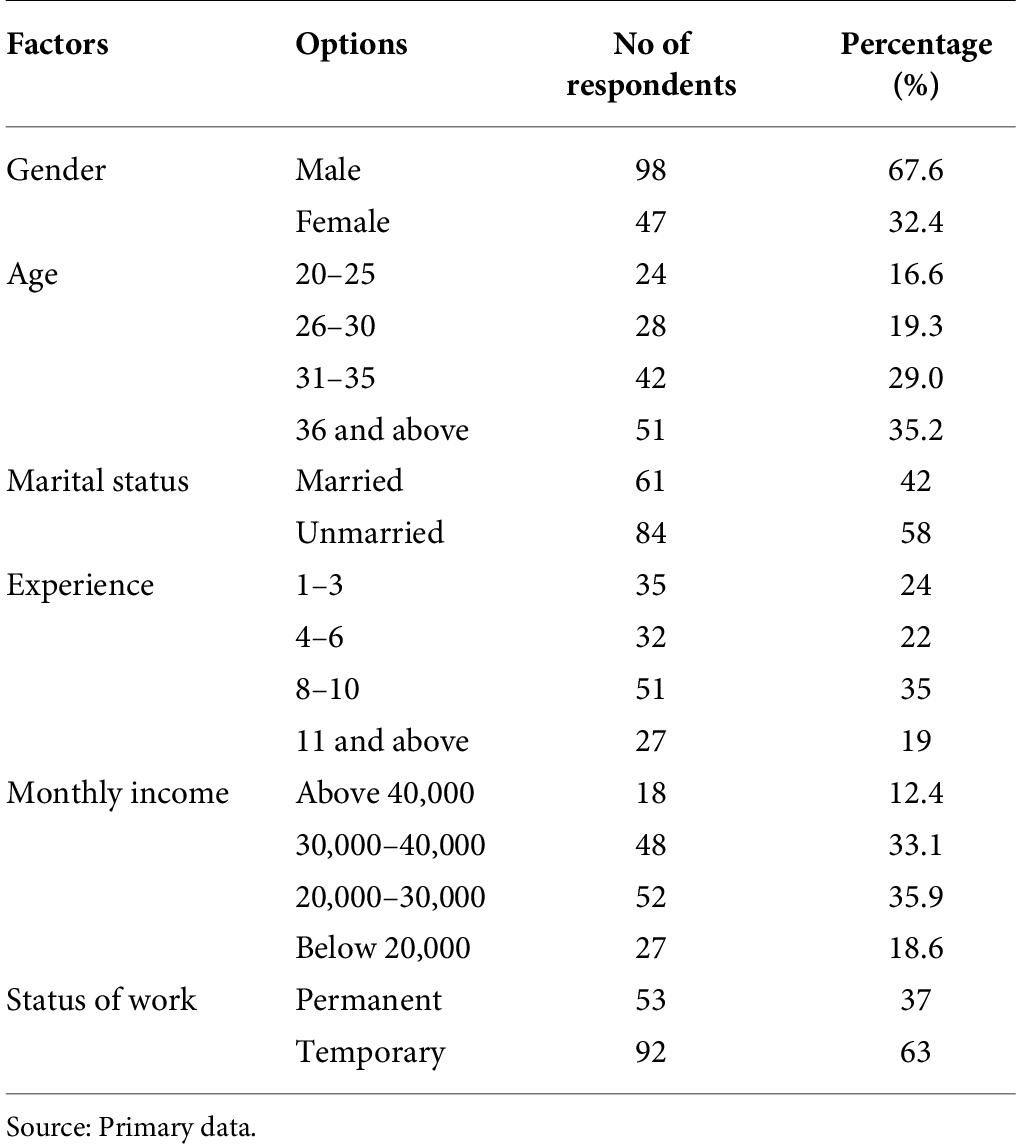
Table 1. Socio-demographic factor summary.
In Table 2, an analysis of workers’ attitudes was conducted using variables such as work environment, working hours, workload, relationships with co-workers, and work-related stress among all 145 respondents who participated in the research. The findings are as follows:
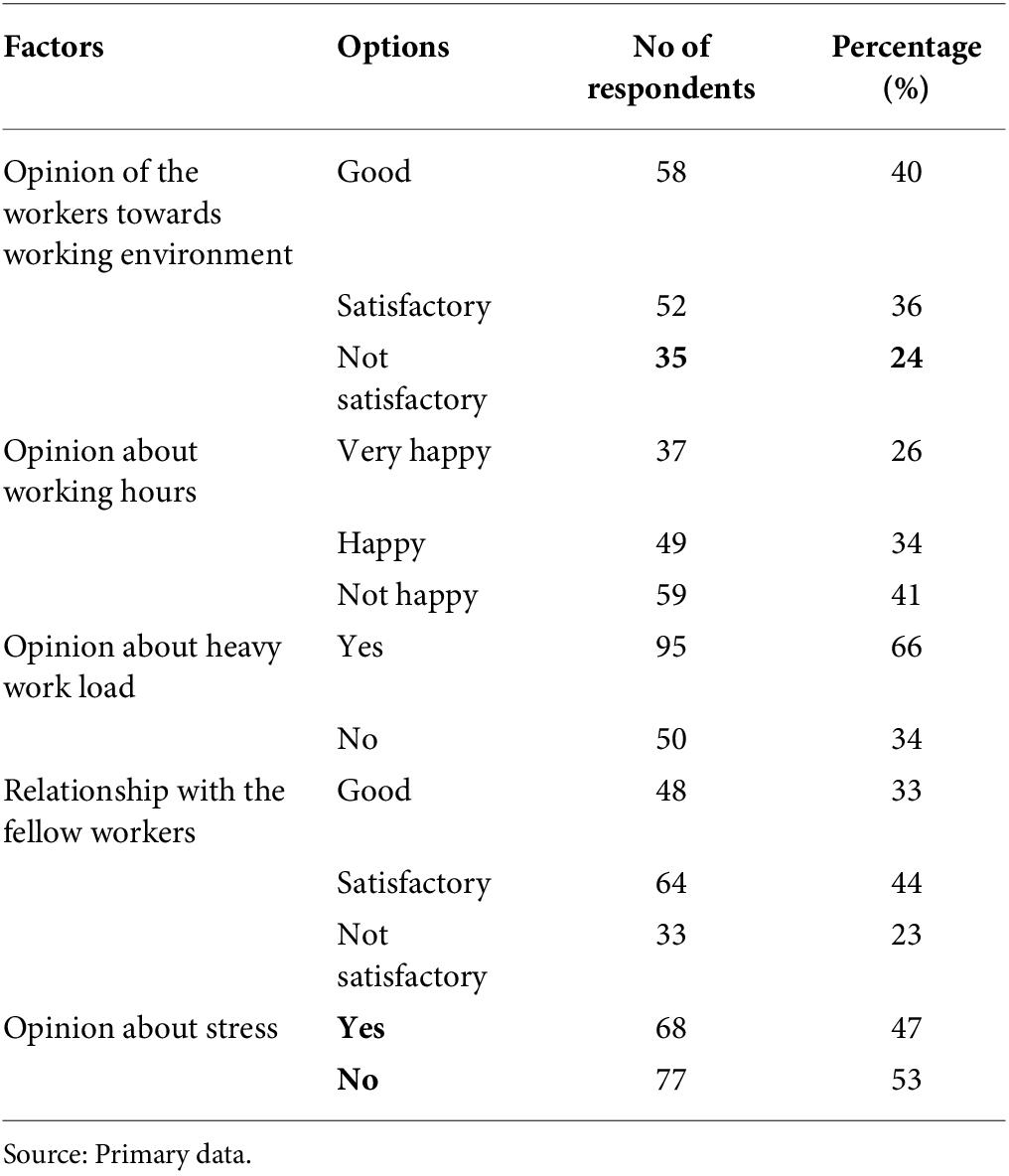
Table 2. Workers attitude towards work.
• Work environment: Among the respondents, 40% rated the work environment as good, 36% as satisfactory, and 24% as unsatisfactory.
• Working hours: With respect to working hours, 26% of the respondents reported being very happy, 34% were happy, while 41% expressed dissatisfaction.
• Workload: A significant proportion of respondents (66%) stated that they faced a heavy workload, whereas 34% reported no such issue.
• Relationships with co-workers: About 33% of respondents reported having good relationships with their co-workers, 44% indicated moderate relationships, and 23% were dissatisfied.
• Work-related stress: In terms of stress, 47% of the respondents acknowledged experiencing work-related stress, while 53% stated that they did not experience any stress.
In Table 3, an analysis of workers’ satisfaction was conducted using variables such as leaves and holidays, salary and welfare measures, supervisor behavior, shift system, and job security among all 145 respondents who participated in the research. The findings are as follows:
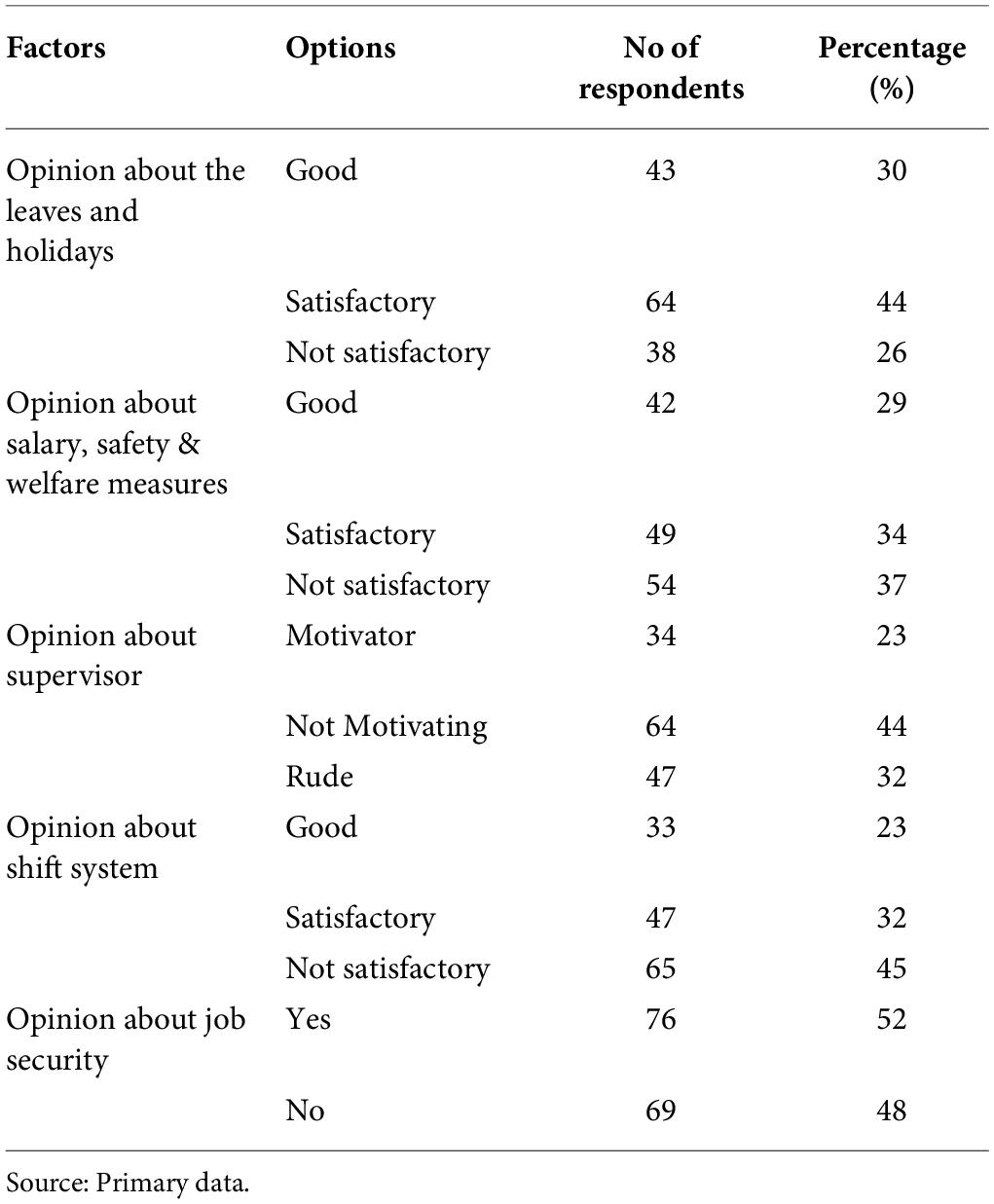
Table 3. Workers satisfaction towards work.
Opinion about leaves and holidays
• 30% of the respondents rated their leaves and holidays as good.
• 44% considered them satisfactory.
• However, 26% were not satisfied with the leaves and holidays provided.
Opinion about salary, safety, and welfare measures
• Only 29% of the respondents found salary, safety, and welfare measures to be good.
• 34% rated them as satisfactory.
• A notable 37% expressed dissatisfaction with these aspects.
Opinion about supervisors
• 23% of the respondents viewed their supervisors as motivators.
• 44% felt that their supervisors were not motivating.
• 32% described their supervisors as rude, indicating a significant concern in this area.
Opinion about the shift system
• 23% of the respondents rated the shift system as good.
• 32% found it satisfactory.
• However, 45% were dissatisfied with the shift system, making it a major area of concern.
Opinion about job security
• 52% of the respondents felt secure in their jobs.
• Meanwhile, 48% expressed concerns about job security, indicating an almost equal division in perception.
Discussion
• Management should help employees understand that they are not just employees, but valuable assets of the organization.
• Management should provide proper leave facilities without disturbing the regular work schedule, for example, by offering restricted holidays or increasing the number of paid leaves.
• Ensuring job security for permanent employees, along with medical facilities, helps retain experienced staff in the organization.
• The shift system should be assigned to employees based on their preferences and willingness.
• Workload should be reduced to allow employees to take greater interest and perform effectively in their jobs.
• Working hours should be adjusted according to the preferences and convenience of the workers.
• A proper grievance redressal system should be implemented to reduce work-related stress among employees.
• Conduct regular safety training, update personal protective equipment (PPE), and implement clear hazard reporting systems to boost trust and morale among workers.
• Conducting regular surveys or informal check-ins can help to understand specific worker needs before implementing programs.
Conclusion
Assigning the right person to the right job enables employees to perform their work efficiently and diligently. A supportive organizational environment motivates employees and encourages flexibility, allowing them to adapt to changing work conditions. Conflicts among employees are managed constructively by the organization. The objectives of the organization are clearly communicated and understood by the employees, ensuring alignment with organizational goals.
The company should continue to inspire and guide employees to achieve these goals. Management plays a key role in directing and supporting employees toward accomplishing the organization’s objectives. By fostering confidence, enthusiasm, and a willingness to contribute, management helps employees actively participate in attaining the organization’s vision.
Funding
The author declares that no financial support was received for the research, authorship, and/or publication of this article.
Conflict of interest
The author declares that the research was conducted in the absence of any commercial or financial relationships that could be construed as a potential conflict of interest.
References
1. Locke EA. The nature and causes of job satisfaction. In: Dunnette MD editor. Handbook of Industrial and Organizational Psychology. Chicago: Rand McNally (1976). p. 1297–349.
2. Barrett P, Barrett M. The role of job satisfaction in employee retention. J Constr Eng Manag. (2007) 133(6):442–9.
3. Shin Y, Cho J. Impact of job insecurity on job satisfaction and turnover intention in the construction industry. J Constr Eng Manag. (2020) 146(4):04020037.
4. Bass BM. From transactional to transformational leadership: learning to share the vision. Organ Dyn. (1990) 18(3):19–31.
5. Gerstner CR, Day DV. Meta-analytic review of leader-member exchange theory: correlates and construct issues. J Appl Psychol. (1997) 82(6): 827–44.
6. Danna K, Griffin RW. Health and well-being in the workplace: a review and synthesis of the literature. J Organ Behav. (1999) 20(3):391–413.
7. Gyi DE, Porter R. Construction safety: improving worker job satisfaction. J Saf Res. (2007) 38(3):303–11.
8. Hinze J, Hallowell MR, Baud D. Construction Safety Management and Engineering. Prentice-Hall (2013).
10. Chan DW, Scott D, Chan AP. Factors affecting the success of a construction project. Int J Proj Manag. (2004) 22(2):45–56.
11. Cheng J, Li H. Social support and employee satisfaction in construction projects. J Constr Manag Econ. (2008) 26(4):437–47.
12. Aprilia SS, Luwiski F, Solahudin A, Sunimah. Impact of Work Environment and Work-Life Balance on Job Satisfaction. (2025).
© The Author(s). 2026 Open Access This article is distributed under the terms of the Creative Commons Attribution 4.0 International License (https://creativecommons.org/licenses/by/4.0/), which permits unrestricted use, distribution, and reproduction in any medium, provided you give appropriate credit to the original author(s) and the source, provide a link to the Creative Commons license, and indicate if changes were made.