Introduction
Bangladesh (BD) is a developing country with a population of approximately 176 million people and a limited land area. Our society is highly stratified, and business opportunities often depend on factors such as quality, social status, and location. Although women represent nearly 50% of the population, the socioeconomic development of BD largely depends on women’s empowerment. Both urban and rural women have significant potential to contribute to economic growth. However, only 7.2% of women are engaged in entrepreneurship in BD, although this number is rising rapidly; in 2018, the number of women-owned enterprises increased by 12%. The majority of female traders are involved in small, medium, and micro enterprises.
Urban and rural women in BD possess immense potential to become sustainable entrepreneurs. However, each group faces specific opportunities and challenges. This research aims to identify the factors influencing women’s entrepreneurship prospects in both rural and urban areas of BD. This research also examines the obstacles that hinder the establishment and growth of female entrepreneurs in these regions.
Currently, there is a growing awareness of the plight of the most marginalized group in society—women—particularly rural women who face the greatest deprivation. Despite these challenges, both rural and urban women have unique skills and capabilities that can lead to successful entrepreneurship. As a consequence, the female workforce, which constitutes half of the total workforce, is gradually advancing in various spheres of life. Women in both rural and urban areas of BD have a positive inclination toward becoming sustainable entrepreneurs, and entrepreneurship is emerging as a prominent career choice for many women at various stages of development.
This research also includes a comparative study of rural and urban women entrepreneurs in BD, focusing on their competencies, capabilities, opportunities, and social perceptions. Additionally, it addresses practical situations and provides recommendations for enhancing women entrepreneurship in the country.
The research also explores how social perceptions influence women’s entrepreneurship in BD and discusses the role of women entrepreneurs in the country’s economic development. Furthermore, it highlights the challenges faced by these entrepreneurs.
In this research, the author presents a comparative analysis of the rural and urban women entrepreneurs in BD. Here, the author aims to create a comprehensive portrait of the challenges and prospects of these women utilizing Likert scale surveys, regression analysis, and chi-square tests.
Research objective
1. To identify the competencies and capabilities of rural and urban women entrepreneurs in Bangladesh.
2. To investigate the challenges faced by rural and urban women entrepreneurs in Bangladesh.
3. To examine the opportunities for rural and urban women entrepreneurs in Bangladesh.
4. To compare the facilities available to and challenges faced by rural and urban women entrepreneurs in Bangladesh.
5. To recognize the determinants affecting women entrepreneurs in Bangladesh.
Research questions
1. To what extent do social perceptions affect rural and urban women entrepreneurship in BD?
2. To what extent does women entrepreneurship influence economic development in BD?
3. To what extent do various challenges affect women entrepreneurship in BD?
Literature review
Entrepreneurship refers to the generation of economic value. It involves taking the initiative to become an entrepreneur—the individual or group who organizes and manages a trade enterprise, striving for financial gain through risk and innovation. Entrepreneurs act as supervisors as well as administrators during the inception and development of an enterprise.
Women entrepreneurs are defined as women or groups of women who establish and run their own businesses. In other words, women entrepreneurs are self-employed persons who set up their businesses and take care of moneymaking concerns. In Bangladesh, both rural and urban women engage in various entrepreneurial activities, yet female entrepreneurs face significant barriers and lag in economic engagement, accreditation, and leadership compared to their male counterparts.
The Government of BD has implemented numerous initiatives to support women entrepreneurship, allocating a budget of approximately one billion for facilities aimed at enhancing women’s entrepreneurial capacities. Significant strategies and regulations have been introduced to promote the expansion of women entrepreneurship (31). Both private and public organizations, as well as various nongovernmental organizations (NGO), are actively promoting women entrepreneurship in BD.
Sectors of women entrepreneurs in Bangladesh
Many women entrepreneurs have started their entrepreneurial journey through various businesses and have successfully run them. The contribution of women entrepreneurs is assuredly amazing in various fields of entrepreneurship. Women entrepreneurs in BD are involved in various sectors, including handicrafts, agricultural products, parlors, textiles, fashion, boutiques, and food delivery services, increasingly moving toward electronic commerce.
The number of women entrepreneurs is increasing day by day, leading to an explosion of female entrepreneurship in BD. Today, these women entrepreneurs play a crucial role in the economic and social development of the country, though they continue to face numerous challenges and hurdles. Nevertheless, they are breaking down barriers, challenging social protocols, and making significant contributions across different fields.
This research focuses on the various factors that affect women entrepreneurship in both rural and urban areas of BD.
Despite their increasing involvement in business, many women in BD encounter significant obstacles when trying to become entrepreneurs or grow their enterprises.
Uncooperative family and community: Women of BD face various restrictions from their families and society.
Shortage of finance: Access to credit is a challenge for all micro-entrepreneurs, but it is particularly difficult for women.
Fear of harassment: Many women entrepreneurs in BD experience violence and injustice across business sectors.
Too much red tape: Procedural and administrative barriers make starting a business particularly challenging for less educated and impoverished women.
Preconceived notions of women’s capabilities: Society often views women’s economic activities and entrepreneurial efforts as inferior to those of their male counterparts.
The role of government and NGOs in women entrepreneurship
Various regulatory bodies and NGOs have supported many rural and urban women in launching and operating their businesses. The BD government has initiated several programs, including the “Gender Action Plan” by the Small and Medium Enterprise (SME) Foundation, aimed at fostering more women entrepreneurs in SMEs through strengthening their administrative as well as technical competence and potential to access credit. The “SME Credit Policies and Programs” was initiated by Bangladesh Bank in March 2010, which arranged special programs for women entrepreneurs to make certain a significant portion of credit funding goes to them. There are several other programs also working for the development of women entrepreneurs.
Scope of rural and urban women to go entrepreneurial
In BD, women in rural households often have sufficient free time during the mornings and afternoons to engage in income-generating activities. However, many rural women in BD struggle to select the right enterprises that require minimal investment. There are many small entrepreneurial opportunities in BD that don’t require significant capital, such as poultry farming, vermiculture, tailoring, and agriculture.
In urban areas of BD, women’s entrepreneurship plays a crucial role in boosting economic development and empowering women. Urban women receive more financial support, team resources, training opportunities, and credit facilities compared to their rural counterparts. Factors contributing to the growth of entrepreneurship in urban areas include corruption, city size, industrial structure, and cultural biases. These factors significantly impact the entrepreneurial initiatives of urban women in BD, influencing their intentions to start and run their businesses effectively.
Research findings indicate that both rural and urban entrepreneurship in BD is influenced by various factors, with rural women face more significant challenges than urban women.
Consequently, the entrepreneurial journey for rural women is more difficult than that of those in other areas. Ultimately, these factors negatively affect all women entrepreneurs in BD, hindering their ability to operate their businesses smoothly. These crucial insights may be applicable to other comparative studies such as ready-made garments (RMG) and small and medium enterprises (SMEs) in BD, as well as other developing countries.
Challenges faced by women entrepreneurs
1. Lack of access to finance: Women entrepreneurs often find it difficult to obtain loans from banks due to the absence of collateral or credit history.
2. Lack of education and training: Many female entrepreneurs lack the skills and knowledge necessary to operate sustainable enterprises.
3. Social and cultural impediment: Women entrepreneurs in BD frequently face various obstacles, including discrimination from male family members, co-workers, and customers.
Legal and documentation problems for women entrepreneurs
Female entrepreneurs in BD face numerous legal and documentation challenges, including:
1. Lack of property rights: Women in Bangladesh generally do not have the same property rights as men, which makes it difficult for them to secure loans needed to launch businesses.
2. Lack of access to legal services: Women entrepreneurs usually do not have access to legal services, making it challenging to defend their enterprises against legal challenges.
3. Lack of documentation: Women entrepreneurs usually do not have the required documentation to launch or operate a business, complicating their ability to access financing, obtain permits, or hire staff.
Hypothesis
H01: There is no important association between urban women’s perceived opportunities and their aspiration to become tenable entrepreneurs.
H02: There is no important alliance between rural women’s perceived opportunities and their aspiration to become tenable entrepreneurs.
H03: There is no important alliance between urban women’s perceived capabilities and their aspiration to become entrepreneurs.
H04: There is no important alliance between rural women’s perceived capabilities and their aspiration to become entrepreneurs.
H05: There is no important alliance between urban women’s social perception and their aspiration to become tenable entrepreneurs.
H06: There is no important alliance between rural women’s social perception and their aspiration to become tenable entrepreneurs.
H07: There is no important alliance between urban women’s individual competencies and their endurable entrepreneurial tendency.
H08: There is no important alliance between rural women’s individual competencies and their endurable entrepreneurial tendency.
H09: Rural entrepreneur mode of sale has no impact on the type of enterprise.
H10: Urban entrepreneur mode of sale has no impact on the type of enterprise.
H11: Share of women entrepreneurs has no impact on the total share of CMSME in Bangladesh.
H12: There is no significant alliance between educational qualification and the type of business.
H13: There is no significant alliance between the location of women entrepreneurs and the mode of sales.
H14: There is no significant alliance between the type of investment source and the percentage of women-run CMSMEs.
H15: There is no significant association between the type of investment sources and the category of women businesses.
H16: There is no important connection between the type of subsector-wise reduction in income of women entrepreneurs and the type of business.
H17: There is no significant association between marital status and the mental stress of women entrepreneurs.
H18: There is no significant association between location and the mental stress of women entrepreneurs.
H19: There is no important connection between the types of CMSMEs and the type of potential investment sources of women entrepreneurs.

Table 1. Urban women’s perceived opportunities.

Table 2. Urban women’s perceived capabilities.

Table 3. Urban women’s social perception.
Data analysis
In this study, the author focuses on both urban and rural women entrepreneurs and businesswomen. Data was collected through direct field study, utilizing both primary and secondary data.
In this paper, the author conducted interviews with 1,620 women. For data analysis, a variety of methods were employed, including a 1–5 Likert scale questionnaire, correlation R test, independent t-test, path coefficient, and Cronbach’s alpha test.
Urban women entrepreneur = 936.
Rural women entrepreneur = 684.
Primary data analysis
Urban women entrepreneur data
Refer to Tables 1–5 for additional information.
Rural women entrepreneur data
Refer to Tables 6–10 for additional information.
Test of hypothesis
H01: There is no important alliance between urban women’s perceived opportunities and their aspiration to become tenable entrepreneurs.
Outcomes in Table 12 disclosed that there is an important connection between perceived opportunities and aspiration to become tenable entrepreneurs of urban women in BD because (P = 0.00 < 0.05). The beta value (r = 0.99) proved that there is a strong positive correlation between perceived opportunities and aspiration to become tenable entrepreneurs of urban women in BD. The R square value proved that 0.9979 of the entire disparity of aspiration to become tenable entrepreneurs is described by perceived opportunities. So, the null hypothesis is true.
H02: There is no important alliance between rural women’s perceived opportunities and their aspiration to become tenable entrepreneurs.
Consequences in Table 14 expressed that there is an important alliance between perceived opportunities and aspiration to become tenable entrepreneurs of rural women in BD. Hence (P = 0.00 < 0.05). The beta value (r = 0.99) expressed that there is a strong positive connection between perceived opportunities and aspiration to become tenable entrepreneurs of rural women in BD. The R square disclosed that 0.9979 of the entire inequality of intention to become sustainable entrepreneurs is described by perceived opportunities. So, the null hypothesis is true.
H03: There is no important alliance between urban women’s perceived capabilities and their aspiration to become tenable entrepreneurs.
Outcomes in Table 16 proved that there is an important connection between perceived capabilities and aspiration to become tenable entrepreneurs of urban women in BD. Hence (P = 0.00 < 0.05). The beta value (r = 0.99) disclosed that there is a strong positive connection between perceived capabilities and aspiration to become tenable entrepreneurs of urban women in BD. The R square disclosed that 0.9980 of the entire disparity of aspiration to become tenable entrepreneurs is described by perceived opportunities. So, the null hypothesis is true.
H04: There is no important alliance between rural women’s perceived capabilities and their aspiration to become entrepreneurs.
Outcomes in Table 18 disclosed that an important alliance exists between perceived capabilities and aspiration to become tenable entrepreneurs of rural women in BD. Because (P = 0.00 < 0.05). The beta value (r = 0.71) expressed that there is a strong positive connection between perceived capabilities and aspiration to become tenable entrepreneurs of rural women in BD. The R square disclosed that 0.71 of the entire inequality of aspiration to become tenable entrepreneurs is described by perceived opportunities. Hence, the null hypothesis is true.
H05: There is no important alliance between urban women’s social perception and their intention to become sustainable entrepreneurs.
Outcomes in Table 20 disclosed that an important connection exists between social perceptions and aspiration to become tenable entrepreneurs of urban women in BD. Hence (P = 0.00 < 0.05). The beta value (r = 0.99) expressed that a strong positive connection exists between social perception and aspiration to become tenable entrepreneurs of urban women in BD. The R square proved that 0.99 of the entire inequality of aspiration to become tenable entrepreneurs is described by social perceptions. So, the null hypothesis is true.
H06: There is no important alliance between rural women’s social perception and their aspiration to become tenable entrepreneurs.
Outcomes in Table 22 express that there is an important connection between social perceptions and aspiration to become tenable entrepreneurs of rural women in BD. Hence 0.05 (P = 0.00 < 0.05). The beta value (r = 0.95) disclosed that a strong positive connection exists between social perception and aspiration to become tenable entrepreneurs of rural women in BD. The R square disclosed that 0.91 of the entire disparity of aspiration to become tenable entrepreneurs is described by social perceptions. Hence, the null hypothesis is true.
H07: There is no important alliance between urban women’s individual competencies and their endurable entrepreneurial tendency.
Outcomes in Table 24 express that there is an important connection between individual competencies and aspiration to become tenable entrepreneurs of urban women in BD. Hence (P = 0.00 < 0.05). The beta value (r = 0.99) disclosed that a strong positive connection exists between individual competencies and aspiration to become tenable entrepreneurs of urban women in BD. The R square proved that 0.99 of the entire inequality of aspiration to become tenable entrepreneurs is described by individual competencies. So, the null hypothesis is true.
H08: There is no important alliance between rural women’s individual competencies and their endurable entrepreneurial tendency.
Outcomes in Table 26 express that a crucial connection exists between individual competencies and endurable entrepreneurial tendency of rural women in BD. Hence (P = 0.00 < 0.05). The beta value (r = 0.998) disclosed that a strong positive connection exists between individual competencies and the sustainability entrepreneurial inclination of rural women of BD. The R square proved that 0.96 of the entire inequality of aspiration to sustainability entrepreneurial inclination is described by individual competencies. Hence, the null hypothesis is true.

Table 4. Urban women’s individual competencies.

Table 5. Urban women’s aspirations to become tenable entrepreneurs.

Table 6. Rural women’s perceived opportunities.

Table 7. Rural women’s perceived capabilities.

Table 8. Rural women’s social perception.

Table 9. Rural women’s individual competencies.

Table 10. Rural women’s aspiration to become tenable entrepreneurs.

Table 11. Correlation between urban women perceived opportunities and aspiration to become tenable entrepreneurs.

Table 12. Regression between urban women perceived opportunities and aspiration to become tenable entrepreneurs.

Table 13. Correlation between rural women perceived opportunities and aspiration to become tenable entrepreneurs.

Table 14. Regression between rural women perceived opportunities and aspiration to become tenable entrepreneurs.

Table 15. Correlation between urban women perceived capabilities and aspiration to become tenable entrepreneurs.

Table 16. Regression between urban women .perceived capabilities and aspiration to become tenable entrepreneurs.

Table 17. Correlation between rural women perceived capabilities and aspiration to become tenable entrepreneurs.

Table 18. Correlation between urban women perceived capabilities and aspiration to become tenable entrepreneurs.

Table 19. Correlation between urban women social perception and aspiration to become tenable entrepreneurs.

Table 20. Regression between urban women social perception and aspiration to become tenable entrepreneurs.

Table 21. Correlation between rural women social perception and aspiration to become tenable entrepreneurs.

Table 22. Regression between rural women social perception and aspiration to become tenable entrepreneurs.

Table 23. Correlation between individual competencies and aspiration to become tenable entrepreneurs.

Table 24. Regression between urban women individual competencies and aspiration to become tenable entrepreneurs.

Table 25. Correlation between rural women individual competencies and endurable entrepreneurial tendency.

Table 26. Regression between rural women individual competencies and endurable entrepreneurial tendency.
Secondary data analysis
Attributes of the participants
In this research, the author used data from two prime NGOs, Association for Social Advancement (ASA) and Bangladesh Rural Business Development (BRBD), in BD. Of which ASA is a private sector and BRBD is a public sector organization.
In the interviewed NGOs, 88% of the women in BRBD were married and about 98% of the women in ASA were married. Almost 33% of the women in ASA are self-literate. These women became literate after joining the micro credit program of ASA to manage financial matters.
Table 28 showed that the participants from the BRBD were more illiterate than the participants from ASA. Again, BRBD women have more secondary education than ASA.

Table 27. Age distribution of the micro credit borrowers.

Table 28. Education level of the women.
If the absolute value of the t-value is greater than the critical value, we reject the null hypothesis. So, the null hypothesis, qualification has no impact on training status, is rejected or not true. So, qualification has a significant impact on the training status of female entrepreneurs of ASA.
For BRBD, t cal = 7.62.
If the absolute value of the t-value is greater than the critical value, we reject the null hypothesis. So, the null hypothesis, qualification has no impact on training status, is rejected or not true. So, qualification has a significant impact on the training status of female entrepreneurs of BRBD.
H: Rural entrepreneur mode of sale has no impact on the type of women entrepreneurship.
Here, the author used an independent t-test, t cal = 2.51.
If the absolute value of the t-value is greater than the critical value, we reject the null hypothesis. So, the null hypothesis, rural entrepreneur mode of sale has no impact on the type of entrepreneurship, is rejected or not true. So, the rural entrepreneur mode of sale has a significant impact on the type of entrepreneurship.
H: Urban entrepreneur mode of sale has no impact on the type of women entrepreneurship.
Here the author used an independent t-test, t cal = 3.11.
If the absolute value of the t-value is greater than the critical value, we reject the null hypothesis. So, the null hypothesis, urban entrepreneur mode of sale has no impact on the type of women entrepreneurship, is rejected or not true. So, the urban entrepreneur mode of sale has a significant impact on the type of women entrepreneurship.
H: Female workforce has no impact on the total workforce.
T-test value for the economic census 2001and 2003 is t cal = 3181.852947.
T-test value for the economic census 2013 is t cal = 3696.549176.
If the absolute value of the calculated t-statistic is larger than the critical value of t, we reject the null hypothesis. For a two-sided 95% confidence interval, use the table of the t-distribution (found at the end of the section) to select the appropriate critical value of t for the two-sided α = 0.05.
So, the null hypothesis, female workforce has no impact on the total workforce, is rejected. The alternative hypothesis, female workforce has a significant impact on the total workforce, is true.
H: Share of women entrepreneurs has no impact on the percentage of CMSME respondents in Bangladesh.

Table 29. Training status of the micro credit borrowers.

Table 30. Sector contribution of women in Bangladesh economy.

Table 31.

Table 32. Selected CMSME-wise respondents.

Table 33. Business category-wise percentage of female employees.

Table 34. Category of business vs. educational qualification.

Table 35. Mode of sales of women traders.

Table 36. Category of business vs. investment sources of women entrepreneurs.
Here, the researcher applied an independent t-test, t cal = −0.822.
In that case, a negative t-value would not cause rejection of the null hypothesis. So, the null hypothesis, share of women entrepreneurs has no impact on the percentage of CMSME respondents in BD, is true.
H: Qualification has no impact on the business category-wise percentage of female employees.
Here, the researcher applied an independent t-test.
For ASA, t cal = −26.07.
So, the null hypothesis, qualification of ASA women entrepreneurs has no impact on the business category-wise percentage of female employees, is true.
For BRBD, t cal = −20.90.
So, the null hypothesis, qualification of BRBD women entrepreneurs has no impact on the business category-wise percentage of female employees, is true.
H: There is no important connection between educational qualification and the type of business of women entrepreneurs.

Table 37. Sector-wise income loss in businesses of women entrepreneurs.
Here, the researcher applied the chi-square test.
The chi-square calculated value = 120.15.
So, chi-square calculated value > chi-square table value.
So, the null hypothesis, that there is no important connection between educational qualification and the type of business of women entrepreneurs, is rejected or not true. So, there is an important connection between educational qualification and the type of business of women entrepreneurs.
H: There is no significant association between the location of women entrepreneurs and the mode of sales.
Here, the author used chi-square test, the chi-square calculated value = 38.212715.
So chi-square calculated value > chi-square table value.
So, the null hypothesis, that no important alliance between the location of women entrepreneurs and the mode of sales, is rejected or not true. So, there is an important connection between the location of women entrepreneurs and the mode of sales.
H: There is no significant association between the type of investment sources and the category of business.
Here, the author used the chi-square test.
The chi-square calculated value = 79.06.
So chi-square calculated value > chi-square table value.
So, the null hypothesis, that there is no notable connection between the type of investment sources and the category of business, is rejected or not true. So, there is an important connection between the type of investment sources and the category of business.
H: There is no significant association between the type of subsector-wise reduction in income of women entrepreneurs and the type of business.
Here, the author used chi-square test.
H: There is no significant association between educational qualification and knowledge on stimulus package.
Here, the researcher applied the chi-square test.

Table 38. Knowledge vs educational qualification.

Table 39. Educational qualification vs. holding trade license by women entrepreneurs.

Table 40. Financial sources of women entrepreneurs.
The chi-square calculated value = 63.65.
So chi-square calculated value > chi-square table value.
So, the null hypothesis, that there is no significant association between educational qualification and knowledge on the stimulus package, is rejected or not true. So, there is a significant association between educational qualification and knowledge on stimulus package.
H: There is no important alliance between educational qualification and holding a trade license by women entrepreneurs.
Here, the researcher employed chi-square test.
The chi-square calculated value = 83.0416.
So chi-square calculated value > chi-square table value.
So, the null hypothesis, that there is no important connection between educational qualification and holding a trade license. So, there is a crucial connection between educational qualification and holding a trade license for women entrepreneurs of BD.
H: There is no significant association between the type of CMSMEs and potential investment sources.
Here, the researcher employed the chi-square test.
The chi-square calculated value = 110.71.
Here, the chi-square calculated value is greater than the chi-square table value.
So, the null hypothesis, that there is no crucial connection between the type of CMSMEs and potential investment sources, is rejected or not true. So, there is an important connection between the type of CMSMEs and potential investment sources.
H: There is no significant association between location and challenges faced by the workers.
Here, the researcher applied chi-square test.

Table 41. Location-wise challenges faced by the women workers.

Table 42. Reduction of income of the women entrepreneurs.
The chi-square calculated value = 11.104.
Here, the chi-square calculated value is less than chi-square table value.
So, the null hypothesis, that there is no significant association exists between location and challenges faced by the workers, is true.
H: Reduction of the average income of February has no impact on the reduction of the average income of June.
Here, the author used an independent t-test, t = 277.38.
If the absolute value of the t-value is greater than the critical value, we reject the null hypothesis. So, the null hypothesis, reduction of average income in February has no impact on the reduction of average income in June, is rejected or not true. So, there is a significant impact of the reduction of the average income in February on the reduction of the average income in June.
H: There is no significant association between the average income in February and the average income in June.
Here, the author used the Pearson r test, r = −0.090033218.
So, a negative correlation exists between the average income in February and the average income in June.
H: There is no important alliance between women entrepreneurs’ marital status and primary spending area of the informal sector female workers.
Here, the author used the chi-square test.
The chi-square calculated value = 178.024.
Because chi-square calculated value is greater than the table value, the null hypothesis, that there is no remarkable association between marital status and primary spending area of the informal sector female workers, is rejected or not true. So, there is a crucial connection between women entrepreneurs’ marital status and primary spending area of the informal sector female workers.
H: There is no significant relationship between the change in food expenditure and demographic attributes of female entrepreneurs.
Here, the author used the chi-square test.

Table 43. Primary spending area vs. marital status of the informal sector women workers.

Table 44. Location-wise expenditure of women entrepreneurs.

Table 45. Location vs monthly food expenditure.
H: There is no significant relationship between the change in food expenditure and the respondents’ household (HH) status.
Here, the author used the chi-square test.
H: There is no significant relationship between the change in food expenditure and the location of women entrepreneurs.
Here, the researcher applied chi-square test.
The chi-square calculated value = 0.57.
Because chi-square calculated value is less than the table value, the null hypothesis, that there is no significant relationship between the change in food expenditure and the location of women entrepreneurs, is true.
H: There is no significant association between the marital status and the type of mental stress.
Here, the author used the chi-square test.
The chi-square calculated value = 55.8806.

Table 46. Mental stress of women entrepreneurs by marital status and locations.

Table 47. Location vs type of stress.

Table 48. Basic needs of rural and urban women entrepreneurs.
Based on the result, the null hypothesis, that there is no significant association between the marital status and the type of mental stress, is rejected. So, there is a significant association between the marital status and the type of mental stress.
H: There is no significant association between the location and the mental stress of women entrepreneurs.
Here, the author used the chi-square test.
The chi-square calculated value = 4.04.
Based on the result, the null hypothesis, that there is no significant association between the location and the mental stress of women entrepreneurs, is true.
H: Potential challenges for women in joining the labor market have no impact on their needs in rural locations.
Here, the author used an independent t-test, t = −0.94.
In that case, a negative t-value would not cause rejection of the null hypothesis. So, the null hypothesis, that potential challenges for women in joining the labor market have no impact on their needs in rural locations, is true.
H: Potential challenges for women in joining the labor market have no impact on their needs in urban locations.
Here, the author used an independent t-test, t = −2.55.
In that case, a negative t-value would not cause rejection of the null hypothesis. So, the null hypothesis, that potential challenges for women joining the labor market have no impact on their needs in urban locations, is true.
H: There is no significant association between the location and the women informal sector workers’ need for joining work.
Here, the author used the chi-square test.
The chi-square calculated value = 5.895.
So, chi-square calculated value < chi-square table value.
So, the null hypothesis, that there is no significant association between the location and the women informal sector workers’ need for joining work, is true.
H: There is no significant association between rural women’s needs and their potential challenges.
Here, the author used an independent t-test.
H: There is no significant association between the needs of urban women and their potential challenges.
Here, the author used an independent t-test.
Source: Analysis from the stimulus package circular by the Bangladesh Bank.
H: There is no significant relationship exists between the female entrepreneurs’ educational status of SMEF 2009 and BIDS 2017.
Here, the author used regression, r = 0.34.
So, a weak positive correlation exists between the educational status SMEF 2009 and BIDS 2017.
H3: Woman entrepreneurship has no relation to family/husband’s business.
Here, the author used a regression test, r = 1.
So, the business of women perfectly correlated with either the parents’ or the husband’s business.
Years of experience as women entrepreneurs, 2017:
H: There is no significant association between year-wise business type and business documents.
Here, the researcher applied the chi-square test.
The chi-square calculated value = 15.99.
So, chi-square calculated value > chi-square table value.
So, the null hypothesis, that there is no significant association between year-wise business type and business documents, is rejected or not true. So, there is a significant association between year-wise business type and business documents.
H: Initial capital has no impact on the current capital of SMEF business.
Here the author used an independent t-test.
In terms of SMEF, t = −0.37.
In that case, a negative t-value would not cause rejection of the null hypothesis. So, the null hypothesis is accepted. So, the initial capital has no impact on the current capital of the SMEF business is true.
H: Initial capital has no impact on the current capital of BIDS business.
In terms of BIDS, t = 0.06850.
If the absolute value of the t-value is greater than the critical value, we reject the null hypothesis. So, the null hypothesis, that initial capital has no impact on the current capital of BIDS business, is rejected or not true.
H: Current investment of SMEF is not related to the current investment of BIDS.
Here, the author used the Pearson r test, r = 0.36.
So, the current investment of SMEF is positively related to the current investment of BIDS. There is a weak positive correlation exists between the current investment of SMEF 2009 and BIDS 2017.
H: There is no significant association between the IT document of business and the type of business organization.
Here, the author used the chi-square test.
The chi-square calculated value = 15.99.
So, chi-square calculated value > chi-square table value.
So, the null hypothesis, that there is no significant association exists between the IT document of business and the type of business organization, is rejected or not true.
H: There is no significant association between the types of impediments and the types of business organizations.
Here, the researcher employed r chi-square test.
The chi-square calculated value = 82.15.
So, chi-square calculated value > chi-square table value.
So, the null hypothesis, that there is no significant association between the types of impediments and the types of business organizations, is rejected or not true.
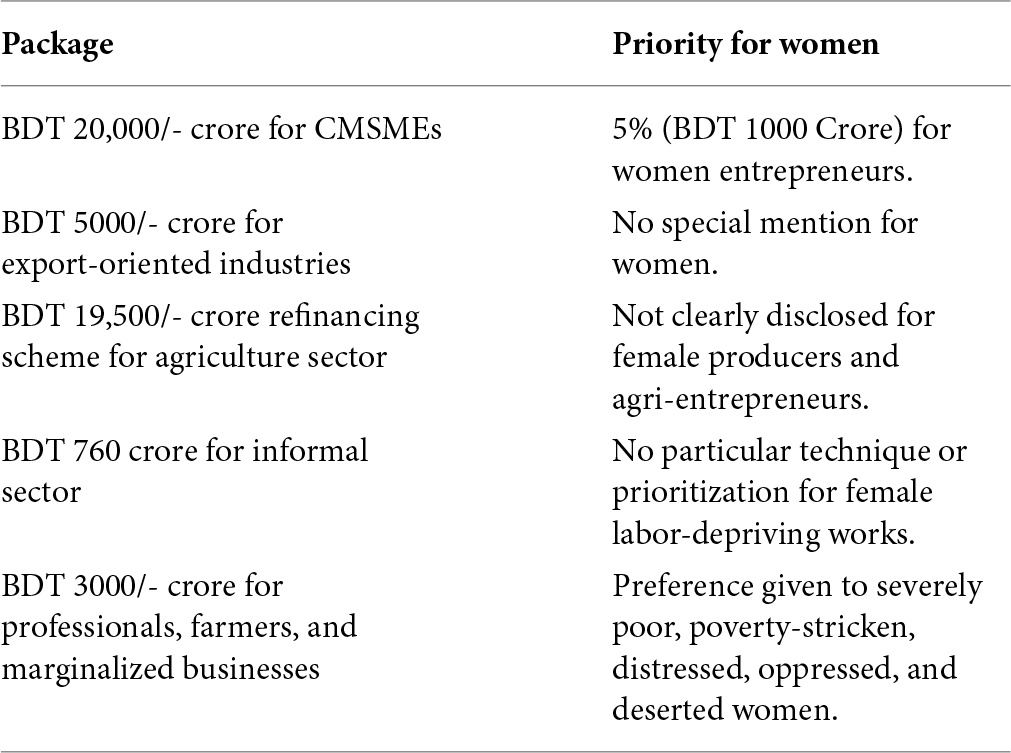
Table 49. Government initiatives for women entrepreneurs.

Table 50. Education level of women traders.
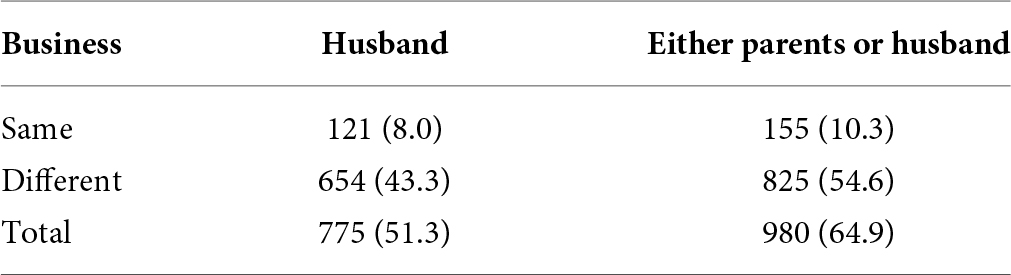
Table 51. Family business history 2017.

Table 52. Type of business vs document.
Discussion and analysis
In this research, the author showed that urban women of BD received more opportunities to become entrepreneurs (Table 1). Here, the author also found that urban women of BD are more capable of being entrepreneurs (Table 2).
In this paper, the author disclosed that urban women face less negative social perception as active entrepreneurs (Table 3). This paper also found that urban women in BD have more competencies to become entrepreneurs (Table 4). The researcher also expressed that urban women have more aspirations to become tenable entrepreneurs (Table 5).
In this paper, the author also found that rural women of BD have fewer perceived opportunities to become tenable entrepreneurs (Table 6). This paper also showed that rural women have fewer capabilities to become tenable entrepreneurs (Table 7). Here, the author found that rural women face more negative social perceptions to become tenable entrepreneurs (Table 8). In this paper, the author showed that rural women have the same individual competencies as urban women in BD (Table 9). Here, the researcher also showed that rural women have comparatively less aspiration to become tenable entrepreneurs (Table 10).
In this paper, the author found that an important association exists between perceived opportunities and aspiration to become tenable entrepreneurs of urban women of BD (Tables 11, 12).
The research shows that (Tables 13, 14) there is a crucial connection between perceived opportunities and aspiration to become tenable entrepreneurs of urban women in BD. The research found that urban women entrepreneurs get more opportunities, which enables them to become entrepreneurs (Tables 15, 16).
The research shows that there is a crucial connection (Tables 17, 18) between perceived opportunities and aspiration to become tenable entrepreneurs of rural women in BD. The research found that if the rural women in BD get more opportunities, they become more tenable entrepreneurs.

Table 53. Source of capital vs type of enterprise.

Table 54. Type of enterprise vs amount of investment.
The research found that there is a notable connection between perceived capabilities and aspiration to become tenable entrepreneurs of urban women in BD (Tables 19, 20). In this research, the author found that urban women have more capabilities to become entrepreneurs.
The research showed that there is a notable bonding between perceived capabilities and aspiration to become tenable entrepreneurs of rural women in BD (Table 21, 22). The research found that rural women have fewer capabilities to become tenable entrepreneurs.
The author proved that there is a robust connection between social perceptions and the aspiration to become tenable entrepreneurs of urban women in BD. The research found that positive social perception of urban women tends to make them become successful entrepreneurs (Tables 23, 24).
Here, the author found that (Tables 25, 26) there is a crucial connection between social perceptions and aspiration to become tenable entrepreneurs of rural women in BD. The research found that negative social perception of rural women hinders their aspiration to become successful entrepreneurs.
Here, the researcher also found that there is a significant bonding between individual competencies and aspiration to become tenable entrepreneurs of urban women in BD. The author proved that urban women have many competencies to become successful entrepreneurs (Table 27).
The research showed that there is a crucial connection between individual competencies and endurable entrepreneurial tendency of rural women in BD. The research found that if the individual competencies of the rural women are increased, the inclination of becoming entrepreneur is also increased (Table 28).
The research showed that (Table 29) qualification has a significant impact on the training status of female entrepreneurs of ASA. The research found that educated women have a greater chance of getting training.
The research also found that qualification has a significant impact on the training status of female entrepreneurs of BRBD. The research found that educated women of BRBD are getting more training.
The research found that (Table 30) rural entrepreneurs’ mode of sale has a significant impact on the type of entrepreneurship. The research found that rural women have only 2% online mode of business, because internet facilities are very low in the rural areas of Bangladesh. Again, the research found that 65% of rural women entrepreneurs used retail sales as a mode of sales. Rural women entrepreneurs have very few showrooms, wholesale, and export businesses. So, the availability of the mode of sale produced such type of rural entrepreneurs in BD.

Table 55. Type of organization vs IT documents.

Table 56. Type of organization vs types of impediments.
The research showed that the urban entrepreneur mode of sale has a significant impact on the type of women entrepreneurship. The urban women are 18% online businesswomen, due to the easily available internet. Again, urban women have fewer wholesale and retail businesses in BD. Again, 48% urban women have showrooms/malls. Urban women entrepreneurs have more export facilities than rural women entrepreneurs in BD. So, the mode of sales has a great impact on the type of entrepreneurship in BD.
The research proved that the female workforce has a significant impact on the total workforce of BD. The research found that female entrepreneurs hold a major portion of the total entrepreneurs in BD. And the percentage of the female workforce is increasing year by year. In Bangladesh female workforce is actively engaged with proprietorship, unpaid family workers, full-time workers, part-time workers, and casual workers (Table 31).
The research found that (Table 32) the share of women entrepreneurs has no impact on the percentage of CMSMEs respondents in BD. The researcher found that women entrepreneurs of BD are independent from CMSME percentage of BD. Owners of women entrepreneurs in the sectors of retail shops, jute products, and handicrafts are much larger than CMSME respondents of BD.
The research found that the qualification of ASA women entrepreneurs has no impact on the business category-wise percentage of female employees. Here, the author proved that the qualification of women entrepreneurs of BD not influence their business category-wise percentage (Table 33).
This research showed that (Table 34) the qualification of BRBD women entrepreneurs has no impact on the business category-wise percentage of female entrepreneurs. So, women with different levels of education can occupy different categories of businesses in BD.
This research showed that there is a crucial connection between educational qualification and the type of business of women entrepreneurs. This research found that women in BD whose education level is below HSC are mostly occupied in cottage and micro entrepreneurship. This research also found that women whose education level is above HSC are mostly occupied in SMEs.
The research showed that there is an important connection between the location of women entrepreneurs and the mode of sales. The research found that the mode of sales is strongly influenced by the location of women entrepreneurs of BD (Table 35).
The research showed that (Table 36) there is a robust link between the type of investment sources and the category of women in businesses in BD. This research found that different investment sources influenced the category of women’s business. This research found that different NGOs are the main investment source of cottage, micro, and SME of BD. Banks are another major investment sources of women entrepreneurs in BD.
This research disclosed that there is a crucial connection between educational qualification and knowledge of the stimulus package. The research found that women entrepreneurs who have higher educational qualifications know about the stimulus package of entrepreneurship. Again, the illiterate and low-educated women do not know about the stimulus package for women businesses (Table 38).
The research found that there is a robust connection between educational qualification and holding a trade license among women entrepreneurs in BD. The research disclosed that educated women entrepreneurs are holding a valid trade license, while illiterate and lower educated women are not holding a valid trade license in BD (Table 39).
The research found that there is a pivotal link between the type of CMSMEs and potential investment sources in BD. The research found that there is no important connection between location and challenges faced by the workers in BD. The research proved that rural and urban women entrepreneurs faced the same challenges in BD (Table 40).
The research found that there is a notable reduction of the average income in February as against reduction of average income in June of women entrepreneurs in BD (Table 37). This research found that in this year the average income of women entrepreneurs decreased from February to June. The income reduction in June is severely influenced by the income reduction in June.
The research also shows that (Table 37) there is a negative correlation between average income in February and average income in June.
This research showed that there is a crucial connection between women entrepreneurs’ marital status and primary spending area of the informal sector female workers in BD. Research found that the food expenditure is highest for unmarried and widowed women entrepreneurs of BD. This research disclosed that only widowed and married women save their income for future investment (Table 43).
This research showed that (Table 44) there is no important association between the change in food expenditure and the location of women entrepreneurs. So, rural and urban women entrepreneurs’ food expenditure is the same.
This research showed that there is a remarkable connection between marital status and the type of mental stress experienced by women entrepreneurs in BD. This research found that divorced and widowed women mostly faced severe/extreme type of mental/physical stress in our society (Table 46).
The research found that there is no important connection between the location and the mental stress of women entrepreneurs. This research disclosed that the types of stress faced by rural and urban women entrepreneurs are the same. The research found that both rural and urban women entrepreneurs faced severe/extreme impact of stress mostly (Table 47).
This research disclosed that (Table 48) possible challenges to females in BD to start entrepreneurship have no impact on their needs in rural locations. So, the needs of rural women cannot hinder the potential challenges for women in joining the labor market.
This research also found that (Table 48) the probable challenges for females in BD to enter entrepreneurship have no impact on their needs in urban locations, which indicates that the needs of urban women cannot influence the potential challenges for women in joining the labor market.
In Table 41, the author analysis the Location-wise challenges faced by the women workers of Bangladesh. This research proves that there is no significant association between the location and the women informal sector workers’ needs for joining work in BD. So, rural and urban women have the same type of needs in their entrepreneurial journey. This research found that the main need of all rural and urban women is work opportunities. Again, rural women have more health safety issues than urban women (Table 49). In Table 42, the author analysis the reduction of income of the women entrepreneurs of Bangladesh.
This research showed that there is a weak positive correlation between the educational statuses of SMEF 2009 and BIDS 2017, which indicates that the educational status of women entrepreneurs in BD has not improved very much (Table 50).
This research found that the husband’s business perfectly correlated with either the parents’ or the husband’s businesses in BD women entrepreneurs. This research found that most of the women entrepreneurs have different businesses from their husbands and parents (Table 51).
The research showed that (Table 52) there is a notable connection between year-wise business type and business documents, which indicates that different women business organizations have the same type of business documents. In BD, all types of women businesses need the same documents such as trade license, tax identification number (TIN), value added tax (VAT) Registration, showrooms, and the like.
The research proved that initial capital has no impact on the current capital of SMEF businesses in BD, which indicates that the maximum number of women entrepreneurs in BD started their SMEF business with a small initial capital, but their current capital varies from their initial capital. It also refers that the initial or primary capital does not affect the current capital of women entrepreneurs. The research found that if the women entrepreneurs started their business from their own source/fund and bank, then their current capital is very high from their initial capital, which indicates that women entrepreneurs performed well. The research also disclosed that if the source of initial capital is husband/parents’ money or friend/relatives’ funds, then the current capital is decreased from the initial capital, and the women entrepreneurs make a loss.
In Table 45, the author analysis the Location vs. monthly food expenditure of women entrepreneurs of Bangladesh. This research also found that initial capital has an impact on current capital of BIDS business, so in terms of BIDS business, the initial capital has a significant impact on the current capital (Table 54).
This research found that the current investments of SMEF are positively related to the current investments of BIDS. There is a weak positive correlation between the current investment of SMEF 2009 and BIDS 2017. So, if the initial capital increases, the current capital of women entrepreneurs also increases (Table 54).
The research found that there is a significant association between the IT document of business and the type of business organizations in BD, which indicates that different businesses under BIDS and SMEF need the same IT documents. So, all types of businesses, including cottage, micro, agriculture, handicrafts, retail, wholesale, and jute products, need similar IT documents, such as a computer, internet access, an email account, a business website, and membership in a business association (Table 55).
Additionally, this research found that there is a significant association between the types of impediments faced and the types of business organizations run by women in BD. SMEF businesses encounter more impediments from both family and society, whereas BIDS business organizations face fewer family and social problems (Table 56).
In Table 53, the author analysis the source of capital vs. type of women enterprise of Bangladesh. Here, the researche also describes (Figure 1) the percentage of CMSMESs categorized by type. This figure shows that 55% of women entrepreneurs are engaged in micro industries, 33% in cottage industries, 10% in small businesses, and only 2% in medium-sized enterprises.

Figure 1. Category-wise survey of percentage of CMSMEs.
In Figure 2, the author describes the sources of investment for women-run CMSMEs. Here, the author found that 49% of women rely on NGOs as their primary source of investment. Additionally, 44.7% of women entrepreneurs use personal savings for their businesses, while 27.7% receive income from family. Sources such as banks and other credit options account for 13% of their investments, and. 10% of female entrepreneurs also rely on bank funding. Furthermore, 6% of women invested their income into other businesses.

Figure 2. Sources of investment of women-run CMSMEs.
The author also describes the subsector-wise reduction in income among women entrepreneurs in Figure 3. This figure indicates that income in the garment accessories sector has decreased by 75%. Beauty parlor owners experienced a 72% drop in income, while tailors’ income has reduced by 59%. Other sectors, including agricultural products, retail shops, online businesses, health-related services, and IT, have also seen more income reductions.

Figure 3. Subsector-wise reduction in income of women entrepreneurs.
In Figure 4, the author graphically represents potential measures taken by women entrepreneurs.
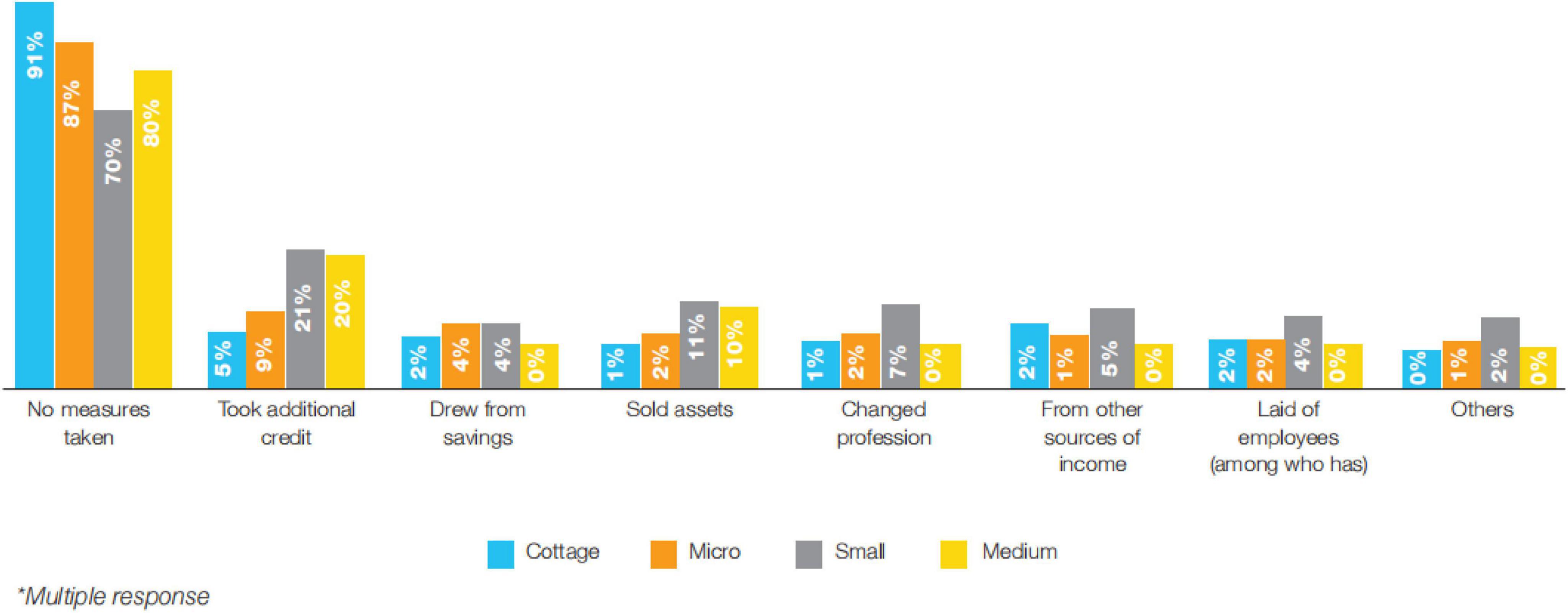
Figure 4. Potential measures taken by women entrepreneurs.
Conversely, the challenges faced by women entrepreneurs are also illustrated in Figure 5. About 48% women cite a lack of proper information as a major challenge. Additionally, 29% women expressed that high interest rates pose another barrier to becoming sustainable entrepreneurs. Furthermore, 19% noted that stringent terms imposed by banks hinder business operations. Other challenges faced by women entrepreneurs in BD include discriminatory behavior (13%) and a lack of required documentation (7%).
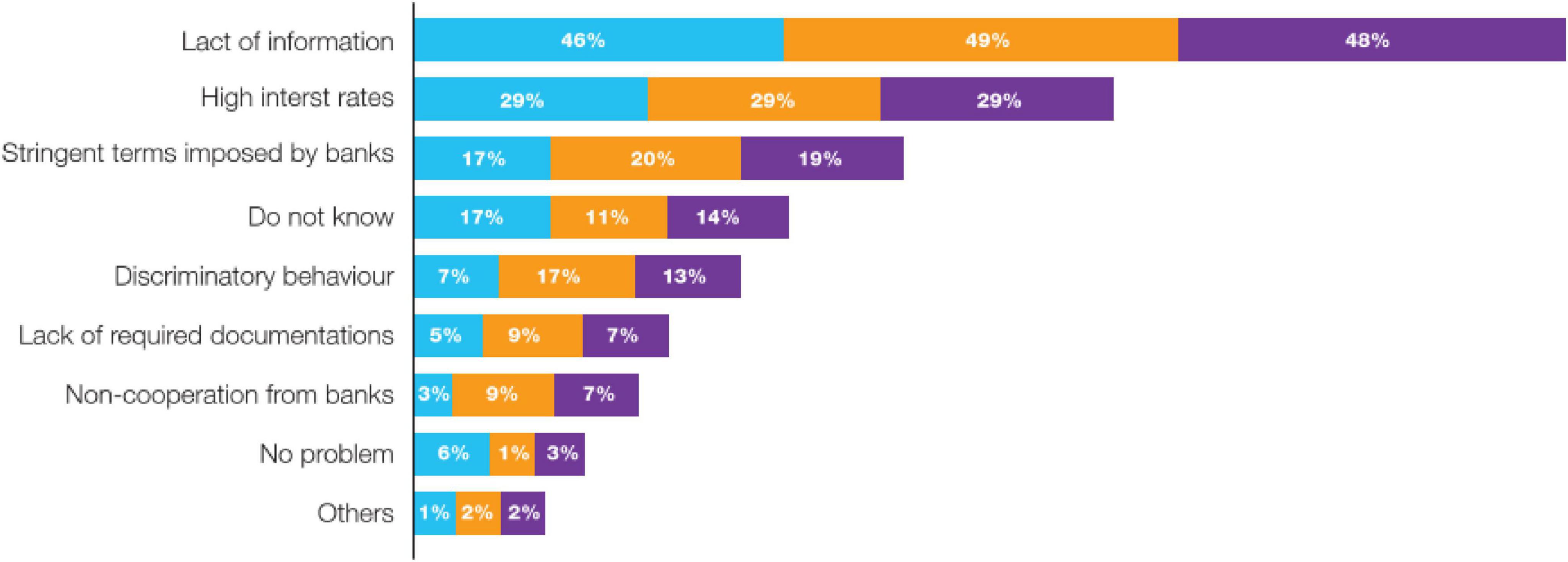
Figure 5. Challenges of the women entrepreneurs.
Figure 6 visually explains the reduction in income among women workers. According to this figure, the income of tailors has decreased by 60%, while construction workers have experienced a 78% reduction. Agricultural workers’ income has dropped by 70%, followed by decreases in income for those in handicrafts, hawking, food processing, and other areas.

Figure 6. Reduction of income of women workers.
Finally, Figure 7 graphically depicts the spending sectors of women entrepreneurs in BD. This graph shows that food expenditure constitutes the largest portion of expenses for female entrepreneurs, accounting for approximately 57.40%. Additionally, women entrepreneurs allocate 7.30% of their income to their children’s expenses. Other expenditure categories include health expenditure, personal expenditure, savings, and so on.

Figure 7. Spending sector of women entrepreneurs.
The author analyzes the immediate impact of income reduction on families of women informal sector workers through Figure 8. This figure shows that family tension is the most significant consequence of income reduction, affecting about 56% of families. Other impacts include mental stress, unfavorable attitudes from family members, and instances of mental and physical abuse, including harsh words directed at family members.

Figure 8. Immediate impact of reduction of income in families of women informal sector workers.
In Figure 9, the author explains the support needed for women informal sector workers to survive. This figure indicates that 83% women entrepreneurs require cash assistance. Additionally, other needs include work opportunities (31%), food support (28%), and training (4%).

Figure 9. Support needed for the women informal sector workers to survive.
Figure 10 describes the potential challenges women face when joining the labor market. Almost 12% of women report facing no work-related challenges, while 3% encounter family obstacles, 1% deal with accommodation problems, and another 3% face transportation issues.

Figure 10. Potential challenges for women in joining the labor market.
Figure 11 outlines the basic needs of rural and urban women entrepreneurs in BD. It reveals that 69% of women need work opportunities, 35% require health and safety, 24% emphasize the importance of ensuring social distancing in the workplace, and 22% seek a safe work environment. Additionally, 2% desire a safe transportation system.

Figure 11. Basic needs of rural and urban women entrepreneurs.
The author analyzes the year-wise capital needs of women entrepreneurs in BD through Figure 12. This figure shows that 19% of women entrepreneurs need capital for 5 years, 30.2% require capital for 6–10 years, 20.5% need 11–15 years, and 12% need 21 or above years of capital.

Figure 12. Year-wise source of capital.
Conclusion
Women’s entrepreneurship plays a very significant role in the economic upliftment of BD. Both rural and urban women entrepreneurs contribute by creating jobs, generating income, and increasing the tax base. While the growth of women entrepreneurship faces several challenges, numerous opportunities also exist. With the support of the government and other organizations through financial collaboration, training and instruction, guidance, and the removal of legal and documentation obstacles, women entrepreneurs in BD can become more successful. This support will help combat gender discrimination and empower women.
In rural BD villages, women have the potential to foster an entrepreneurial culture in an underdeveloped area. These rural women contribute to our economy through self-employment and by creating business opportunities for other underprivileged women. This research highlights the pivotal characteristics and perceptive attributes of both village and urban female entrepreneurs in BD.
This research disclosed the unique and intellectual factors, together with moneymaking and non-economic inspiration, risk-taking reliance, capabilities, competence, decision-making ability, and creativity of rural and urban women in BD, that influence the intention of rural and urban women to become sustainable entrepreneurs. These factors enhance their determination to access the business world and effectively operate their enterprises. The research outcomes indicate that challenges such as the mode of sale, credit systems, educational status, inadequate facilities, technical problems, and promotional complexities affect urban and rural women in the micro, small, and medium sectors. As a consequence, women entrepreneurs face greater vulnerabilities compared to their male counterparts. Finally, these hurdles detrimentally influence women entrepreneurs. especially those in rural areas, hindering their ability to operate successfully. The evaluative outcomes of this research may also apply to other sectors such as RMG, textile, and tannery industries in BD and other countries.
Funding
The author declares that no financial support was received for the research, authorship, and/or publication of this article.
Conflict of interest
The author declares that the research was conducted in the absence of any commercial or financial relationships that could be construed as a potential conflict of interest.
Bibliography
1. Abdin MJ. SME Cluster Development Key to Speedy Industrial Growth. The Financial Express (2015). 2015 p.
3. Alam MS, Ullah MA. SMEs in Bangladesh and their financing: an analysis and some recommendations. Cost Manag. (2006) 34(3):57–72.
4. Alam MS, Ullah MA. SMEs in Bangladesh and their financing: an analysis and some recommendations. Cost Manag. (2013) 34(3):56–64.
5. Asian Development Bank.Asia SME Finance Monitor. Philippines: Asian Development Bank (2014). p. 123–6.
6. Badrul HM, Akhter T. Small and medium enterprises financing in Bangladesh: the missing middle. Int J Manag Bus Res. (2014) 4(4):296–305.
7. Bangladesh Bank.Small and Medium Enterprise (SME) Credit Policies & Programmes. Dhaka: Bangladesh Bank (2010). p. 5–8.
8. Bangladesh Bank, SME & Special Programmes Department.Master Circular for SME Financing (SMESPD Circular No-1). Dhaka: Bangladesh Bank (2016). p. 1–2.
9. Bosri R. SME financing practices in Bangladesh: scenario and challenges evaluation. World J Soc Sci. (2016) 6(2):39–50.
10. Chowdhury MSA, Azam MKG, Islam S. Problems and prospects of SME financing in Bangladesh. Asian Bus Rev. (2013) 2:51–7.
11. Acharya J. Rural Credit and Women Empowerment: Case Study of the Janashakthi Program in Hambantota District, Srikanta. M.Sc. Thesis, No. 94-5, Bangkok: Asian Institute of Technology (1994).
12. Ackerly B. Testing tools of development: credit programs, loan involvement and women’s empowerment. IDS Bull. (1995) 26(3):56–68.
13. Ahmed SM, Adams A, Chowdhury AMR, Bhuiya A. Income-earning women from rural Bangladesh: changes in attitudes and knowledge. Empowerment. (1997) 4:1–12.
14. Ahmed A, McQuaid RW. Entrepreneurship, management, and sustainable development. World Rev Entrep Manag Sustain Dev. (2005) 1(1):6–30.
15. Ahmed SU. Entrepreneurship and Management Practices among Immigrants from Bangladesh in the United Kingdom. Unpublished Doctoral Dissertation, London: Brunel University (1981).
17. Ahmed SU. Entrepreneurship development with some reference to Bangladesh, entrepreneurship and management in Bangladesh. In: Mannan MA editor. Research Monograph. Bangladesh: Bureau of Business Research (BBR), Faculty of Commerce, University of Dhaka (1987).
19. Amin R, Ahmed AU, Chowdhury J, Ahmed M. Poor women’s participation in income generating projects and their fertility regulation in rural Bangladesh: evidence from a recent survey. World Dev. (1994) 22(4):555–65.
20. Amin S, Pebley A. Gender inequality within households: the impact of women’s development program in 36Bangladeshio Villages. In: Special Issue on Women, Development and Change. (Vol. 22). The Bangladesh Development Studies, The Bangladesh Institute of Development Studies (BIDS) (1994). p. 121–55.
21. Apte JK. Coping strategies of destitute women in Bangladesh. Food Nutr Bull. (1988) 10(3):121–55.
22. Arefin K, Chowdhury MR. Small women entrepreneurship in Dhaka city: an appraisal. Maneggiare. (2008) 4:45–55.
24. Bagozzi RP. Structural equation models in experimental research. J Market Res. (1977) 14(May):209–26.
26. Bagozzi RP. Attitudes, intentions, and behavior: a test of some key hypotheses. J Personal Soc Psychol. (1981) 41:607–27.
27. Begum R. Entrepreneurial performance of women entrepreneurs in Bangladesh. J Bus Stud. (2002) XXIII(2):343–55.
28. Begum R. Determining entrepreneurial success status of women entrepreneurs. J Bus Stud. (2003) XXIV(1):127–36.
29. Begum R, Uddin IM, Ahmed MM. Role of the Grameen bank in enhancing the socio-economic condition of women: a study on Bazar Para at Gomastapur. J Bus Stud. (2005) XXVI(1):15–35.
30. Byrne BM. Structural Equation Modeling with Lisrel, Prelis, and Simplis: Basic Concepts, Applications, and Programming. Mahwah, NJ: Lawrence Erlbaum Associates (1998).
31. Huq F, Moyeen A. Supply Chain Management and Competitive Advantage: A Study On Bangladeshi Business Organizations. (2002).
32. Roy I. The socio-economic contribution of women entrepreneurs in Bangladesh. Glob J Manag Bus Res. (2016) 16(B5):13–9. Available online at: https://journalofbusiness.org/index.php/GJMBR/article/view/2018
© The Author(s). 2026 Open Access This article is distributed under the terms of the Creative Commons Attribution 4.0 International License (https://creativecommons.org/licenses/by/4.0/), which permits unrestricted use, distribution, and reproduction in any medium, provided you give appropriate credit to the original author(s) and the source, provide a link to the Creative Commons license, and indicate if changes were made.