Introduction
The oil production is still the mainstay of the economy of Nigeria; it aids power generation, provides foreign exchange, and serves as a way of providing revenue that promotes Nigerians’ income. According to (1), the process of bringing current equipment, especially during production, transportation, and recycling, as well as the keeping of oil and gas, human natural feature, has resulted in endangering our surroundings within and outside. Structures of water were destroyed, resulting in massive damages of water and animals (2). It was reported that available farm produce has been turned into wasteland as a result of weakness of fertility of the soil and infections brought about by contaminated land leading to the destruction of fertility of the soil, land, water, and gaseous substances are on the increase (3). The report of the media organization whereby an uprising of some youths in the oil communities from the various oil-producing communities who have been treated unfairly by multinational companies “collecting gold in their land and leaving nothing in return” (4).
Rioting youths have killed numerous multinational company staff, resulting in the loss of volumes of wealth and putting off production of oil in a red alert (5). By definition, a crude oil spill is the action of allowing liquid petroleum hydrocarbon into the environment, which is caused by human activity, and it’s brought about by pollution. It results from a lack of inspection programmers, use of substandard storage facilities, vagaries of weather, natural disasters, corrosion due to salt water, and equipment failure (6). The aforementioned activities have impacted at the host communities negatively. These activities took place due to crude oil exploration. From the start of crude oil operation over five decades, governments have not shown any concern neither the multinational companies doing business in the host community, to stop the rate of environmental pollution (7). The recent oil spill that occurred on the 19th of August 2024, at one of the Shell Petroleum Development Company of Nigeria facilities located at Elelenwo claimed the life of a young man due to the claim that a transfer was made into his account from the spill site, according to the news broadcast by Radio 92.3FM, Port Harcourt, on the 30th of August, 2024, at which the Shell Petroleum Development Company of Nigeria refused to make a statement, while the community demanded that for compensation and remedial measures commence immediately (8).
The study areas are the Okoroagu, Umuechem, and Odagwa communities, with over 50 wellheads and 2 flow stations connected to the Rumukpokwu Maniford terminals to the Bonny trunk line light crude, which produced one of the best crude oils in Nigeria that improved the foreign earnings of the country and at the same time suffered neglect from the multinationals in terms of taking responsibility and giving adequate compensation for numerous spills that occurred years ago (9).
Ogeleka et al. (10) revealed that in Nigeria, the first oil spillage took place at Araromi in the present Ondo State in 1978. The extent of the damage was beyond human comprehension, as the environment, soil, and water were polluted. Similarly, the second historical incidence of oil spills in Nigeria waas the Texaco Funiwa No. 5 well blowout, which took place at the Funiwa field about 9 km offshore in the Niger Delta, causing the loss of 200,000 barrels of crude oil in the environment on 17th January, 1980 and causing massive destruction of large hectares of farmland used by local farmers, thereby creating unemployment and resulting in rural or urban movement. Also, water bodies were at very high risk, resulting in the killing of numerous fishes as well as the destruction of aquatic organism. Natives of the area had their livelihood taken away from them, as many of them were fishermen, and due to the contamination of the water, they had no drinking water, as it could not be used for any meaningful purpose (11). Similarly, another memorable oil spill was the Forcados terminal spill in July 1979, which happened to be the fourth in the history of the Nigeria petroleum industry, whereby about 570,000 barrels of crude oil were accepted to have been discharged within 21 days of the blowout causing degradation of soil fertility and ecosystem, as well as marine organisms (12).
Furthermore, another historical incident of oil spills is the Abudu pipeline oil spillage of 2nd November, 1982, which gives an interesting case study of a different dimension. In this particular instance, it was neither an incident involving a tanker on the high seas nor a blowout (13).
Aigberua and Okere (14) reported that incidents of oil spills in Nigeria have occurred at an increasing rate. It is a well-known fact that from our observation 515 oil spills have occurred since 1994, causing a loss of 30,282 barrels of oil, while 1991 recorded the greatest volume of oil spilled, which has been discharged into the environment with a total record of 106,827 barrels. It is significant to understand that the level of incidents and the corresponding quantities shown do not create the real picture of the situation. This is because Nigeria National Petroleum Cooperation (NNPC) petroleum inspectorate guidelines on oil spillage reporting have given companies the privilege to ignore some reoccurrences on the basis that the quanties taking place were not important. In a situation whereby the volume of oil spills has been classified into minor, medium, and major incidents, truly not all incidents of the offshore waters were accounted for to the petroleum inspectorate for documentation (15).
Another report on the National Oil Spill Detention and Regulation Agency (NOSDRA) data for 2020 shows that Nigeria suffered 327 oil spill incidents. These incidents resulted in a loss of 17,169.872 barrels of crude oil. In 2023, data from NOSDRA showed that 108 oil spill cases were reported between the 1st of November 2022 and February 2023. Later in 2023, data released by NOSDRA showed that Nigeria recorded 168 incidents of oil spills and this resulted in the spillage of 5,520 barrels of crude oil into the environment between January and August 2023.
This incident could have been avoided if proper safety precautions, such as upgraded safety jackets, had been taken (16). The Nigerian Extractive Industries Transparency Initiative (NEITI), according to Izuaka (17), views pipeline vandalism and crude oil theft as national emergencies. Between 2009 and 2020, these problems cost the nation 619.7 million barrels of crude oil valued at $46.16 billion, or N16.25 trillion. This harms the economy and jeopardizes the exploration and extraction of oil and gas. Between 2017 and 2021, Nigeria experienced 7,143 pipeline breaks and vandalism. The damage from these events cost $12.74 million, or N4.325 trillion, and destroyed 208.639 million barrels of crude oil and petroleum products. It costs a lot to fix and maintain pipelines that have been vandalized or damaged. Therefore, this research work investigated the impact of crude oil spills affecting soil physicochemical properties such as soil pH, moisture content, electrical conductivity (EC), salinity, soil bulk density, soil texture, and Total Petroleum Hydrocarbon (TPH) in the Umuechem, Okoroagu, and Odagwa communities (18).
Materials and methods
Study area
The Igbo-Aguru-Asa clan in the Etche Local Government Area of Rivers State is the study area, with a landmass consisting of approximately 805.8 km2, comprising three communities and an elevation of 50 m. Geographically, it is located within latitude 4.99°N and longitude 7.054°E (Figure 1).

Figure 1. Map of Etche clan showing the study area.
Etche Local Government has a boundary with Imo State in the north, while the southern part of Rivers State is the Obio-Akpor Local Government Area, the eastern part is Abia State and the western part is the Ikwerre Local Government Area. The three oil communities are bounded by seven communities which are Igwuruta in Ikwerre Local Government Area and Egwi, Abara, Chokocho, Umuanyagu, Ulakwo, Akwa, and Owaza in Abia State. This study was approved by the University of Port Harcourt, Nigeria.
Research design
The experimental method was chosen to carry out the research work. The fieldwork experimental method was done by taking coordinates at eight different samples each and four control sample, making a total of twelve soil samples, respectively. The samples were synthetically selected; eight represent the samples from oil-producing communities in Umuechem and Okoroagu/Odagwa, and four samples are from outside the oil-producing communities in Umuanyagu (a zone with less environmental pressure and oil activities) as control samples (Figure 2). Using a Dutch soil auger, soil samples were taken at two different depths: 0–15 cm (top layer) and 15–30 cm (second layer) with regard to distance. Before field sampling, 1-L sampling plastic bottles were prewashed and sterilized, and the bottles were rinsed with the source water to be sampled at each sampling location. After being collected, the samples were carefully placed in an ice-crested cooler to prevent atmospheric reaction before laboratory analysis. The physicochemical properties determined from the soil samples were pH, EC, TPH, carbon and nitrogen ratio (C/N), bulk density, salinity, carbonate, bicarbonate, and moisture content, respectively, tested in the soil samples; all soil samples were collected and sent to the laboratory for investigation and analysis using standard methods.

Figure 2. Destroyed vegetation at odagwa spill site.
Sample size and sampling technique
The sample size for the study was meticulously chosen to guarantee robust statistical analysis and dependable results. According to a report by the International Centre for Investigative Reporting in 2022, Nigeria’s oil and gas sector employs 18,712 individuals. Performing comprehensive surveys that encompass the entire population poses considerable difficulties. Augmenting the sample size would enhance the precision of the findings, albeit at the cost of additional resources and time required for data collection and analysis. The study utilizes diverse sampling techniques to guarantee that the sample precisely reflects the population. Oil and gas companies (Shell Petroleum Development Company [SPDC]) were selected using a non-probabilistic method, specifically convenience sampling. The selection of this method was based on pragmatic factors such as the ease of access to the facility and the willingness of the company to participate as well as using geometrical information system (GIS) to collect the soil samples from four grade points. The study lasted for 3 months from June to September.
Statistical analysis
Data was analyzed using analysis of variance (ANOVA) and arithmetic mean to evaluate the overall significance by applying the F-statistic and p-value to assess the strength of the predictors.
Results and discussions
The results of the study were presented in Figures 3–10 and Tables 1–3, respectively. A1 and A2 represent the Umuechem community, and B1 and B2 represent the Odagwa/Okoroagu community, which are the main oil-bearing communities as were used in the study and were heavily affected by crude oil spills, while C1 and C2 represent the Umuanyagu community, which serves as the control as shown in Tables 1 and 2, respectively. As observed in Tables 1 and 2, the mean TPH values from the Umuechem community are 68,530 and 63,602 mg/kg for A1 and A2, respectively; the Odagwa/Okoroagu communities are 38,437 and 24,430 mg/kg for B1 and B2, respectively which exceeded the target and intervention value set by the Nigeria Upstream Petroleum Regulatory Commission (NUPRC) (defunct Department of Petroleum Resource [DPR]) standard or permissible limit; and the Umuanyagu community 315 and 331 mg/kg (C1 and C2), the control, fall below the intervention value but above the targeted value recommended by NUPRC (defunct DPR), as shown in Table 3. This has proven the fact that the Umuechem community, as well as the Odagwa/Okoroagu communities, is heavily contaminated with TPH, so endangering the soil’s ability to function for the production of crops, as it hinders the lenticels from absorbing oxygen, which causes oxygen deprivation, which also causes the crops to wither and die in large quantities, leaving the soil barren and unproductive (19).

Figure 3. Impact of oil spills on sandy soil.
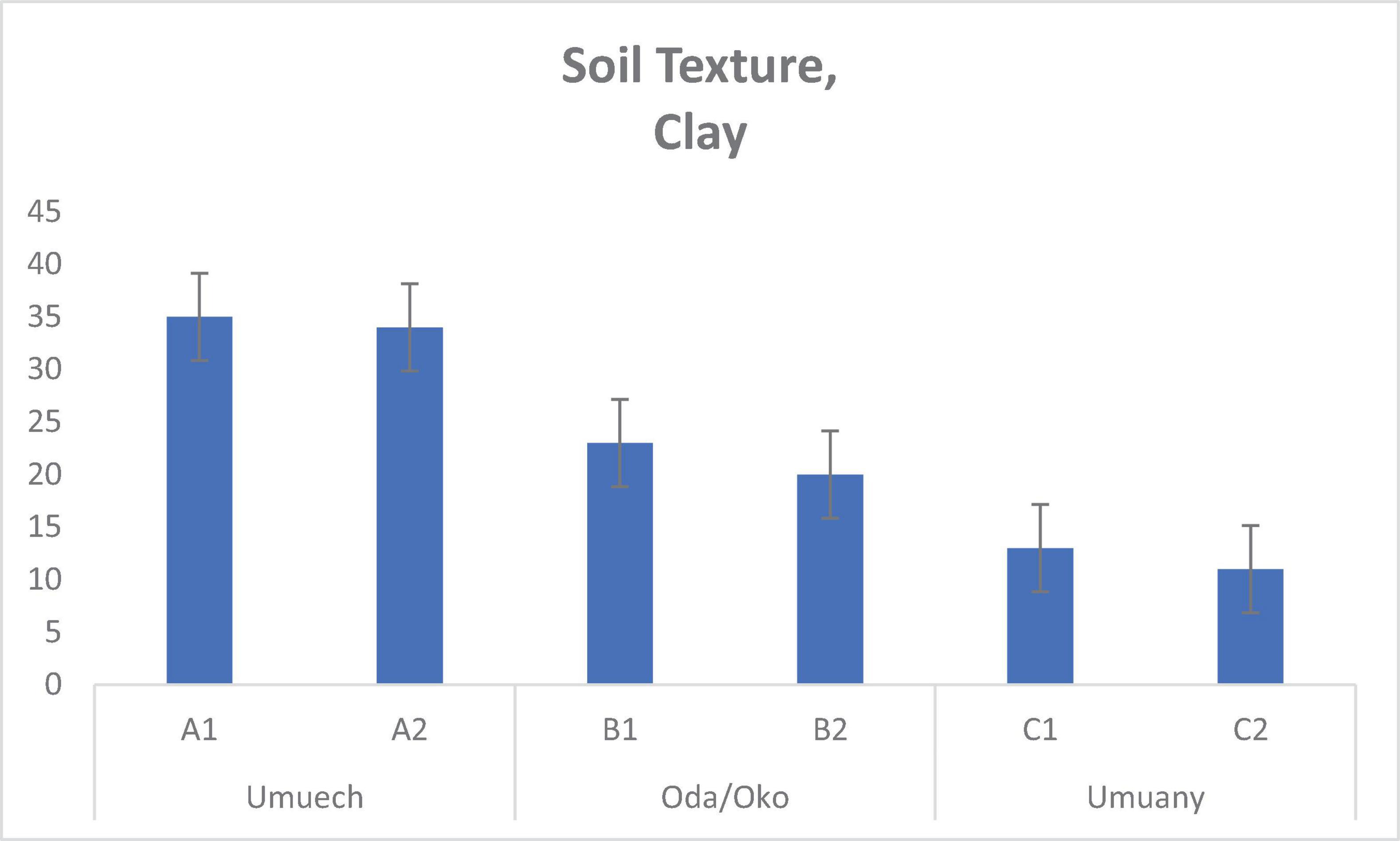
Figure 4. Impact of oil spills on clay soil.

Figure 5. Impact of oil spills on silt soil.

Figure 6. Impact of oil spills on Total Petroleum Hydrocarbon (TPH).
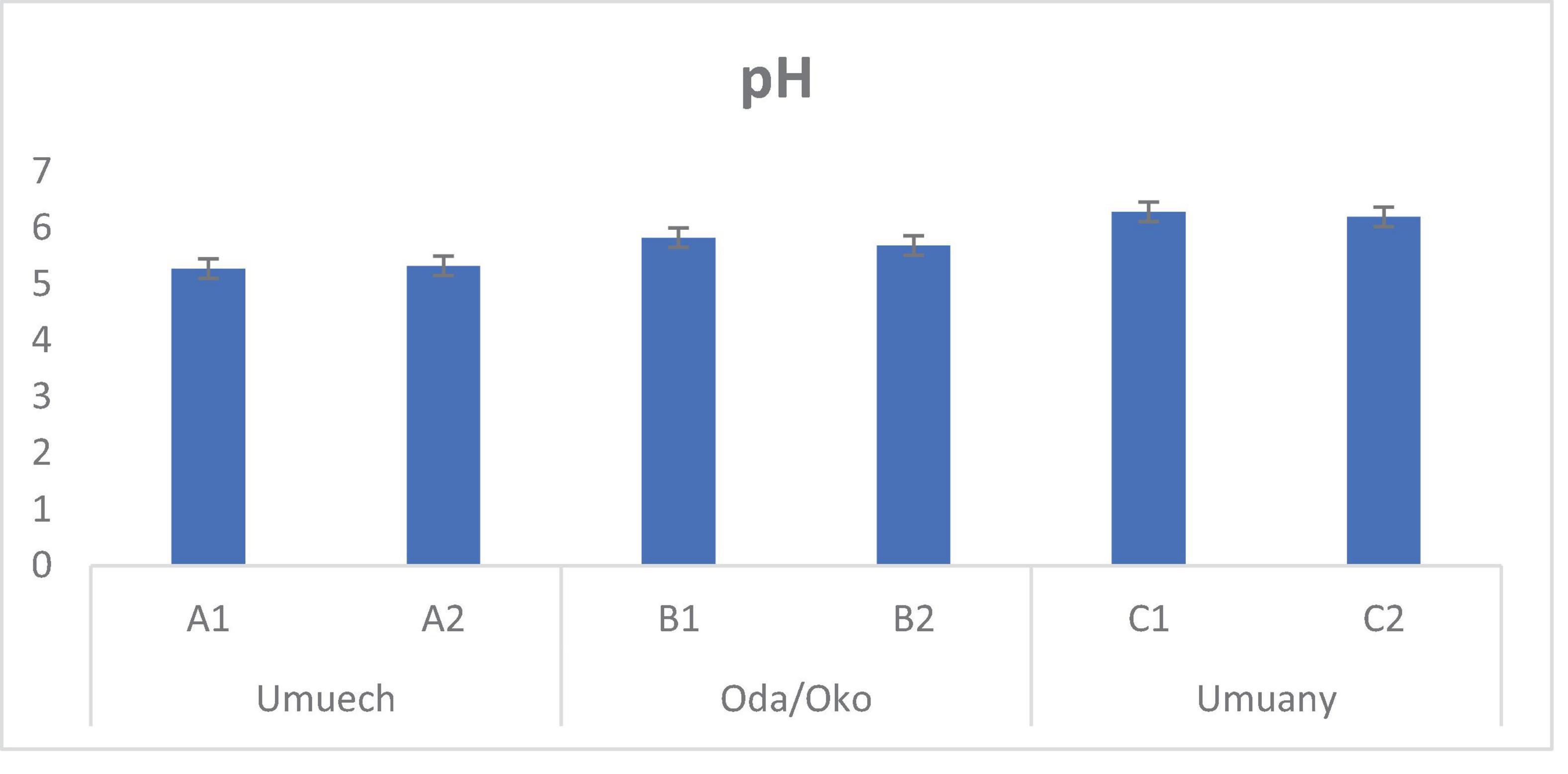
Figure 7. Impact of oil spills on pH.

Figure 8. Impact of oil spills on electrical conductivity (EC).

Figure 9. Impact of oil spills on salinity.

Figure 10. Impact of oil spills on bulk density.

Table 1. Field work report showing data obtained from the field analysis.

Table 2. Effects of oil spill on Umuechem/Nkali soil texture.

Table 3. Permissible limit for Nigeria Upstream Petroleum Regulatory Commission (NUPRC) (defunct Department of Petroleum Resource [DPR]).
Total Petroleum Hydrocarbon (TPH) values as seen from the study area have proven the fact that the Umuechem community was highly impacted more than the Odagwa/Okoroagu communities, while the Umuanyagu community, which served as the control, did not record any trace of TPH contamination, as shown in Figure 6. The concentrations of TPH were raised by crude oil spills to levels that are detrimental to crops and vegetation. This implies a decrease in crop productivity, which may result in local food insecurity. Similar circumstances were found in the study conducted by (13) on the effects of crude oil spills on farmland in Rivers State’s Gokana Local Government Area. Additionally, the area’s high TPH levels had an impact on the nearby flora and fauna, which are crucial to the biogeochemical cycle that influences the availability of plant nutrients, both above and below ground (20).
The pH of the oil-impacted soils at both Umuechem community (5.28 and 5.33 for A1 and A2, respectively) and Odagwa/Okoroagu communities (5.83 and 5.69 for B1 and B2, respectively) were significantly lower than the NPURC (defunct DPR) permissible limits for soil. The presence of oil in the soil discourages the leaching of basic salts which are responsible for the rise in pH of Umuanyagu community (6.29 and 6.20 for C1 and C2, respectively) the control; resulting to the production of organic acids by microbial metabolism. The soil has pH values <7 which affect the solubility of minerals. The soils are highly acidic and are toxic to plants’ nitrogen fixation and decomposition activities and hindered the soils of the area (13).
Odagwa/Okoroagu communities pH as an oil-bearing community recorded higher than the one in the Umuechem community; this proves that Umuechem soil is more acidic than Odagwa/Okoroagu soil. The EC, which measures the ionic concentration, was reported as 96 and 134 for A1 and A2, respectively in the crude oil spilled soils of the Umuechem community. Odagwa/Okoroagu 58.2 and 64.3 for B1 and B2, respectively which is significantly higher than the control soils Umuanyagu. This is since organic substances such as crude oil are of low EC.
There is higher moisture content in Odagwa/Okoroagu than in Umuechem soils of the oil-spilled areas. This is as a result of too little aeration of the soil brought about by air displacement in the soils, which leads to the reduction in the rate of evaporation and encourages waterlogging with lower value in control. This is unconnected with the values recorded from the sandy, clay, and silt soil, whereby Odagwa/Okoroagu with higher sand than Umuechem, and the least is the control, Umuanyagu. However, clay and silt soil, Umuechem soil, is higher than Odagwa/Okoroagu and the control. These may be attributed to hydrophobic hydrocarbons that reduce high moisture content and also lower microbial activities by obstructing airflow, which would lower oxygen supply; this results in a breakdown of soil structure and dispersion of soil particles, which reduces percolation and retention of water; once more, the soil in the area develops severe and persistent water repellency after contamination with crude oil (1, 13).
Similarly, Umuechem soil has higher salinity than Odagwa/Okoroagu soil, while Odagwa/Okoroagu soil also has a higher bulk density value than Umuechem soil with a lower record in control. It should be mentioned that impacted soils can increase their capacity to hold water, decrease their bulk density, increase aeration, and stimulate microbial activity and root penetration. The analysis, as presented in Table 1, indicates that the mean values are higher than the allowable limits of the DPR standard for soil quality intervention values (21).
Conclusion
The TPH levels, pH, EC, moisture content, bulk density, clay soil, sandy soil, silk soil, and salinity concentration are all displayed in the test results produced by the soil analysis of the affected areas. They also demonstrate the degree of contamination of the soils in comparison to the control sites. Low soil fertility is typically indicated by this accession, which suggests low agricultural output and a diminished source of income in the impacted areas. The results from the affected locations, as determined by descriptive statistics, exhibit considerable statistical variability, making corrective action imperative.
Limitation
The researcher encountered challenge of getting samples from polluted site. There were issues of taut restriction from the multinational company operating in the host communities. Furthermore, lack of adequate funding in carrying out the tested samples was a setback to cover the entire contaminated site.
Author Contributions
BN: Conceptualization, analysis, and interpretation of the data; Writing – original draft; Writing – review and editing; Critical review for intellectual content; Final approval of the version to be published. The authors attest that the data supporting the study’s findings are available within the article. All authors have read the work and agreed to be accountable for all aspects of the work.
Funding statement
No funding was received.
Acknowledgments
The authors express their gratitude to my supervisor and the Department of Agricultural and Environmental Engineering laboratory at Rivers State University’s Faculty of Engineering in Port-Harcourt, Rivers State, for their assistance with this work.
Conflict of interest
The authors declare that the research was conducted in the absence of any commercial or financial relationships that could be construed as a potential conflict of interest.
References
1. Ezeh C, Onyema V, Obi C, Moneke A. A Systematic Review of the Impacts of Oil Spillage on Residents of Oil-Producing Communities in Nigeria. Research Square (2023). p. 1–26.
2. Ewim DRE, Orikpete OF, Scott TO, Onyebuchi CN, Onukogu AO, Uzougbo CG, et al. Survey of wastewater issues due to oil spills and pollution in the Niger Delta area of Nigeria: a secondary data analysis. Bull Natl Res Cent. (2023) 47(116):1–20.
3. Igbani F, Tatah GW, Odekina MUA. Review on the effects of crude oil spill on aquatic life (fish) in the Niger Delta, Nigeria. Int J Environ Pollut Res. (2024) 12(1):75–94.
4. Igwe O, Ngwoke M, Ukah BU, Ubido OE. Assessment of the physicochemical qualities of groundwater and soils around oil-producing communities in Afam, area of Port Hacourt, Niger Delta, Nigeria. Appl Water Sci. (2021) 11(74):1–13.
5. Sanchez DN, Knapp CW, Olalekan RM, Nanalok NH. Oil Spills in the Niger Delta Region, Nigeria: Environmental Fate of Toxic Volatile Organics. Research Square (2021). p. 1–17.
6. Nwokocha OP, Ishaya KS, Daku YS, Msheliza FN. Assessment of crude oil spillage on physical and chemical properties of soil in Ukwa West Local Government Area of Abia State, Nigeria. Glob Sci J. (2021) 9(11).
7. Osarokaka AJ, Nzeako SO, Imafidor HO, Living-Jamala U. Soil nematodes status of crude oil polluted sites in Bodo community, Gokana Local Government Area, Rivers State, Nigeria. Afr J Environ Sci Technol. (2021) 15(2):85–97.
8. Ukpene AO, Igborgbor JC, Oduma E, Konyeme TE. Environmental impacts of oil spills on marine ecosystems: a case study of the Niger-Delta environment. Afr J Health Saf Environ. (2024) 5(1):103–13.
9. Bello AT, Nwaeke T. Impacts of oil exploration (oil and gas conflicts. Niger Delta as a case study). J Geosci Environ Prot. (2023) 11:189–200.
10. Ogeleka DF, Edjere O, Nwudu A, Okieimen FE. Ecological effects of oil spill on pelagic and bottom dwelling organisms in the riverine areas of Odidi and Egwa in Warri, Delta State. J Ecol Nat Environ. (2016) 8(12):201–11.
11. Ogeleka DE, Tudararo-Aherobo LE, Okieimen FE. Ecological effects of oil spill on water and sediment from two riverine communities in Warri, Nigeria. Int J Biol Chem Sci. (2017) 11(1):453–61.
12. UNEP.Environmental Issues in the Niger Delta of Nigeria Related to Its Petroleum Industry. Ogoni Land (Rivers State Nigeria): UNEP (2011).
13. Digha ON, Ambah B, Jacob EN. The effects of crude oil spillage on farmland in Gokana Local Government Area of Rivers State. Eur J Bas Appl Sci. (2017) 4(1):1–21.
14. Aigberua AO, Okere UV. The impact of oil spills on prevailing metal-soil associations. Int J Sci Eng Res. (2019) 10(5):1339–65.
15. Akpoghelie OJ, Igbuku UA, Osharechiren E. Oil spill and the effects on the Niger delta vegetation: a review. Niger Res J Chem Sci. (2021) 9(1):1–12.
16. Ismail K. Health, Safety Issues in Nigeria’s Oil, Gas Sector. Glasgow: Foresight Global Oil & Gas Investment Company Ltd (2019).
17. Izuaka M. Crude oil theft, pipeline vandalism pose national emergency challenge – NEITI. Premium Times. (2023).
18. Ordinioha B, Brisibe S. The human health implications of crude oil spills in the Niger delta. Nigeria: An interpretation of published studies. Niger Med J. (2013) 54(1):1–7.
19. Nweke B, Okogbule-Wonodi A, Ekemube R. Combine effect of dry and decomposed Raffia palm in the bioremediation of oil-based drill cutting. Int J Compos Mater Matr. (2023):21–9.
20. Nweke B, Okogbule Wonodi A, Chikwue IM. The influence of fresh Raffia palm trunk on the bioremediation of oil-based drill cuttings. Int J Pollut Prev Control. (2024) 1(2):1–8.
21. Kadafa AY. Oil exploration and spillage in the Niger Delta of Nigeria. Civil Environ Res. (2012) 2(3):1–14.
© The Author(s). 2025 Open Access This article is distributed under the terms of the Creative Commons Attribution 4.0 International License (https://creativecommons.org/licenses/by/4.0/), which permits unrestricted use, distribution, and reproduction in any medium, provided you give appropriate credit to the original author(s) and the source, provide a link to the Creative Commons license, and indicate if changes were made.