Introduction
Syphilis is a systemic infection with ocular involvement that can involve any segment of the eye. Ocular manifestations can occur at any stage of the disease. Here we present a case of syphilis presenting as anterior granulomatous uveitis. Hematological investigations lead to the diagnosis of syphilis, which would have been missed had the blood investigations not been carried out.
Aims and objectives
To report a rare case of syphilis presenting as anterior granulomatous uveitis without any other systemic features, which is a rare entity.
Case
A 40-year-old male reported to us with a history of decreased vision in the left eye for the past month. There was no other significant history. His best corrected visual acuity was 6/6 in the right eye and 6/6P in the left eye. Bilateral pupillary reactions, ocular movements, intraocular pressure, fundus and B-scan ultrasonography were normal. Slit lamp examination revealed mutton fat and stellate keratic precipitates (Figure 1) plus minimal anterior chamber reaction in the left eye suggestive of anterior granulomatous uveitis. The patient was started on standard therapy for anterior granulomatous uveitis. His complete hematological workup revealed a positive venereal disease research laboratory test, fluorescent treponemal antibody absorption test, and Treponema pallidum hemagglutination assay. The patient was advised a dermatological and medical workup, where he was started on standard treatment for syphilis. There was no further followup from his side.
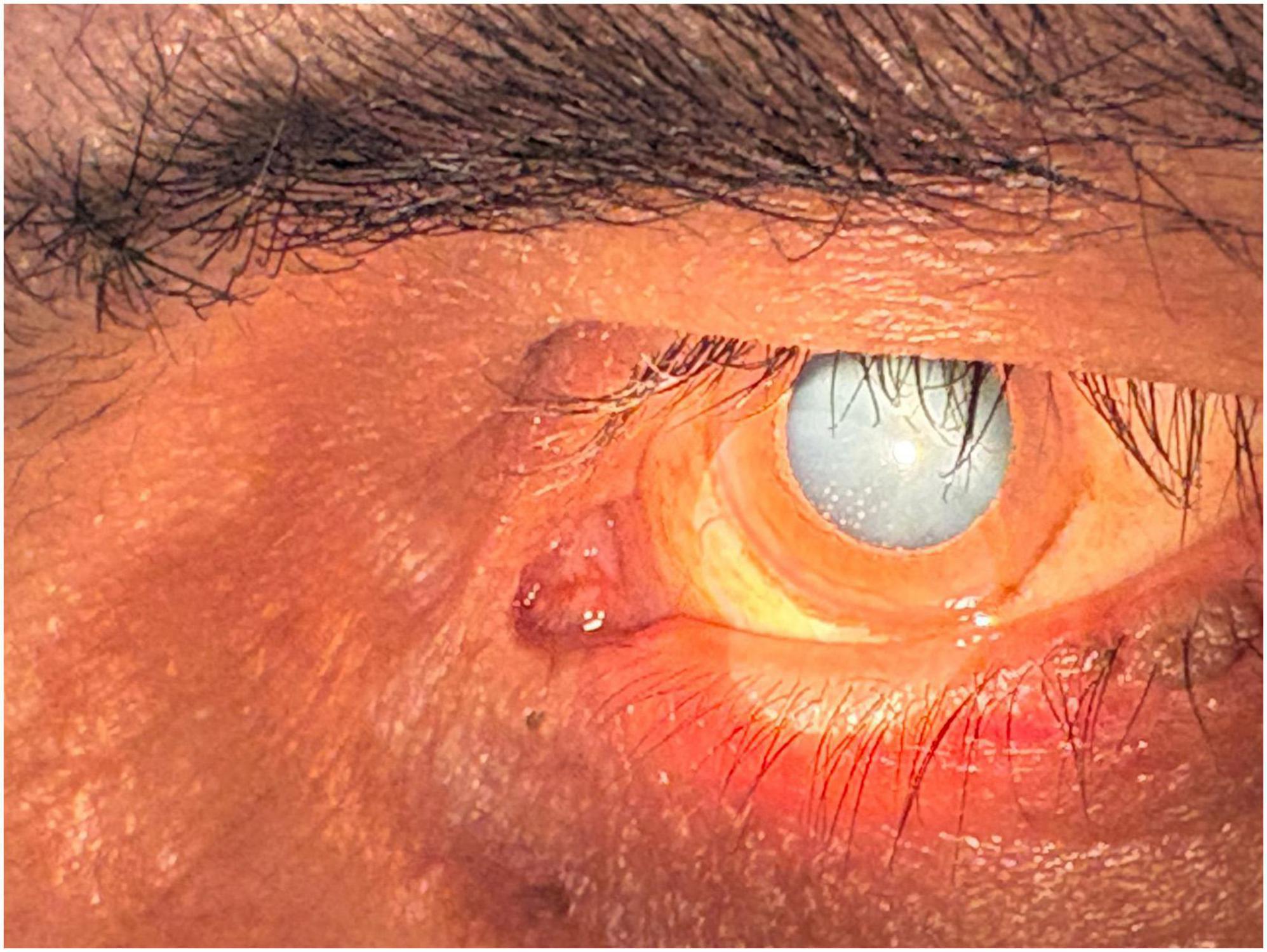
Figure 1. Mutton fat and stellate keratic precipitates.
Discussion
Syphilis is seen commonly in homosexuals and those with a high incidence of HIV infection (1). Syphilis can involve the eye in the form of interstitial keratitis, uveitis, chorioretinitis, retinal vasculitis, and optic neuropathy (2). Ulcerative blepharitis, conjunctivitis, scleritis, Argyll Robertson pupil, and cranial nerve palsy are also seen (3). Posterior uveitis or panuveitis are the most common presentations of ocular syphilis (4). Syphilitic anterior uveitis presents most commonly as a granulomatous uveitis (5). IV Penicillin G 18–24 million units/day (3–4 million units q4h or continuous infusion) for 10–14 days is the suggested treatment for ocular syphilis, while Ceftriaxone 2 g IV/IM daily for 10–14 days can also be used (6).
Conclusion
Ocular syphilis is often overlooked, due to its lesser prevalence in the current scenario, plus lack of suspicion on the part of the clinician. It is recommended that every case of uveitis should undergo testing for syphilis to rule out this “GREAT IMITATOR.”
Source of support-none
The paper being submitted has not been published, simultaneously submitted, or already accepted for publication elsewhere.
Funding
The authors declare that no financial support was received for the research, authorship, and/or publication of this article.
Conflict of interest
The authors declare that the research was conducted in the absence of any commercial or financial relationships that could be construed as a potential conflict of interest.
References
1. Furtado JM, Arantes TE, Nascimento H, Vasconcelos-Santos DV, Nogueira N, de Pinho Queiroz R , et al. Clinical manifestations and ophthalmic outcomes of ocular syphilis at a time of re-emergence of the systemic infection. Sci Rep. (2018) 8(1):12071. doi: 10.1038/s41598-018-30559-7
2. Hong MC, Sheu SJ, Wu TT, Chuang CT. Ocular uveitis as the initial presentation of syphilis. J Chin Med Assoc. (2007) 70(7):274–80.
3. Dutta Majumder P, Chen EJ, Shah J, Ching Wen Ho D, Biswas J, See Yin L , et al. Ocular syphilis: an update. Ocul Immunol Inflamm. (2019) 27(1):117–25.
4. Moradi A, Salek S, Daniel E, Ganaputra S, Ostheimer TA, Burkholder BM , et al. Clinical features and incidence rates of ocular complications in patients with ocular syphilis. Am J Ophthalmol. (2015) 159(2):334–43.e1. doi: 10.1016/j.ajo.2014.10.030
5. Kiss S, Damico FM, Young LH. Ocular manifestations and treatment of syphilis. Semin Ophthalmol. (2005) 20(3):161–7. doi: 10.1080/08820530500232092
6. Ye Z, Yang M, Zou Y, Zhang J, Deng J, Zong Y , et al. Syphilis and the eye: clinical features, diagnostic challenges, and evolving therapeutic paradigms. Pathogens. (2025) 14(9):852. doi: 10.3390/pathogens14090852
© The Author(s). 2026 Open Access This article is distributed under the terms of the Creative Commons Attribution 4.0 International License (https://creativecommons.org/licenses/by/4.0/), which permits unrestricted use, distribution, and reproduction in any medium, provided you give appropriate credit to the original author(s) and the source, provide a link to the Creative Commons license, and indicate if changes were made.