Introduction
As the world’s population ages, many of us are facing a lot of health issues. As reported by the World Health Organization, millions of individuals are struggling with weight gain, and these negative impacts give a lot of struggles to the elders to do their daily tasks (1). When an individual is in the stage of severe illness, they must need a supportive person to give support to the work when the medical condition becomes weak. Good treatment with care for that particular individual and is very important.. Technology has opened many ways to solve the problems of elders in health care. Most of the countries are providing support for the elderly who are affected by negative health impacts like heart disease, strokes, chronic diseases, hearing loss, etc. Internet of Things (IoT) is an important technology that helps to exchange the data between the things that are connected to the internet and helps to keep the information of users more secure. Monitoring and managing the heart health of the elders with IoT is important to care for the body condition of elders in an effective manner. The open interconnection between the smart objects to the network is described as the internet of things. Mainly, the internet of things helps to exchange the data between the things that are connected to the internet and helps to keep the information of users more secure. Many physical devices, sensors, and actuators will use individual internet protocol (IP) addresses to hold the data of the patients in a confidential manner (2).
Many advantages can be provided by the IoT to the elderly. And the capacity of IoT-related applications make it possible to store additional data and can perform well in difficult conditions because of electromagnetic radiation (3). When an individual is in the stage of severe health disorder, they require a supporting person at the hospital to give them support when their medical condition becomes serious, such as being unable to talk, walk, or communicate adequately; treatment with care is essential for that particular person. Most of the country is treating people who have been harmed by strokes using IoT technology. Now, the technology has grown up in many ways to solve the problem of elders in healthcare according to the advancement in technology. IoT is an important technology that helps to collect the information of a specific patient quickly; at the same time, it helps to provide timely and correct information to the doctors (1).
There are many uses of IoT technology in elderly health care systems that help to improve the well-being of the elderly who are undergoing many diseases (1, 4–6). The Internet of Things helps to monitor the elders in real time and is able to get their medical status and can contact medical assistants in real time (3, 4). Health care can be considered as a very attractive application field of IoT (2) and the best one to provide a technologically related use to many diseases to the people, help to manage and trace the details and help to identify the tracking of clinical staff, patients, supply medications, and equipment to the elders. IoT is providing many medical applications like long-term disease management, exercise scheduling, and remote health monitoring, as well as elderly health care (6). This research investigates the potential of integrating IoT with the elderly healthcare system. This research explores the benefits and challenges associated with using a seamless health care system for the elderly based on IoT, identifying the best practices for implementing this seamless health care system for the elderly based on IoT.
According to the existing system, it provides delayed processing of data and also provides aid for the people in emergencies. The potential of a seamless IoT is investigated through this research, and physiological sensing with location tracking is integrated with it. This research provides an integrated solution that helps to make an automated detection.
Literature review
IoT is a modern technology that provides a way to connect all physically connected items. IoT allows data to be detected from physical items and shared by integrating technology in a methodical way. The collection of anything, anywhere, at any time, any service, and any network is commonly referred to as the “internet of things.” Cloud and grid computing integration are key practices in the provision of healthcare to the elderly (7). The majority of the nation has a sufficient number of people reaching old age, and using IoT for the healthcare of elderly and disabled people has many benefits. These include the ability to quickly identify patients’ vital signs, track patient data, and create statistics about their health conditions. Additionally, the use of thermal and normal cameras to monitor patient conditions is also possible. These days, the majority of gadgets, including watches, are linked to the internet. These gadgets use wireless networks and sensor technology to transfer data between sensors. Biosensing, microelectronics, and cellular networking technology are also highly advanced in the health system (8).
As the world population ages, many of us are experiencing a variety of health challenges, including diabetes, high blood pressure, low blood pressure, and chronic sickness. According to the World Health Organization, millions of people are experiencing weight increase, which can make it difficult for the elderly to perform their everyday tasks (1). When an individual is severely unwell, they require a supportive person at the hospital to assist them with their work when their medical condition is critical, and if they are able to communicate well, therapy with a caregiver is required. Most countries are giving treatment to those who have suffered a stroke. It is quite difficult to locate the patients’ past help and medical records. Due to the delayed process of acquiring, it made a major issue to provide them the proper therapy at the right time, and it may bring the patients into a comatose state (1).
Since technology has grown up and opened many solutions to solve the problem of elders in healthcare, according to advanced numerous technologies. Radio frequency identification (RFID) is one important technology that allows for the fast collection of patient information. At the same time, it is regarded as inexpensive and serves as a little messenger, assisting doctors and nurses in providing timely and accurate information in order to deliver patient care as rapidly as possible. Also, RFID is a method that can be used to locate and identify specific objects. The internet of things can give numerous benefits (6). According to that, RFID is one of the benefit that can execute read and write operations without a connection to the tags by automatically recognizing the tags. Tags may be remotely identified by the readers, and tags travelling at high speeds can be identified automatically. Readers can read and write a large number of identification (ID) takes individually and concurrently within a range without interacting with each other. The capacity of an RFID tag allows for the storage of additional data, and tags can also work effectively in harsh settings. Take electronic radiation, which is harmless to the human body due to its high-temperature acid-base resistance (6).
The development of IoT has made everything more intelligent. The health sector has benefited greatly from IoT’s ability to continuously monitor people’s medical conditions. One excellent solution for elderly care is ambient assisted living (AAL), a wireless sensor network that is both the best and least expensive system currently on offer. Additionally, the IoT Smart Hospital has proposed to receive services like automatic monitoring and the ability to view patient details. Additionally, a single wireless sensor that aids in monitoring heart rate (HR), temperature, oxygen, and electrolytes has been developed as part of the IoT Healthcare System for Elderly Patients at Home (7).
A real-time monitoring system is therefore required, and a wireless communication system with the ability to view HR, steps, and calories has been proposed. Wearable devices, such as the Fitbit watch, are typically helpful in measuring certain health-related metrics, such as HR, steps, calories, and sleep.
The password data can be extracted using the “OAuth” open standard communication protocol, and application programming interface (API) authentication is a useful tool for getting senior citizen data from the Fitbit server (9).
The potential of RFID can improve the care of the elderly (6). A brief review of literature reveals that RFID technology is also one of the technologies that helps to monitor the elders in real time and is also important to collect and access all patients’ records, track the movements of medical equipment, and source for help to monitor the patients’ health (6, 10).
Health care can be considered as a very attractive application field of IoT (7) and the best one to provide a technologically related use to many diseases to the people, help to manage and trace the details and help to identify the tracking of clinical staff, patients, supply medications, and equipment to the elders. IoT is providing many medical applications like long-term disease management, exercise scheduling and remote health monitoring, as well as elderly health care (6).
However, there is still much to be learned about how this RFID technology can be worked into elderly health care applications and what benefits and challenges this integration presents. Wearable technology claims that it has evolved based on a number of factors, including the psychological pyramid and metrics like HR, electrocardiogram (ECG), and BT. These state that we may assess the ECG and photoplethysmogram (PPG) as well as the blood pressure by using pulse arrival time (PAT). That is being used as a gateway to test the bluetooth low energy (BLE) psychological measurement. Additionally, cloud connectivity is crucial for smartphone analysis and data retrieval (11).
IoT health monitoring systems aid in the ongoing monitoring of patients’ vital signs, such as blood oxygen saturation, ECG, and body temperature (BT). The system is operated by the programming software Arduino. The system makes use of wireless fidelity (Wi-Fi), and it also uses Blink to send data to the cloud so that it can be continuously and instantly monitored. The Arduino and not the microcontroller unit (MCU) are the two microcontrollers utilized here, so doctors and family members can receive alerts via smartphone. Future technological advancements will also need to enhance the system’s use of Arduino and MCU (12).
BT, HR, and Galvanic skin response (GSR) data in this adult IoT-based health monitoring system, which is based on an Android application. Additionally, the system makes use of the Arduino Uno platform. The Raspberry Pi is essential for sending data to the cloud. Android Studio is used by the Android app, which aids in the visualization of adult and patient dates (13).
The primary phases and structures of a health IoT-based real-time assistance monitoring system include data creation, acquisition, processing, communication, and access. The system uses many technologies, including BLE, GSM, and Wi-Fi, to transfer data, including HR, and blood pressure. It also efficiently uses mobile apps, messaging services, and the internet.
In accordance with the Gupta system, it describes an IoT-based healthcare monitoring system for patients who are obese. Along with helping to monitor the patients’ physical conditions, the system measures the HR, SpO2, blood pressure, BT, and other parameters. An Arduino board can be used to save many patient datasets at once. Additionally, via a Wi-Fi module, doctors can speak with patients who are far away from the system and find it challenging to communicate with them. Information about the patients can also be given to health professionals (14). Additionally, in this instance, sensors collect crucial health indicators data like HR, BP, and BT, which are then processed and assisted in being uploaded to the cloud by a Raspberry Pi. Real-time data can be obtained via mobile apps, which will benefit medical professionals and personnel more (15, 16). GSM and mobile Wi-Fi are crucial for remote patient monitoring. One technology that facilitates data transmission to the cloud is Wi-Fi.
The system was created using seven classification algorithms for the healthcare model. Area under the curve (AUC), accuracy, sensitivity, and specificity are among the measures utilized by the system to assess the performance of classifiers. Additionally, data sets from nine distinct illness kinds have been arranged based on classifications and age. There are three aspects to this system’s operation: gathering data, preparing, processing, and computing the results (17); displaying the results to physicians; and storing the results on a cloud server. Studies combine prior system models with machine learning-based health models. The technology can foresee many things, including the supply of food, the military, and the weather (18).
Methodology
There are five major scholarly databases that have been used to review, like IEEE Xplore for the purpose of reviewing the IoT systems, also the sensors, and engineering studies. Next is the ScienceDirect (Elsevier), which has been used to review the clinical and technological research. PubMed for the purpose of getting reviews about biomedical and healthcare-related studies and also ACM Digital Library for the purpose of reviewing computing and mobile health solutions and Google Scholar to capture additional relevant grey literature (Figure 1).

Figure 1. Methodology of monitoring and managing heart health with IoT-powered healthcare solutions for the elderly.
In order to improve the health of the elderly promptly, this project is one of the most significant designs since it uses IoT technology to assess vital signs, transmit emergency alarms, and locate a person in a crisis. The primary objective of this project is to monitor the elderly population’s temperature, HR (BPM), and locomotor state using automated alerts triggered by anomalous data or human intervention. This system provides real-time information and quick emergency responses using wireless and sensor technologies. In order to notify caregivers and medical professionals when an elderly patient experiences irregularities, this research compares the patient’s posture and HR using machine learning models.
Results
Across multiple dimensions, systematic reviews illustrate that the improvements that can be derived from the IoT-powered cardiac monitoring systems are significant. Also, it can be used for continuous monitoring; real-time analytics can improve the early detection of elderly health care, can protect in the time of an emergency, and also helps improve the engagement of the user overall.
With both human and automatic emergency notifications, the project effectively delivers a real-time monitoring system for elderly individuals. In the event of an emergency, the device reliably transmits an elderly person’s GPS location combined with measurements of their HR, temperature, and physical movement.
The output is presented via short message service (SMS) with the following format: PLEASE HELP ME. I do not feel well.
Status: [Normal/Person Down]
BPM: [Current BPM]
Temperature: [Current Temperature]°C
Location: [Google Maps Link]
If the conditions exceed the predefined thresholds, the device automatically sends this message, ensuring prompt caregiver response. Additionally, caregivers receive a phone call when the second pushbutton is pressed.
According to the above results, solutions that are provided by the IoT can be focused on monitoring the elders in real-time remotely to fulfill the needs that are important to senior care. Dual functionality can be used to make the system flexible and ensure the manual and automatic alerts that can be used for the elderly in times of emergencies and the assistant needed time to the elders. There is a complete view of patients’ details, like movement monitoring, BPM, and temperature which can be provided by this system in times of emergencies. Also, the use of a GPS module can offer security and provide the precise location of the elders in times of emergencies, and caregivers can be able to find the location of the elders easily. There is a drawback noted that, on occasion, sometimes the detection of the temperature through the DHT11 sensor provides an inaccurate result; however, using more sophisticated sensors can provide more accurate results about temperature. Also, the use of additional calibration of the pulse sensor can provide more accurate readings of BPM (Figures 2, 3).
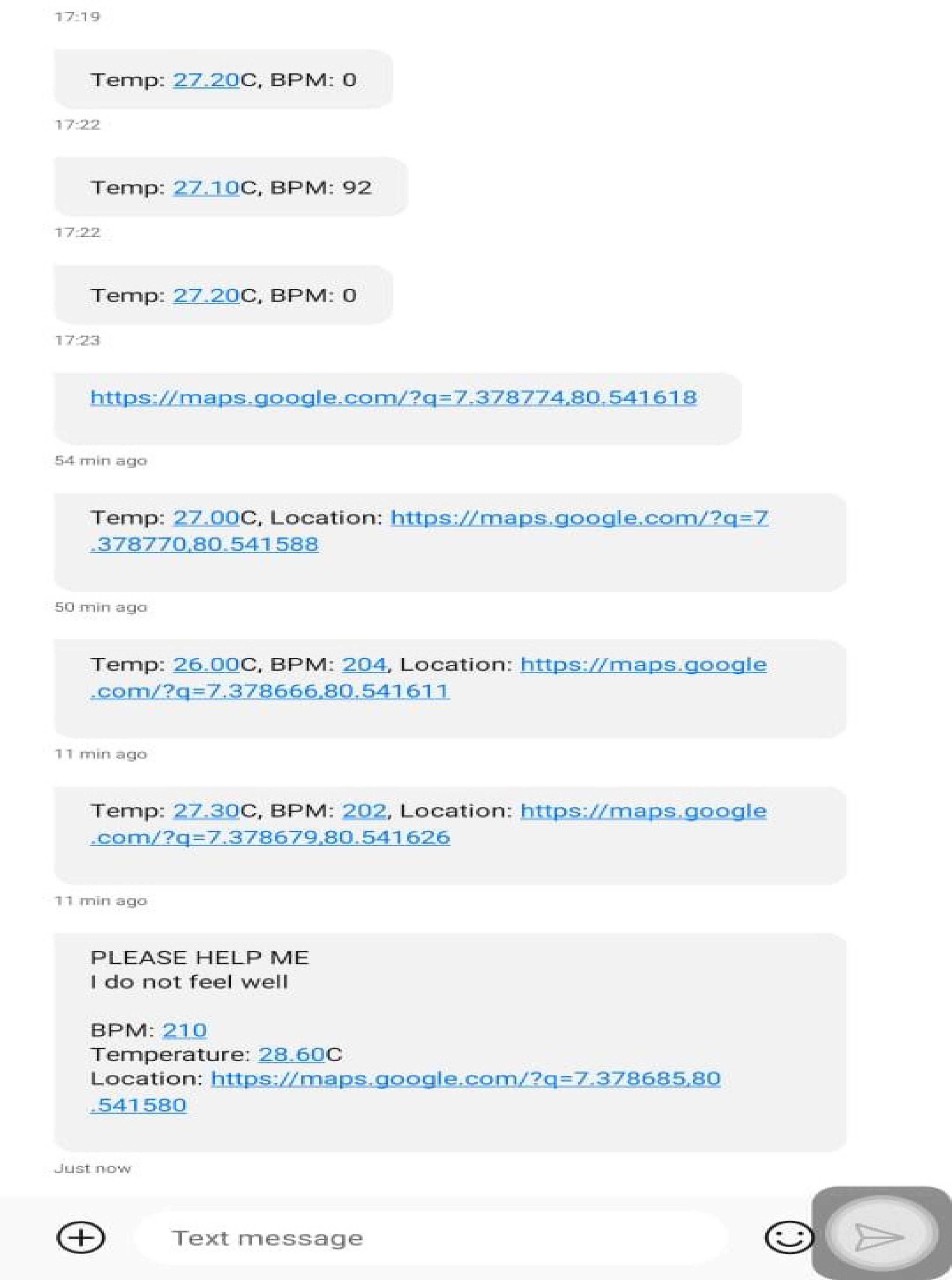
Figure 2. Output presented via short message service (SMS).

Figure 3. Output presented via SMS.
Findings and discussion
There are a lot of findings that can be shown through the system’s deployment and testing. Firstly, the automatic and manual responses to the elderly people can be achieved using sensors and modules and can be able to use this system in real-time and they can also monitor themselves through this system. Additionally, the use of the module SIM800L enables efficient communication through phone calls as well as SMS. This tool acts as a crucial one to create notices in emergencies.
Additionally, the use of GPS enables tracking of the position of elders in emergencies and also provides the location for the elders who are having trouble finding their way in emergencies. Also, there is an availability to use this system with user friendly features, which helps to provide good navigation to the elders who lack knowledge. Also, this system provides a warning facility through the push buttons. By implementing this system, elders can able to get an enhanced heart health monitoring system reliably and professionally. And by using the DHT22 or BME280 instead of DHT11, can able to provide more accurate results according to the weather condition, alternatively. By making sure the beats of the pulse sensor can find the inaccuracies in the environmental conditions, that can be overcome. Also, it is important to make sure the communication of elders is in times of emergencies. Also, by making sure about the precision, in the data it collects that is inherent in the technology.
Conclusion
According to this system, it provides multiple ways of handling health issues by the elderly people. This system provides the best safety for the elders to care for them in real time continuously with a user-friendly interface. Additionally, having the ability to use dual mode means that the system can be used effectively in emergency situations. Furthermore, this system provides aid to the elders in the case of emergency situations and can identify the risks that are related to the elders early as possible to provide timely care to save their lives from cardiac disease. Also, it aids in providing the facility to access the data in real-time and also can monitor the health conditions of elders regularly.
This system helps to provide a heart health monitoring and managing system with the help of IoT to improve the health conditions and the safety of the elders and also can provide early diagnosis with customized health care. It can provide the best solution to solve the problems that are related to the cardiac diseases with the use of wearable sensors, cloud analytics, and caregiver alert mechanisms. Also, this system provides the solutions to protect the system with privacy; also, it can be able to address the challenges that are related to the interoperability.
Providing a definitive solution to address the gap that existis in the field of elderly health is a critical thing now a days. Also, with the help of this system, one can get developments in the future in remote health monitoring. Additionally, the elders can feel confident to live independently through this system. Also, the timely notifications can be derived from the doctors and other caregivers about the current status and updates related to the elders to help them give treatment in a timely manner.
Funding
The author declares that this research received no external funding.
Conflict of interest
The author declares that the research was conducted in the absence of any commercial or financial relationships that could be construed as a potential conflict of interest.
References
1. Hu L, Ong DM, Zhu X, Liu Q, Song E. Enabling RFID technology for healthcare: application, architecture, and challenges. Telecommun Syst. (2014) 58(3):259–71. doi: 10.1007/s11235-014-9871-x
2. ResearchGate. An overview of IoT and healthcare. ResearchGate (2024). Available online at: https://www.researchgate.net/publication/330933788_An_Overview_of_IoT_and_Healthcare
3. Profetto L, Gherardelli M, Iadanza E. Radio frequency identification (RFID) in health care: where are we? A scoping review. Health Technol. (2022) 12(5):879–91. doi: 10.1007/s12553-022-00696-1
4. Mu L, Han X, Chen Y, Jin X. Seamless healthcare system for the elderly based on RFID technology. Intell Inf Manag. (2014) 6(5):248–55. doi: 10.4236/iim.2014.65024
5. ResearchGate. RFID and Sensors Enabled In-Home Elderly Care. ResearchGate (2023). Available online at: https://www.researchgate.net/publication/221412831_RFID_and_sensors_enabled_Inhome_elderly_care
6. Nuuri A. The Use of RFID Technology in the Patient Tracking System [Thesis]. Theseus (2023). Available online at: https://www.theseus.fi/handle/10024/746255
7. ResearchGate. The Impact of Using IoT for Elderly and Disabled People Healthcare: An Overview. ResearchGate (2024). Available online at: https://www.researchgate.net/publication/355873453_The_impact_of_using_IoT_for_Elderly_and_Disabled_people_Healthcare_An_overview
8. Connected Health. Wearables and the IoT. Connected Health. CRC Press (2017). p. 159–62. doi: 10.1201/9781315184494-11
9. Pinto S, Cabral J, Gomes T. We-care: An IoT-based health care system for elderly people. 2017 IEEE International Conference on Industrial Technology (ICIT). (2017). doi: 10.1109/icit.2017.7915565
10. Su CJ, Shih SC. Building distributed e-healthcare for elderly using RFID and multi-agent. Int J Eng Bus Manag. (2011) 3:7. doi: 10.5772/45677
11. Wu T, Wu F, Qiu C, Redoute JM, Yuce MR. A rigid-flex wearable health monitoring sensor patch for IoT-connected healthcare applications. IEEE Internet Things J. (2020) 7(8):6932–45. doi: 10.1109/JIOT.2020.2977164
12. Al-Sheikh MA, Ameen IA. Design of mobile healthcare monitoring system using IoT technology and cloud computing. IOP Conf Ser Mater Sci Eng. (2020) 881(1):012113. doi: 10.1088/1757-899X/881/1/012113
13. Hamim M, Paul S, Hoque SI, Rahman MN, Baqee IA. IoT based remote health monitoring system for patients and elderly people. 2019 International Conference on Robotics, Electrical and Signal Processing Techniques (ICREST). (2019). doi: 10.1109/icrest.2019.8644514
14. Gupta D, Parikh A, Swarnalatha R. Integrated healthcare monitoring device for obese adults using internet of things (IoT). Int J Electr Comput Eng (IJECE). (2020) 10(2):1239–47. doi: 10.11591/ijece.v10i2.pp1239-1247
15. Alamsyah A, Subito M, Ikhlayel M, Setijadi E. Internet of things–based vital sign monitoring system. Int J Electr Comput Eng (IJECE). (2020) 10(6):5891–8. doi: 10.11591/ijece.v10i6.pp5891-5898
16. Abdulmalek S, Nasir A, Jabbar AK, Almuhaya MA, Bairagi AK, Khan MAM , et al. IoT-based healthcare-monitoring system towards improving quality of life: a review. Healthcare (Basel). (2022) 10(10):1993. doi: 10.33090/2227-9032/10/10/1993
17. Kishor A, Chakraborty C. Artificial intelligence and internet of things based healthcare 4.0 monitoring system. Wireless Pers Commun. (2021) 127(2):1615–31. doi: 10.1007/s11277-021-08708-5
18. Souri A, Ghafoorian M, Mahmud M, Mohammed AS. A new machine learning-based healthcare monitoring model for student’s condition diagnosis in internet of things environment. Soft Comput. (2020) 24(22):17111–21. doi: 10.1007/s00500-020-05003-6
© The Author(s). 2025 Open Access This article is distributed under the terms of the Creative Commons Attribution 4.0 International License (https://creativecommons.org/licenses/by/4.0/), which permits unrestricted use, distribution, and reproduction in any medium, provided you give appropriate credit to the original author(s) and the source, provide a link to the Creative Commons license, and indicate if changes were made.