Introduction
Cancer remains a significant global health problem, causing millions of new cases and deaths annually. Although considerable progress has been made in surgery, radiotherapy, molecularly targeted therapies, and immunotherapies, chemotherapy is still a very important part of treatment for many solid tumors and hematological malignancies. Conventional chemotherapeutic agents are not, however, specific and can be widely distributed in the healthy tissues, therefore causing severe adverse effects such as myelosuppression, cardiotoxicity, nephrotoxicity, neurotoxicity, gastrointestinal complications, etc. Furthermore, chemotherapy frequently causes multidrug resistance (MDR), which greatly reduces its long-term effectiveness. The use of nanotechnology has transformed the delivery of drug molecules by providing controlled drug release, extended systemic circulation, better pharmacokinetics, and enhanced accumulation in tumors. The first generation of cancer nanomedicines targeted disease sites mainly by passive targeting, as shown in Figure 1, in which the nanoparticles (NPs) were selectively delivered into tumors via the enhanced permeability and retention (EPR) effect. Although the EPR effect was a major step forward from traditional chemotherapy, there have been many reports of differences in the efficacy of this effect for various tumor types, patients, and disease phases, reducing its widespread use in clinical treatment (1, 2).
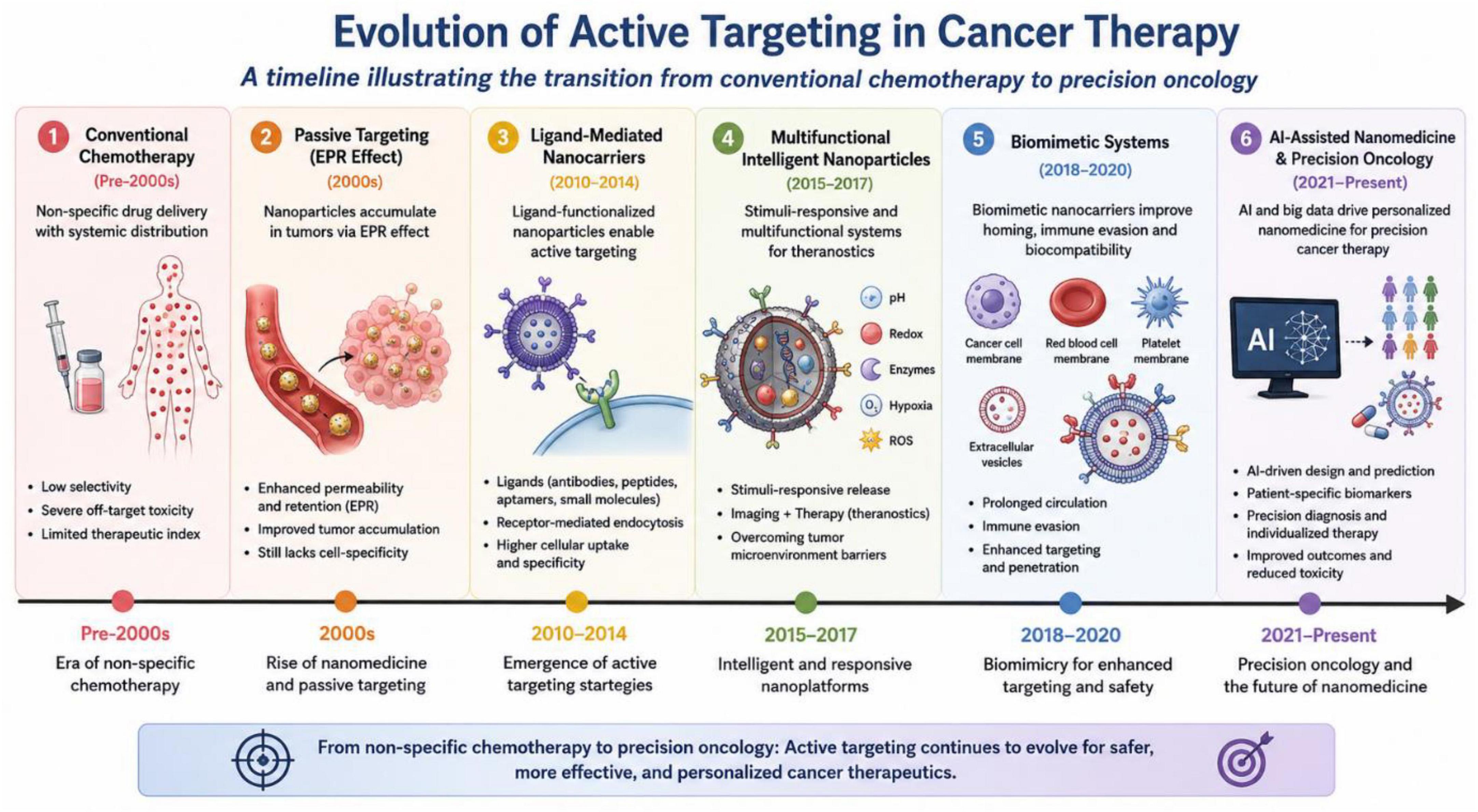
Figure 1. Evolution of active targeting in cancer therapy. A timeline illustrating the transition from conventional chemotherapy to passive targeting, ligand-mediated nanocarriers, multifunctional intelligent NPs, biomimetic systems, AI-assisted nanomedicine, and precision oncology.
Researchers have attempted to overcome these shortcomings by targeting the drug using molecular recognition mechanisms, a technique termed active targeting. Active targeting is obtained by endowing nanocarriers with ligands that have the ability to specifically recognize receptors or biomarkers that are overexpressed at the cancer surface or in the tumor microenvironment. The signaling through receptor interaction and recognition will promote receptor-mediated endocytosis, resulting in more drug accumulating inside the cells and the better therapeutic effect, with less damage to normal tissues. In the past, the number of clinically relevant biomarkers was limited, such as human epidermal growth factor receptor 2 (HER2), epidermal growth factor receptor (EGFR), folate receptor (FR), transferrin receptor (TfR), CD44, integrins, prostate-specific membrane antigen (PSMA) and programmed death-ligand 1 (PD-L1), while today molecular oncology has grown at a high rate and these markers are increasing. The interested sites of such biomarkers are now being the targets for the development of ligand-functionalized nanomedicines for the precise delivery of chemotherapeutic drugs, nucleic acids, proteins, peptides, and imaging agents (3–8).
At the same time, new developments in nanotechnology have enabled the use of traditional NPs as intelligent nanomedicine platforms that can recognize and respond to biological entities like acidic pH, redox potential, hypoxia, enzymes, and reactive oxygen species (ROS) (9). Active targeting, stimuli-responsive delivery, imaging, and immunomodulation are now combined into a single multifunctional platform with the use of NPs. Tumor homing and immune evasion are further improved with biomimetic nanocarriers coated with cancer cell membranes, red blood cell membranes, platelet membranes, or extracellular vesicles to create new opportunities for the personalized treatment of cancer. Technological advances in computational biology and artificial intelligence (AI) have also recently facilitated the design of nanomedicines, allowing prediction of ligand–receptor interactions, optimization of physicochemical properties of NPs, and identification of patient-specific biomarkers. These technologies will be used to develop machine-to-machine (M2M) nanomedicine that will be specific to tumor characteristics. Although significant advances have been made, there are still many obstacles to be overcome for an active-targeted nanomedicine to be fully and broadly used in clinical practice (10).
The clinical translation of tumors is still hampered by the presence of tumor heterogeneity, dense stromal barriers, protein corona formation, limited tissue penetration, manufacturing scalability, regulatory complexity, and cost-effective production. To overcome these hurdles, the team needs to work with interdisciplinary members, including nanotechnologists, oncologists, molecular biologists, pharmacologists, computational scientists, and regulatory agencies. It is a mini-review that outlines the development of the active targeting strategies from discovery of molecular biomarkers as discussed in Table 1, to the development of intelligent nanomedicine for cancer treatment, focusing on recent developments in the field, clinically relevant advances, current efforts in translation, and future directions for the next generation precision cancer therapeutics.
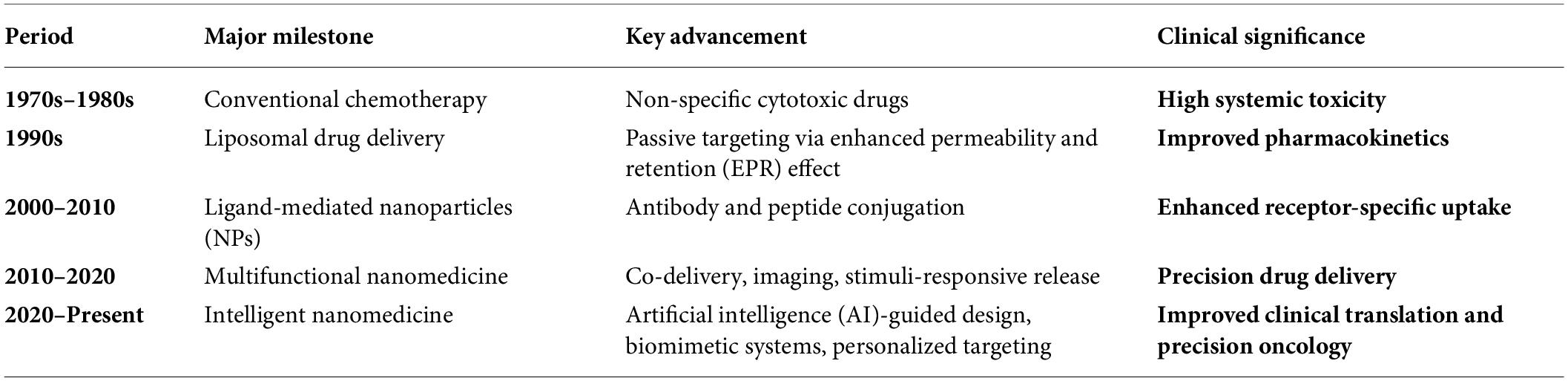
Evolution of active targeting strategies in cancer therapy
Targeted drug delivery has revolutionized the treatment of cancer from a non-specific cytotoxic chemotherapy to a more selective and precise approach using biomarkers. The development of intelligent delivery systems that can actively identify tumor-specific biomolecules and react to the specific characteristics of the tumor microenvironment has been stimulated by progress in molecular biology, nanotechnology, and biomedical engineering. Active targeting is one of the most promising strategies for increasing the therapeutic efficacy and reducing systemic toxicity today (15).
Conventional chemotherapy has been replaced by passive targeting
Passive targeting has replaced conventional chemotherapy. Medical treatments of malignancies were limited to conventional chemotherapy for many years. The cytotoxic drugs (doxorubicin, paclitaxel, cisplatin, 5-fluorouracil) indiscriminately killed rapidly dividing cells and caused severe damage to other rapidly growing tissues, including bone marrow, gastrointestinal epithelium, hair follicles and reproductive organs. In addition, the poor aqueous solubility and rapid systemic clearance, dose-limiting toxicities, and the development of MDR significantly impacted the effectiveness of treatment (2).
Nanotechnology has been an important innovation in oncology since the 1990s as a new method of drug delivery
Nanocarriers such as liposomes, polymeric NPs, nanostructured lipid carriers (NLCs), dendrimers, and polymeric micelles (PMs) have also been found to enhance drug solubility, shield the drugs from premature degradation, and extend circulation times, and provide better pharmacokinetic profiles. The majority of first-generation nanomedicines were based on the EPR effect, which was initially defined as the preferential accumulation of NPs in tumor tissues due to leaky tumor blood vessels and inadequate lymphatic drainage. The approach, called passive targeting, has been effective in the clinical translation of a number of nanomedicines such as liposomal formulations of anthracyclines and albumin-bound paclitaxel (16, 17).
It was a major achievement, but further studies showed that the EPR effect is quite variable, depending on the tumor type, patient, and disease stage. Nanoparticle accumulation is also affected by tumor vascularization, stromal density, interstitial fluid pressure, infiltration by immune cells, and composition of the extracellular matrix (ECM), all of which can cause variations in reproducibility and predictability in clinical applications. The onset of active targeting: To address the passive accumulation problems as discussed in Table 2, researchers adopted active targeting, which involves the functionalization of nanocarriers with ligands that selectively bind receptors/bio-markers that are over-expressed on cancer cells.
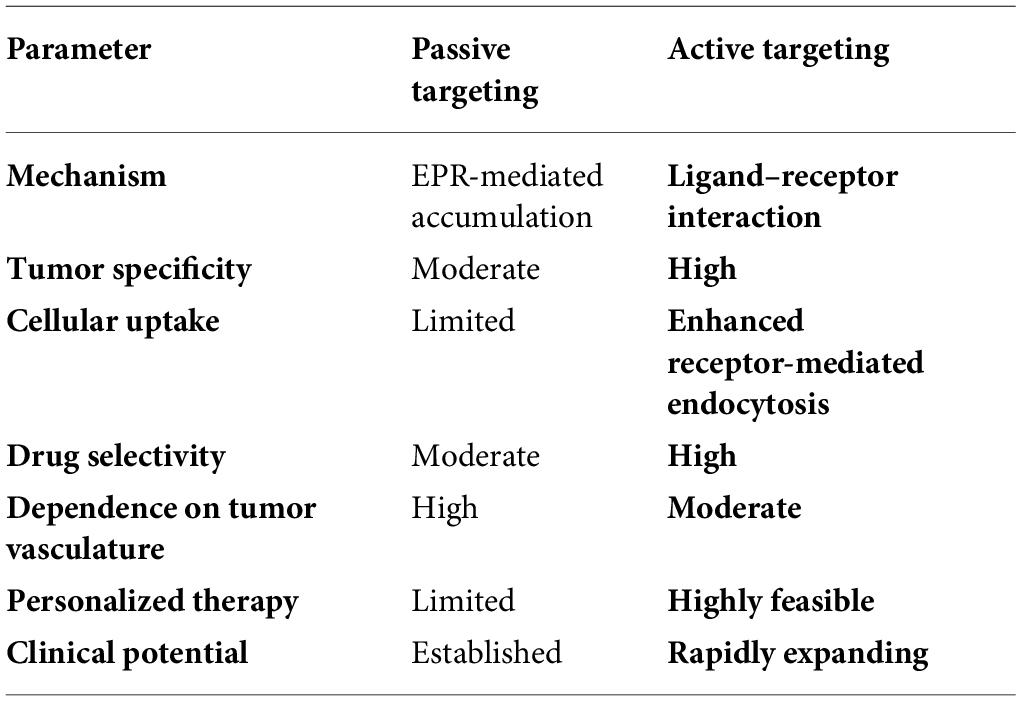
Table 2. Comparison of passive and active targeting strategies
Active targeting, as shown in Figure 2, does not mainly promote delivery of NPs to the tumor; rather, it improves cell-specific recognition of the NPs, receptor-mediated internalization, intracellular accumulation of the drug, and therapeutic selectivity after delivery to the tumor. Active targeting requires the targeting ligands to bind to the receptors. The nanocarrier is then delivered into the cells of cancer via receptor-mediated endocytosis, which enhances the delivery of the drug into the cells and minimizes interaction with healthy tissues.
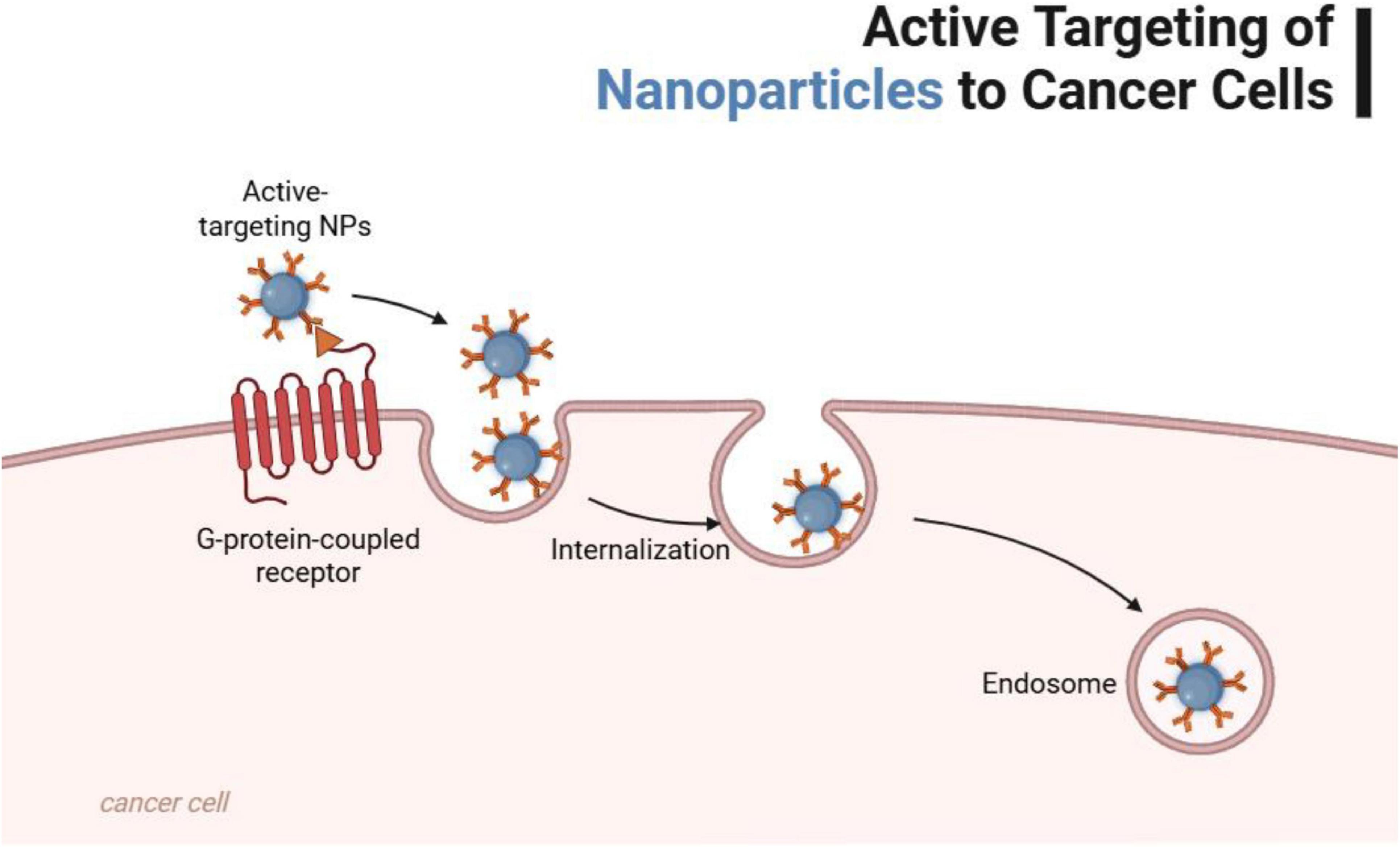
Figure 2. Active targeting of NPs to cancer. Active-targeting NPs functionalized with specific ligands selectively bind to overexpressed cell-surface receptors, such as G-protein-coupled receptors (GPCRs), on cancer cells. Ligand–receptor interaction triggers receptor-mediated endocytosis, resulting in nanoparticle internalization and trafficking into intracellular endosomes. This targeted uptake enhances intracellular drug accumulation, improves therapeutic efficacy, and minimizes off-target toxicity compared with non-specific drug delivery.
The paradigm shift was achieved through advances in cancer genomics, proteomics, and molecular diagnostics that led to the discovery of many tumor-associated biomarkers that are very different from those in normal tissues.
The molecular basis of active targeting
Successful active targeting requires the use of a biomarker that has desirable biological properties, such as:
• The proteins are highly expressed on tumor cells.
• Low levels of expression in normal tissue
• Efficient receptor-mediated endocytosis
• Reliability at the end of the disease
• The clinical relevance of the findings of this investigation is applicable to the majority of patients.
The HER2, EGFR, FR, TfR, CD44, integrins (especially αvβ3), PSMA, and PD-L1 are some of the attractive therapeutic targets in several biomarkers. They affect cell growth, angiogenesis, invasion, immune evasion, and metastasis, and could be potential targets for therapy and molecular imaging. These biomarkers have led to the creation of more precise nanomedicines specific to certain cancer sub-types, lessening the toxicity of the treatments and increasing precision in treatment (7, 18, 19).
Evolution of targeting ligands
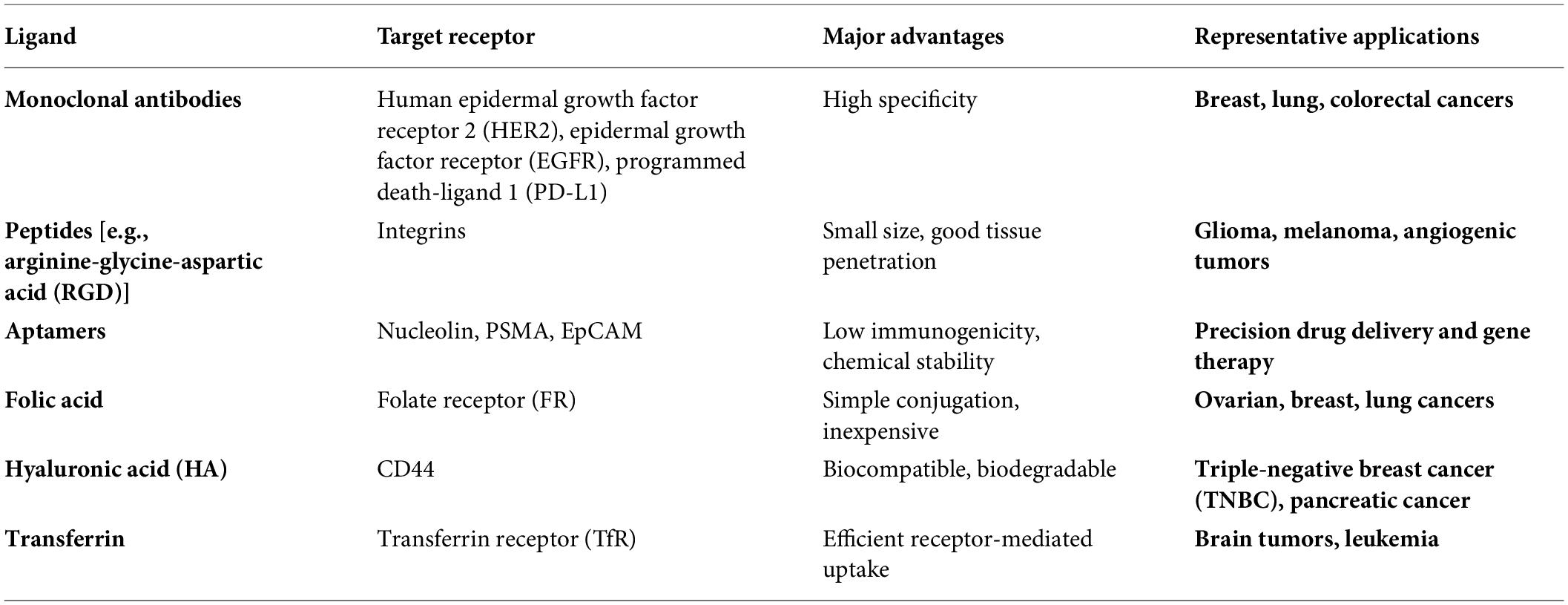
The breakthrough in active targeting was the creation of a variety of ligand systems and molecular recognition of the specific molecular biomarkers. Many factors, like targeting efficiency, circulation time, immunogenicity, and clinical translation, are significantly affected by the choice of ligand. Monoclonal antibodies are among the first targeting ligands, due to their outstanding specificity towards tumor-associated receptors.
Antibody-functionalized NPs showed improved tumor accumulation but generally had a large molecular size, a rather complex manufacturing process, and higher production costs. For these reasons, peptides were investigated, including arginine-glycine-aspartic acid (RGD) peptides that bind to integrins. The peptides have several benefits, such as being smaller, more penetrating to the tumor, less immunogenic, easily synthesized, and more chemically stable. But alternatives have emerged, in the form of aptamers, short single-stranded DNA or RNA molecules that can bind specific proteins with the affinity of antibodies. They are attractive for targeted drug delivery and as nucleic acid therapeutics due to their high specificity, low immunogenicity, and ease of chemical modification (20–22).
As discussed in Table 3, small molecules like folic acid, hyaluronic acid (HA), and transferrin are also commonly employed due to their ability to bind to receptors that are often over-expressed in cancer cells and their fairly low production costs and safety profile. New developments involve so-called dual-ligand systems in which two different ligands bind two different receptors. These platforms increase the tumor specificity, leave the receptor heterogeneity, and decrease the chances of therapeutic resistance.
Intelligent nanomedicine: the next evolution
The latest phase in the evolution of active targeting involves the development of intelligent nanomedicine, where nanocarriers integrate multiple functionalities into a single platform. These systems not only recognize tumor biomarkers but also respond dynamically to biological stimuli such as acidic pH, hypoxia, ROS, elevated glutathione levels, enzymes, or external triggers, including light, ultrasound, and magnetic fields.
Intelligent nanocarriers can achieve sequential targeting, controlled drug release, multimodal imaging, immune modulation, and combination therapy, thereby maximizing therapeutic outcomes while minimizing off-target effects. Biomimetic NPs coated with cancer cell membranes, erythrocyte membranes, platelet membranes, or extracellular vesicles further enhance circulation time and immune evasion.
More recently, AI and machine learning (ML) have begun to influence nanoparticle design by predicting ligand–receptor interactions, optimizing nanoparticle size and surface chemistry, modeling protein corona formation, and identifying patient-specific therapeutic targets. These computational tools are accelerating the transition toward precision nanomedicine and may substantially reduce the time required for preclinical optimization (28, 29).
Collectively, these advances illustrate the remarkable evolution of active targeting from simple receptor recognition to sophisticated, multifunctional nanoplatforms capable of integrating diagnostics, therapy, and personalized medicine. Continued progress in biomarker discovery, materials science, and computational biology is expected to further expand the clinical potential of intelligent nanomedicine.
Molecular biomarkers in cancer targeting
The newest step in the development of active targeting is the development of intelligent nanomedicine, a platform that combines several different functionalities. They recognize biochemical markers of tumors, and they are dynamic with regard to biological factors such as acidic pH, hypoxia, ROS, high levels of glutathione, enzymes, etc., and stimuli such as light, ultrasound, or magnetic fields. By utilizing intelligent nanocarriers, sequential targeting, controlled drug release, multimodal imaging, immune modulation, and combination therapy can be achieved, which can optimize drug delivery and maximize therapeutic effects with fewer side effects. The circulation time and immune evasion are yet further improved by coating biomimetic NPs with the membrane of cancer cells, erythrocytes, platelets, or EVs. Recently, AI and ML have started to play a role in the design of NPs by predicting ligand–receptor interactions, optimizing the size and surface chemistry of NPs, modelling the formation of protein corona, and identifying therapeutic targets specific to patients. Such computational tools are ushering the transition towards precision nanomedicine and could significantly shorten the preclinical optimization time. All these developments demonstrate the impressive progress of active targeting, moving from receptor recognition to highly multifunctional nanoplatforms, incorporating diagnostic, therapeutic and personalized medicine. As the discovery of biomarkers, as shown in Figure 3 and discussed in Table 4, with materials science advancements and computational biology innovations continuing, the clinical applications of intelligent nanomedicine should grow even more (30–32).
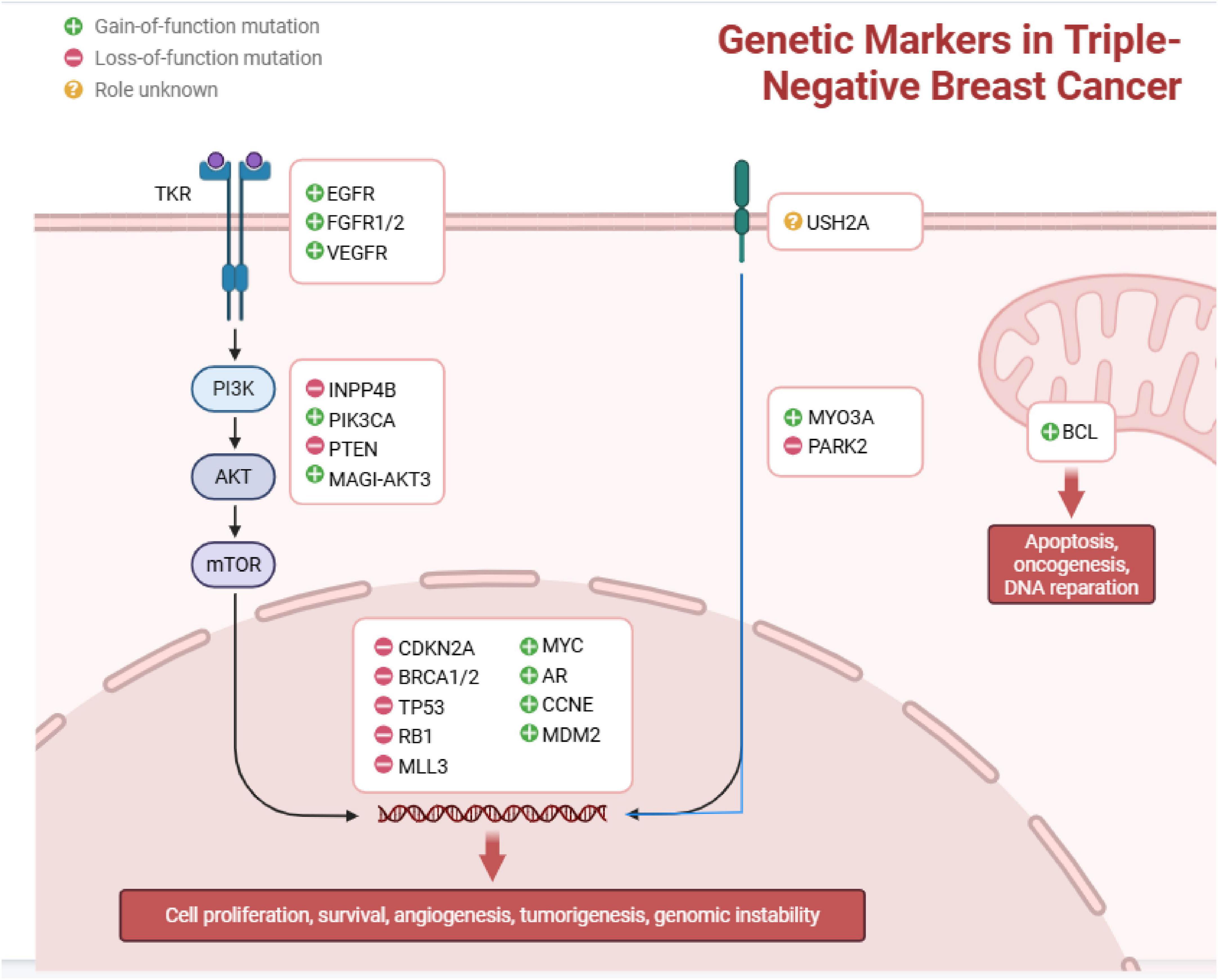
Figure 3. Key genetic biomarkers and oncogenic signaling pathways in TNBC. Schematic representation of the major genetic alterations and signaling pathways involved in TNBC. Gain-of-function mutations in receptor tyrosine kinases (RTKs), including EGFR, FGFR1/2, and VEGFR, activate the PI3K/AKT/mTOR signaling cascade, promoting cell proliferation, survival, angiogenesis, and tumor progression. Additional alterations in genes such as PIK3CA, PTEN, INPP4B, and MAGI-AKT3 further dysregulate intracellular signaling. Frequent mutations in tumor suppressor genes (BRCA1/2, TP53, RB1, CDKN2A, and MLL3) and amplification of oncogenes (MYC, CCNE, MDM2, and AR) contribute to genomic instability and uncontrolled cell growth. Other genetic alterations, including USH2A, MYO3A, PARK2, and BCL, influence apoptosis, DNA repair, and oncogenesis. Collectively, these molecular abnormalities drive the aggressive phenotype of TNBC and provide potential therapeutic targets for precision oncology.
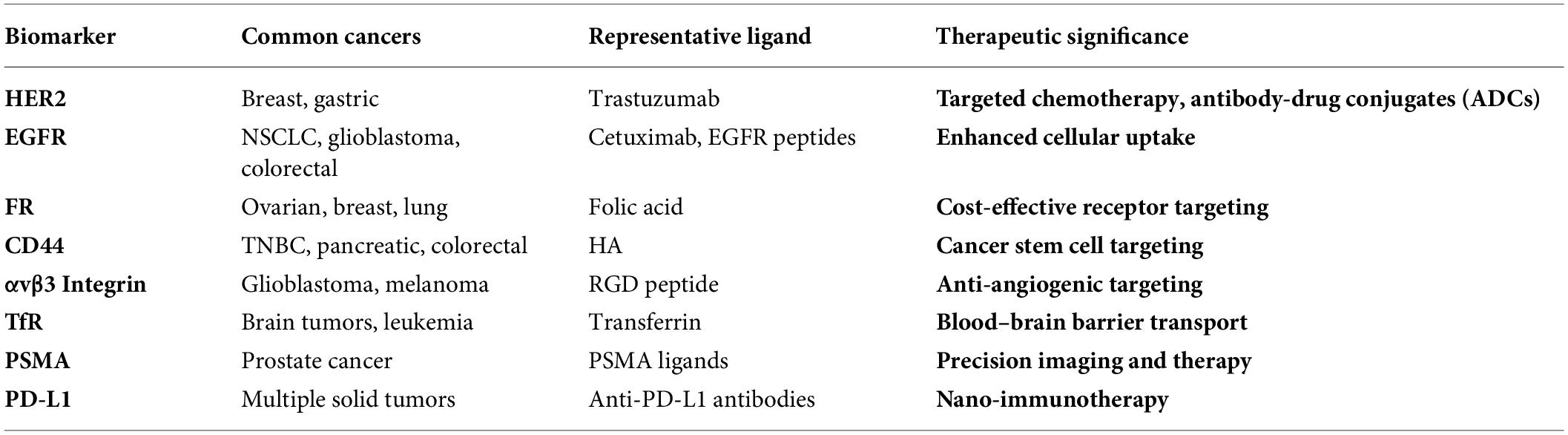
Table 4. Major molecular biomarkers used for active targeting in cancer therapy.
HER2
HER2 is a member of the epidermal growth factor receptor family that is a transmembrane receptor tyrosine kinase. It is also found to be over-expressed in about 20–30% of breast cancers and also in gastric, ovarian, and endometrial cancers. Overexpression of HER2 is linked to high malignancy of tumors, high proliferation rate, increased angiogenesis, and bad prognosis. Successful monoclonal antibodies like trastuzumab have made HER2 one of the most clinically validated targets in oncology. Nanocarriers modified with trastuzumab or anti-HER2 antibody fragments have been shown to increase the uptake of these particles by the receptor, intracellular delivery of the drug, and the toxicity of these particles against HER2-positive tumors. Several new classes of targeted NPs, such as HER2-targeted liposomes, polymeric NPs, and antibody-drug conjugates (ADCs), are under study for their ability to enhance therapeutic efficacy while simultaneously limiting cardiotoxicity caused by traditional chemotherapy (33).
EGFR
Another receptor tyrosine-kinase that is commonly over-expressed in non-small cell lung cancer, glioblastoma, colorectal cancer, and head and neck squamous cell carcinoma is EGFR. EGFR activates a number of signaling pathways, including PI3K/AKT and MAPK pathways that in turn control cell proliferation, migration, survival, and angiogenesis. Monoclonal antibodies, peptides, and aptamers, as well as EGFR-binding ligands, have been used to target EGFR and achieved a great improvement in selective delivery of chemotherapeutics and nucleic acids. Additionally, EGFR-targeted NPs have been found to have the ability to overcome drug resistance, in part by increasing the intracellular accumulation of the drug and by sidestepping efflux transporters (6).
Folate receptor
The FR is highly expressed by ovarian, breast, lung, kidney, and endometrial cancers and is minimally expressed in most healthy tissues, especially the α-isoform. Folic acid is one of the most widely studied targeting ligands due to its low cost, lack of immunogenicity, chemical stability, and ability to be readily attached to nanoparticle surfaces. Numerous preclinical studies have shown that folate-functionalized liposomes, polymeric NPs, solid lipid NPs, and NLCs have shown improved tumor accumulation, enhanced cellular uptake, and improved therapeutic outcomes. Thanks to its simplicity, folate conjugation remains a preferred approach to active targeting (7, 8).
CD44
CD44 is an adhesion molecule, a cell-surface glycoprotein that plays a multifunctional role in metastasis, migration, adhesion, and EMT. It is expressed very strongly in cancer stem cells and in aggressive cancers like triple-negative breast, pancreatic, ovarian, and colorectal cancers. In particular, CD44 has been the subject of much interest due to its association with tumor recurrence and resistance to chemotherapy. Due to its good biocompatibility and biodegradability, HA, the natural ligand of CD44, is widely used for functionalization of nanocarriers. HA-coated NPs are found to be highly endocytosed, penetrative, and selectively targeted to CD44-overexpressing tumors. In addition, HA-based systems can be designed to release drugs in response to the HA-degrading enzymes found in tumors, allowing for controlled drug delivery (25).
Integrins
Integrins are heterodimeric transmembrane receptors that mediate cell adhesion, migration, angiogenesis, and tumor invasion. Of these, αvβ3 integrin is an interesting molecule that is highly upregulated in tumor-associated endothelial cells and in certain aggressive cancers such as melanoma, glioblastoma, and breast cancer. RGD peptides are ligands with high affinity to αvβ3 integrins and are one of the most widely used targeting peptides. RGD-functionalized NPs show a more pronounced angiogenic vessel targeting, penetration of tumor tissue, and accumulation of the drug in the cell. They also have a relatively small molecular size, which allows them to be more easily diffused into solid tumors than larger antibody-based systems (34).
Transferrin receptor
The rapidly growing cancer cells need a large amount of iron to support DNA synthesis and cellular metabolism, which leads to an overexpression of the TfR. This receptor is especially rich in glioblastoma, leukemia, breast and liver cancer. The transferrin-conjugated NPs are based on receptor-mediated endocytosis to enhance the intracellular drug delivery. Furthermore, targeted systems using transferrin are also promising candidates to traverse the blood–brain barrier, thereby potentially contributing to the treatment of primary and metastatic brain tumors. Several targeted TfR nanomedicines loaded with chemotherapeutic agents, siRNA, and gene therapy have been preclinically and clinically evaluated (26).
The prostate-specific membrane antigen (PSMA)
It occurs on the surface of prostate cancer cells. PSMA is a transmembrane glycoprotein that is highly expressed in prostate cancer cells and tumor neovasculature. Its expression is limited to normal tissues, and high internalization following ligand binding makes PSMA a valuable target for precision oncology. The PSMA-targeted NPs have been shown to achieve increased accumulation in prostate tumors and the delivery of chemotherapeutics, radionuclides, and imaging probes. These are being combined with theranostic systems where diagnosis and therapy are targeted (17, 35).
PD-L1 and emerging immunological biomarkers
The recent success of cancer immunotherapy has broadened the scope of active targeting from tumor cells to other targets like immune checkpoints like PD-L1. In some cancers, PD-L1 is often highly expressed, and it inhibits T-cell activation by binding to the programmed cell death protein 1 (PD-1) receptor. Anti-PD-L1 antibodies or immune-modulating ligands can be attached to NPs to selectively deliver the checkpoint inhibitors to tumors, thus maximizing the therapeutic efficacy of the treatment through a local effect while minimizing systemic immune-related side effects. New biomarkers linked to tumor-associated macrophages (TAMs), fibroblasts, hypoxia, and ECM remodeling are also being targeted as a promising avenue for future nanomedicine (36).
Conclusion and future perspectives
In the field of cancer therapy, active targeting has become a paradigm shift, as it allows for targeted delivery of drugs while relying on the recognition of molecular biomarkers that are specific to the tumor. The identification of biomarkers like HER2, EGFR, FR, CD44, integrins, TfR, and PSMA has greatly improved the advancement of ligand-functionalized drug delivery systems for greater specificity, enhanced cellular uptake, and less systemic toxicity. Biomarker-guided active targeting is more precise than passive targeting and other forms of conventional chemotherapy and can be used to overcome problems of drug biodistribution and off-target effects.
As new biomarkers are discovered because of advances in molecular biology, genomics, and proteomics, the range of targeted cancer treatments is growing, and the development of personalized treatment approaches is greater than ever before. Moreover, the use of these biomarkers with multifunctional nanocarriers has led to better selective delivery of chemotherapeutic drugs, nucleic acids, proteins, and imaging probes in preclinical and early clinical trials, with encouraging results.
However, there are still several challenges, such as tumor heterogeneity, dynamic changes in receptor expression, biological barriers, poor tissue penetration, large-scale manufacturing, and regulatory approval. Solving these challenges will involve a multi-disciplinary strategy that will integrate molecular oncology, nanotechnology, pharmaceutical science, computational biology, and clinical research. More research is needed to identify highly patient-specific biomarkers, form systems with multiple functions that can cope with tumor heterogeneity, and integrate AI and ML to refine ligand selection and design NPs.
Further improvements in the clinical use of active targeting strategies are anticipated to be brought by continued development of biomimetic delivery systems, stimuli-responsive nanocarriers, and precision medicine. All these innovations promise to help drive biomarker-guided targeted therapies to routine use in the clinic and enhance the efficacy of treatment, reduce toxicity, and advance precision oncology.
Abbreviations
AI: artificial intelligence
ADC: antibody–drug conjugate
BBB: blood–brain barrier
CD44: cluster of differentiation 44
DNA: deoxyribonucleic acid
ECM: extracellular matrix
EGFR: epidermal growth factor receptor
EMT: epithelial–Mesenchymal transition
EPR: enhanced permeability and retention
EVs: extracellular vesicles
FR: folate receptor
HA: hyaluronic acid
HER2: human epidermal growth factor receptor 2
MAPK: mitogen-activated protein kinase
MDR: multidrug resistance
ML: machine learning
NLCs: nanostructured lipid carriers
NSCLC: non-small cell lung cancer
PD-1: programmed cell death protein 1
PD-L1: programmed death-ligand 1
PI3K: phosphoinositide 3-kinase
PMs: polymeric micelles
PSMA: prostate-specific membrane antigen
RGD: arginine–glycine–aspartic acid
RNA: ribonucleic acid
ROS: reactive oxygen species
siRNA: small interfering ribonucleic acid
TAMs: tumor-associated macrophages
TfR: transferrin receptor
TNBC: triple-negative breast cancer
Funding
The authors declare that financial support was not received for this work and/or its publication.
Clinical trial
Not applicable.
Acknowledgments
We thank the management of Excel College of Pharmacy, Manipal Academy of Higher Education, and Vellalar College of Pharmacy. Figures were created with BioRender.com. Mendeley Reference Manager assisted in citation management. The authors used OpenAI ChatGPT (Go version) solely for language refinement, grammar correction, and structural editing. No AI tool was used for scientific interpretation, data generation, or reference creation.
Conflict of interest
The authors declare that the research was conducted in the absence of any commercial or financial relationships that could be construed as a potential conflict of interest.
References
1. Gluz O, Liedtke C, Gottschalk N, Pusztai L, Nitz U, Harbeck N. Triple-negative breast cancer—current status and future directions. Ann Oncol. (2009) 20(12):1913–27. doi: 10.1093/annonc/mdp492
2. Danhier F, Feron O, Préat V. To exploit the tumor microenvironment: passive and active tumor targeting of nanocarriers for anti-cancer drug delivery. J Control Release. (2010) 148(2):135–46. doi: 10.1016/j.jconrel.2010.08.027
3. Rojhannezhad M, Soltani BM, Vasei M, Ghorbanmehr N, Mowla SJ. Functional analysis of a putative HER2-associated expressed enhancer, Her2-Enhancer1, in breast cancer cells. Sci Rep. (2023) 13(1):19516. doi: 10.1038/s41598-023-46460-x
4. Swain SM, Shastry M, Hamilton E. Targeting HER2-positive breast cancer: advances and future directions. Nat Rev Drug Discov. (2023) 22(2):101–26. doi: 10.1038/s41573-022-00579-0
5. Modi S, Jacot W, Yamashita T, Sohn J, Vidal M, Tokunaga E , et al. Trastuzumab deruxtecan in previously treated HER2-low advanced breast cancer. N Engl J Med. (2022) 387(1):9–20. doi: 10.1056/NEJMoa2203690
6. Zhou DD, Bai WQ, Zhai XT, Sun LP, Zhen YS, Li ZR , et al. Excellent effects and possible mechanisms of action of a new antibody-drug conjugate against EGFR-positive triple-negative breast cancer. Mil Med Res. (2021) 8(1):63. doi: 10.1186/s40779-021-00358-9
7. Lu Y, Low PS. Folate-mediated delivery of macromolecular anticancer therapeutic agents. Adv Drug Deliv Rev. (2002) 54(5):675–93. doi: 10.1016/s0169-409x(02)00042-x
8. Lee RJ, Low PS. Folate-mediated tumor cell targeting of liposome-entrapped doxorubicin in vitro. Biochim Biophys Acta. (1995) 1233(9):134–44. doi: 10.1016/0005-2736(94)00235-h
9. Sun T, Jiang C. Stimuli-responsive drug delivery systems triggered by intracellular or subcellular microenvironments. Adv Drug Deliv Rev. (2023) 196:114773. doi: 10.1016/j.addr.2023.114773
10. Kim JH, Li Y, Kim MS, Kang SW, Jeong JH, Lee DS. Synthesis and evaluation of biotin-conjugated pH-responsive polymeric micelles as drug carriers. Int J Pharm. (2012) 427(2):435–42. doi: 10.1016/j.ijpharm.2012.01.034
11. Wu S, Ge A, Deng X, Liu L, Wang Y. Evolving immunotherapeutic solutions for triple-negative breast carcinoma. Cancer Treat Rev. (2024) 130:102817. doi: 10.1016/j.ctrv.2024.102817
12. Subbiah V, Gouda MA, Ryll B, Burris HA, Kurzrock R. The evolving landscape of tissue-agnostic therapies in precision oncology. CA Cancer J Clin. (2024) 74(5):433–52. doi: 10.3322/caac.21844
13. de Visser KE, Joyce JA. The evolving tumor microenvironment: from cancer initiation to metastatic outgrowth. Cancer Cell. (2023) 41(3):374–403. doi: 10.1016/j.ccell.2023.02.016
14. Hong Y, Boiti A, Vallone D, Foulkes NS. Reactive oxygen species signaling and oxidative stress: transcriptional regulation and evolution. Antioxidants (Basel). (2024) 13(3):312. doi: 10.3390/antiox13030312
15. Lorusso V, Marech I, Giampaglia M, Gnoni A, Tinelli A, Chiuri VE. Present and emerging targeted therapy for metastatic breast cancer. J Cancer Res Updates. (2012) 1(1):94–101. doi: 10.6000/1929-2279.2012.01.01.14
16. Singh S, Mehra NK, Jain NK. Development and characterization of the paclitaxel loaded riboflavin and thiamine conjugated carbon nanotubes for cancer treatment. Pharm Res. (2016) 33(7):1769–81. doi: 10.1007/s11095-016-1916-2
17. Sahoo SK, Ma W, Labhasetwar V. Efficacy of transferrin-conjugated paclitaxel-loaded nanoparticles in a murine model of prostate cancer. Int J Cancer. (2004) 112(2):335–40. doi: 10.1002/ijc.20405
18. Unni A, Ragavendra SP. Engineering T cells for cancer: the evolution and future of CAR-based therapies. Next Res. (2025) 2:100892. doi: 10.1016/j.nexres.2025.100892
19. Du C, Deng D, Shan L, Wan S, Cao J, Tian J , et al. A pH-sensitive doxorubicin prodrug based on folate-conjugated BSA for tumor-targeted drug delivery. Biomaterials. (2013) 34(12):3087–97. doi: 10.1016/j.biomaterials.2013.01.041
20. Mateo J, Carreira S, Sandhu S, Miranda S, Mossop H, Perez-Lopez R , et al. DNA-repair defects and olaparib in metastatic prostate cancer. N Engl J Med. (2015) 373(18):1697–708. doi: 10.1056/NEJMoa1506859
21. Merker JD, Oxnard GR, Compton C, Diehn M, Hurley P, Lazar AJ , et al. Circulating tumor DNA analysis in patients with cancer: American Society of Clinical Oncology and College of American Pathologists Joint Review. J Clin Oncol. (2018) 36(16):1631–41. doi: 10.1200/JCO.2017.76.8671
22. Yang WC, Wei MF, Lee YH, Huang CS, Kuo SH. Radiosensitizing effects of CDK4/6 inhibitors in hormone receptor-positive and HER2-negative breast cancer mediated downregulation of DNA repair mechanism and NF-κB-signaling pathway. Transl Oncol. (2024) 49:102092. doi: 10.1016/j.tranon.2024.102092
23. Xiang D, Shigdar S, Qiao G, Wang T, Kouzani AZ, Zhou SF , et al. Nucleic acid aptamer-guided cancer therapeutics and diagnostics: the next generation of cancer medicine. Theranostics. (2015) 5(1):23–42. doi: 10.7150/thno.10202
24. Song X, Ren Y, Zhang J, Wang G, Han X, Zheng W , et al. Targeted delivery of doxorubicin to breast cancer cells by aptamer functionalized DOTAP/DOPE liposomes. Oncol Rep. (2015) 34(4):1953–60. doi: 10.3892/or.2015.4136
25. Lee H, Lee K, Park TG. Hyaluronic acid-paclitaxel conjugate micelles: synthesis, characterization, and antitumor activity. Bioconjug Chem. (2008) 19(6):1319–25. doi: 10.1021/bc8000485
26. Soe ZC, Kwon JB, Thapa RK, Ou W, Nguyen HT, Gautam M , et al. Transferrin-conjugated polymeric nanoparticle for receptor-mediated delivery of doxorubicin in doxorubicin-resistant breast cancer cells. Pharmaceutics. (2019) 11(2):63. doi: 10.3390/pharmaceutics11020063
27. Ponka P, Lok CN. The transferrin receptor: role in health and disease. Int J Biochem Cell Biol. (1999) 31(10):1111–37. doi: 10.1016/s1357-2725(99)00070-9
28. Liu Q, Huang C, Zhan G, Guan Y, Li S. The need for expansion of global collaborations on AI in oncology. Lancet. (2025) 405(10487):1339. doi: 10.1016/S0140-6736(25)00634-8
29. Han Z, Ai J. Editorial: biomarkers and immunotherapy for genitourinary tumors. Front Immunol. (2024) 15:1394170. doi: 10.3389/fimmu.2024.1394170
30. Vito A, El-Sayes N, Mossman K. Hypoxia-driven immune escape in the tumor microenvironment. Cells. (2020) 9(4):992. doi: 10.3390/cells9040992
31. Liu L, Yu J, Liu Y, Xie L, Hu F, Liu H. Hypoxia-driven angiogenesis and metabolic reprogramming in vascular tumors. Front Cell Dev Biol. (2025) 13:1572909. doi: 10.3389/fcell.2025.1572909
32. Liao Q, He H, Mao Y, Ding X, Zhang X, Xu J. Engineering T cells with hypoxia-inducible chimeric antigen receptor (HiCAR) for selective tumor killing. Biomark Res. (2020) 8(1):56. doi: 10.1186/s40364-020-00238-9
33. Yuan Y, Zhou S, Li C, Zhang X, Mao H, Chen W , et al. Cascade downregulation of the HER family by a dual-targeted recombinant protein-drug conjugate to inhibit tumor growth and metastasis. Adv Mater. (2022) 34(23):e2201558. doi: 10.1002/adma.202201558
34. Danilucci TM, Santos PK, Pachane BC, Pisani GFD, Lino RLB, Casali BC , et al. Recombinant RGD-disintegrin DisBa-01 blocks integrin αvβ3 and impairs VEGF signaling in endothelial cells. Cell Commun Signal. (2019) 17(1):27. doi: 10.1186/s12964-019-0339-1
35. de Bono J, Mateo J, Fizazi K, Saad F, Shore N, Sandhu S , et al. Olaparib for metastatic castration-resistant prostate cancer. N Engl J Med. (2020) 382(22):2091–102. doi: 10.1056/NEJMoa1911440
36. Wang C, Xu YH, Xu HZ, Li K, Zhang Q, Shi L , et al. PD-L1 blockade TAM-dependently potentiates mild photothermal therapy against triple-negative breast cancer. J Nanobiotechnology. (2023) 21(1):476. doi: 10.1186/s12951-023-02240-3
© The Author(s). 2026 Open Access This article is distributed under the terms of the Creative Commons Attribution 4.0 International License (https://creativecommons.org/licenses/by/4.0/), which permits unrestricted use, distribution, and reproduction in any medium, provided you give appropriate credit to the original author(s) and the source, provide a link to the Creative Commons license, and indicate if changes were made.