Introduction
Vertebral compression fractures are often discussed in relation to osteoporosis in older adults. However, thoracolumbar wedge compression fractures can also happen after moderate to high-energy trauma in a broader age range, and their best treatment is still debated. This ranges from conservative bracing to various surgical techniques (1).
Balloon kyphoplasty is a minimally invasive, percutaneous method that uses an inflatable balloon to restore vertebral height and create a space for cement, helping to reduce deformities and stabilize fractures. While balloon kyphoplasty is best known for treating osteoporotic vertebral compression fractures, more studies support its use in traumatic, non-osteoporotic thoracolumbar fractures without neurological deficit, including adolescents and young adults who may take longer to recover with only conservative treatment (1, 2).
A related technical question is whether balloon kyphoplasty should be done via a unipedicular or bipedicular approach. Studies on osteoporotic fractures generally report similar outcomes between the two methods, with the unipedicular approach often requiring less operating time (3).
We share our experience from a single center with balloon kyphoplasty performed through a mix of unipedicular and bipedicular techniques based on surgeon judgment in 12 patients with acute traumatic thoracolumbar wedge compression fractures without neurological deficit, ranging in age from 17 to 75. This case series follows the case report (CASE) guidelines (4).
Methods
Study design and setting
This is a retrospective, single-center case series conducted at Government Kilpauk Medical College Hospital, Chennai, Tamil Nadu, India. Patients were treated between July 2025 and January 2026.
Ethics approval
This study was approved by the Institutional Ethics Committee, Government Kilpauk Medical College. All procedures followed were in accordance with the ethical standards of the responsible committee on human experimentation (institutional and national) and with the Helsinki Declaration of 1975, as revised in 2008.
Patients
Patients presenting with an acute traumatic thoracolumbar wedge compression fracture, confirmed on imaging (radiographic vertebral height loss with magnetic resonance imaging- short tau inversion recovery [MRI STIR] hyperintensity indicating an acute injury), and without neurological deficit on clinical examination, were included.
Surgical technique
All patients underwent percutaneous transpedicular balloon kyphoplasty under fluoroscopic guidance. A unipedicular or bipedicular approach was used according to the operating surgeon’s judgment. Balloon inflation was used to restore vertebral height and create a cavity, followed by cement augmentation of the affected level(s). Representative real-time fluoroscopic and intraoperative footage is provided in Video 1.
| Video 1. Balloon_Kyphoplasty.mp4. Real-time intra operative and fluoroscopic footage of percutaneous balloon kyphoplasty, demonstrating trocar and balloon placement, balloon inflation, and cement augmentation under fluoroscopic guidance. All imaging has been de-identified. Duration: 2 min 27 s. 0:22–0:30 Instruments required for the procedure 0:30–0:41 Entry into target pedicle using a fenestrated Jamshidi needle 0:45–0:53 Guidewire inserted through the fenestrated Jamshidi needle 1:03–1:12 Manual drilling 1:12–1:18 Balloon catheter insertion 1:18–1:42 Balloon inflation 1:42–2:11 Cement insertion under real-time fluoroscopic monitoring 2:11–2:25 Post-operative X-rays and results https://youtu.be/nv4DlNnphMc |
Outcome measures
Pain was assessed using the visual analogue scale (VAS, 0–10) pre-operatively, on post-operative day 1 (POD1), and at the final follow-up. Ambulation status, length of hospital stay, complications (in particular cement leakage), and follow-up imaging for vertebral height stability were also recorded.
Statistical analysis
Given the descriptive nature and small size of this case series, results are presented as means and ranges; no inferential statistical testing was performed.
Results
Twelve patients (9 male, 3 female; mean age 44.9 years, range 17–75) met the inclusion criteria. Fractures involved levels D6 through L2, with the lumbar spine (L1–L2) accounting for the majority of treated levels and thoracic levels (D6, D8, D9, D12) accounting for the remainder; four patients had two-level fractures. The mean pre-operative VAS was 5.2 (range 4–6). Seven patients (58%) underwent a unipedicular approach, and five (42%) a bipedicular approach. The mean cement volume was 4.0 mL per level (range 3–5).
All patients had a VAS of 1 and were ambulant without assistance on POD1, and all were discharged on POD2. The mean pre-operative local wedge angle was 9.9° (range 4.2–17.5°), improving to a mean post-operative wedge angle of 5.8° (range 3.8–8.5°)—a mean correction of 4.1° (range 0.4–11.5°) (Table 1). One patient (Case 3; 8.3%) had an asymptomatic extra-canalicular cement leak at the lateral aspect of the left L1 pedicle, identified on imaging, with no associated neurological deficit; this patient’s post-operative course was otherwise unremarkable. No other intra- or post-operative complications were recorded.
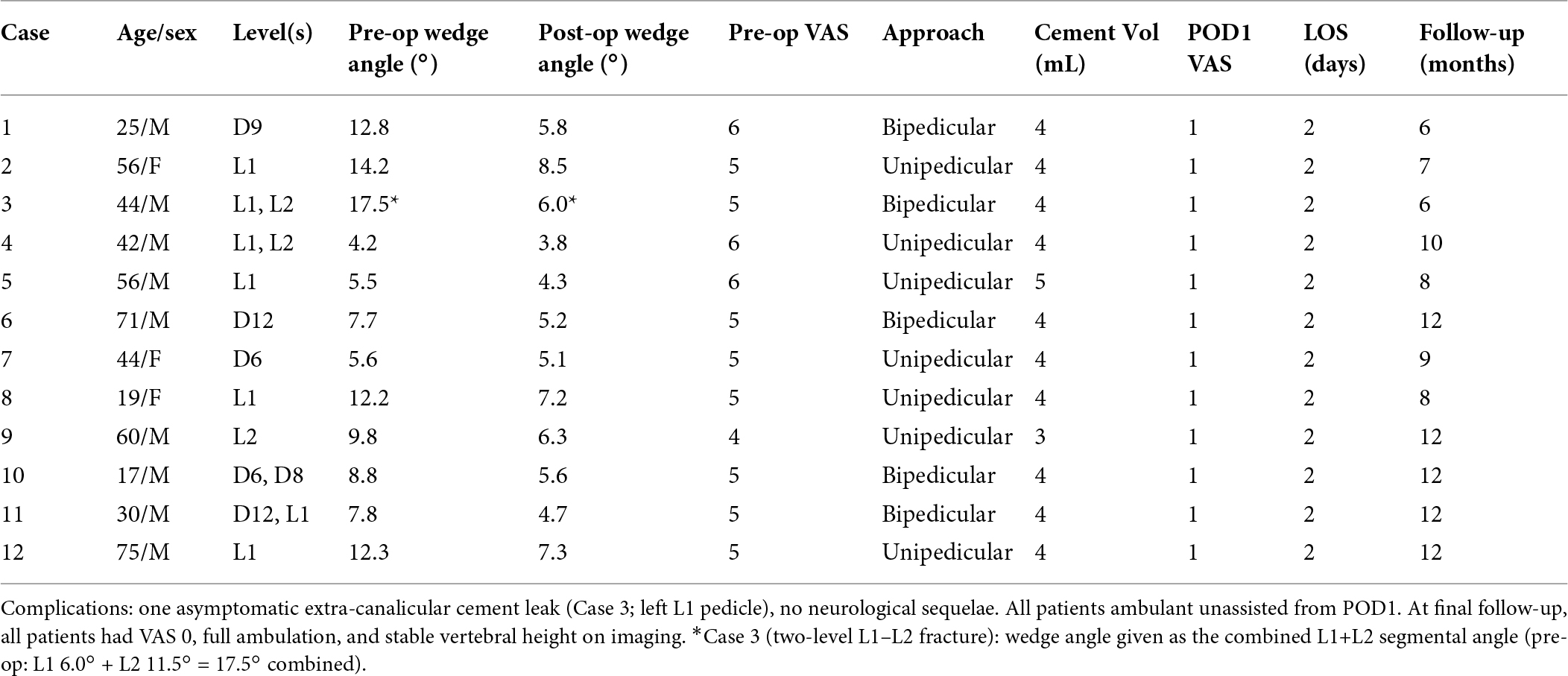
Table 1. Patient demographics, treatment, and early outcomes.
The mean follow-up was 9.5 months (range 6–12). At final follow-up, all 12 patients had a VAS of 0, remained fully ambulant, and showed stable vertebral height on follow-up imaging (Table 1).
Discussion
Our case series describes balloon kyphoplasty for traumatic thoracolumbar wedge compression fractures without neurological deficit in 12 patients ranging in age from 17 to 75 years—a population and indication that are comparatively under-represented relative to the extensive literature on osteoporotic vertebral compression fractures in the elderly.
Our findings are consistent with prior reports that balloon kyphoplasty is an effective option for traumatic thoracolumbar fractures without neurological compromise, achieving rapid pain relief and early restoration of vertebral height with a low complication rate (1). In our series, mean local wedge angle improved from 9.9° pre-operatively to 5.8° post-operatively (mean correction 4.1°), consistent with the deformity correction reported in literature.
Our approach was selected at the operating surgeon’s discretion rather than by a standardized protocol, resulting in a mixed cohort (seven unipedicular, five bipedicular). This is consistent with randomized data showing comparable clinical and radiological outcomes between the two techniques (3).
The single cement leak observed (8.3%) was asymptomatic, extra-canalicular, and without neurological sequelae. This is lower than reported asymptomatic leak rates of up to 22.5% in traumatic vertebral compression fractures, particularly where posterior vertebral body wall integrity is compromised (5).
Limitations
1. Retrospective design
2. Small sample size
3. Single center setting
4. No control group
5. Variable follow-up
Conclusion
In our case series of 12 patients with traumatic thoracolumbar wedge compression fractures without neurological deficit, balloon kyphoplasty—performed through either a unipedicular or bipedicular approach—achieved rapid pain relief, early unassisted mobilization, and durable outcomes at intermediate-term follow-up, with a low rate of asymptomatic complications. These findings support balloon kyphoplasty as a reasonable treatment option across a broad age range, including adolescents and young adults, though larger comparative studies are warranted.
Data availability statement
Any data that support the findings of this study are included within the article.
Author contributions
Conceptualization: A. Retnam, A.R. Baskar. Methodology: A. Retnam, A.R. Baskar. Investigation and Data Curation: A. Retnam, N. Kumar M. Writing – Original Draft: A. Retnam. Writing – Review & Editing: A. Retnam, A.R. Baskar, S.R. Reddi, N. Kumar M. Supervision: A.R. Baskar, S.R. Reddi. All authors read and approved the final manuscript.
Funding
The authors declare that financial support was not received for this work and/or its publication.
Acknowledgments
The authors have no acknowledgments to report.
Consent for publication
Written informed consent for publication of this case series and any accompanying clinical details — including the accompanying intraoperative video footage (Supplementary Video 1) — was obtained from each patient. For Case 10, who was a minor (17 years of age) at the time of treatment, written informed consent for publication was obtained from the patient’s parent/legal guardian rather than the patient. Completed consent forms are available to the Editor upon request.
Generative AI statement
A generative AI tool (Claude, Anthropic) was used to assist with structuring and drafting the manuscript text from data, imaging findings, and clinical details supplied by the authors and with formatting the manuscript to the journal’s author guidelines. All clinical data, scientific interpretation, and conclusions are those of the authors, who take full responsibility for the accuracy and integrity of the manuscript.
Conflict of interest
The authors declare that the research was conducted in the absence of any commercial or financial relationships that could be construed as a potential conflict of interest.
References
1. Hartmann F, Gercek E, Leiner L, Rommens PM. Kyphoplasty as an alternative treatment of traumatic thoracolumbar burst fractures Magerl type A3. Injury. (2012) 43(4):409–15.
2. Edwards R, James S. Balloon kyphoplasty for the treatment of vertebral fractures in adolescents and young adults. J Am Osteopath Acad Orthop. (2023) 7(1).
3. Rebolledo BJ, Gladnick BP, Unnanuntana A, Nguyen JT, Kepler CK, Lane JM. Comparison of unipedicular and bipedicular balloon kyphoplasty for the treatment of osteoporotic vertebral compression fractures. Bone Joint J. (2013) 95-B(3):401–6.
4. Gagnier JJ, Kienle G, Altman DG, Moher D, Sox H, Riley D et al. The CARE guidelines: consensus-based clinical case report guideline development. J Med Case Rep. (2013) 7:223.
5. Abdelgawaad AS, Ezzati A, Govindasamy R, Krajnovic B, Elnady B, Said GZ. Kyphoplasty for osteoporotic vertebral fractures with posterior wall injury. Spine J. (2018) 18(7):1143–8.
© The Author(s). 2026 Open Access This article is distributed under the terms of the Creative Commons Attribution 4.0 International License (https://creativecommons.org/licenses/by/4.0/), which permits unrestricted use, distribution, and reproduction in any medium, provided you give appropriate credit to the original author(s) and the source, provide a link to the Creative Commons license, and indicate if changes were made.